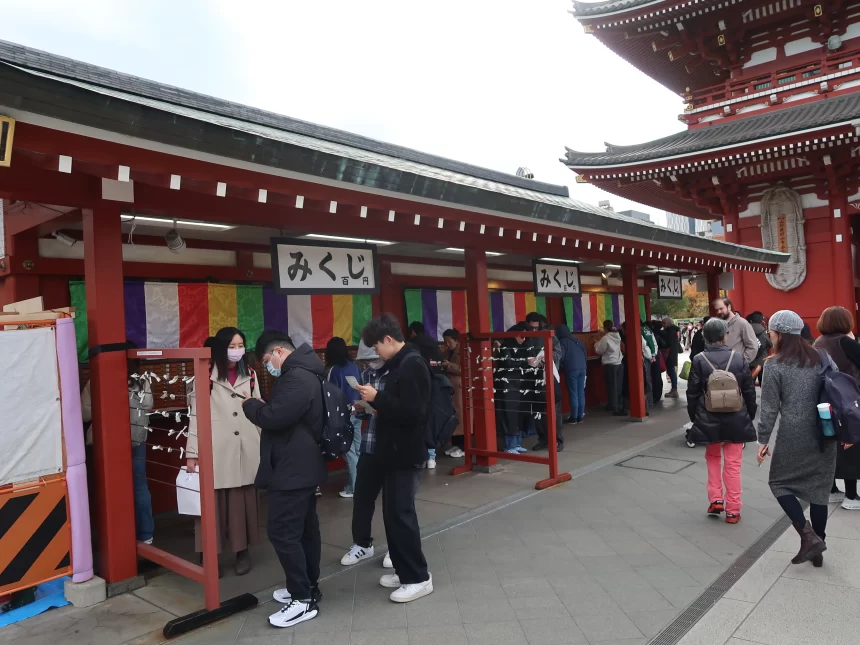
What Is Omikuji?
Omikuji are traditional Japanese fortune slips that you can find at many shrines and temples across Japan. They offer visitors a fun and meaningful way to learn what kind of luck may come their way. People usually draw omikuji when they pray for guidance, start a new year, or simply want to enjoy a cultural experience.
Not sure what to do at a shrine? Learn the basic etiquette before trying omikuji to avoid common mistakes.
How to Draw Omikuji (Step-by-Step)
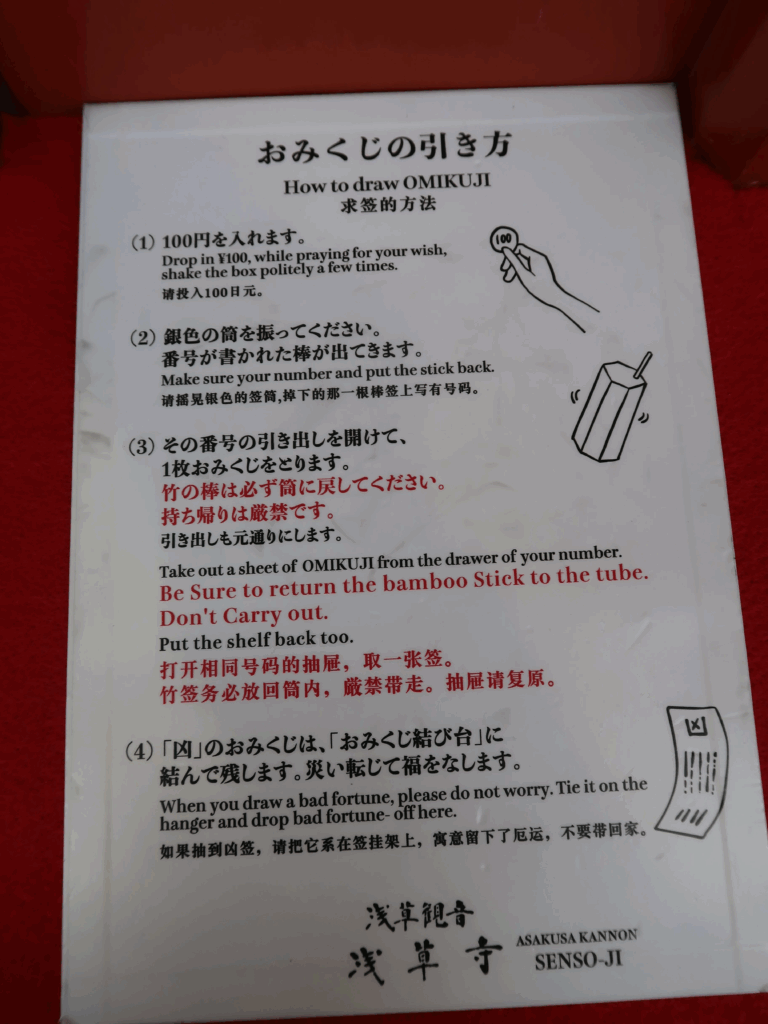
The process may vary slightly depending on the shrine or temple, but it usually works like this:
Find the corresponding number and receive your fortune
Make a small offering (often around 100 yen, though some places may have a fixed fee or a box to place your money)
Shake the omikuji box and take out a numbered stick (in some places, you may draw the paper directly instead)
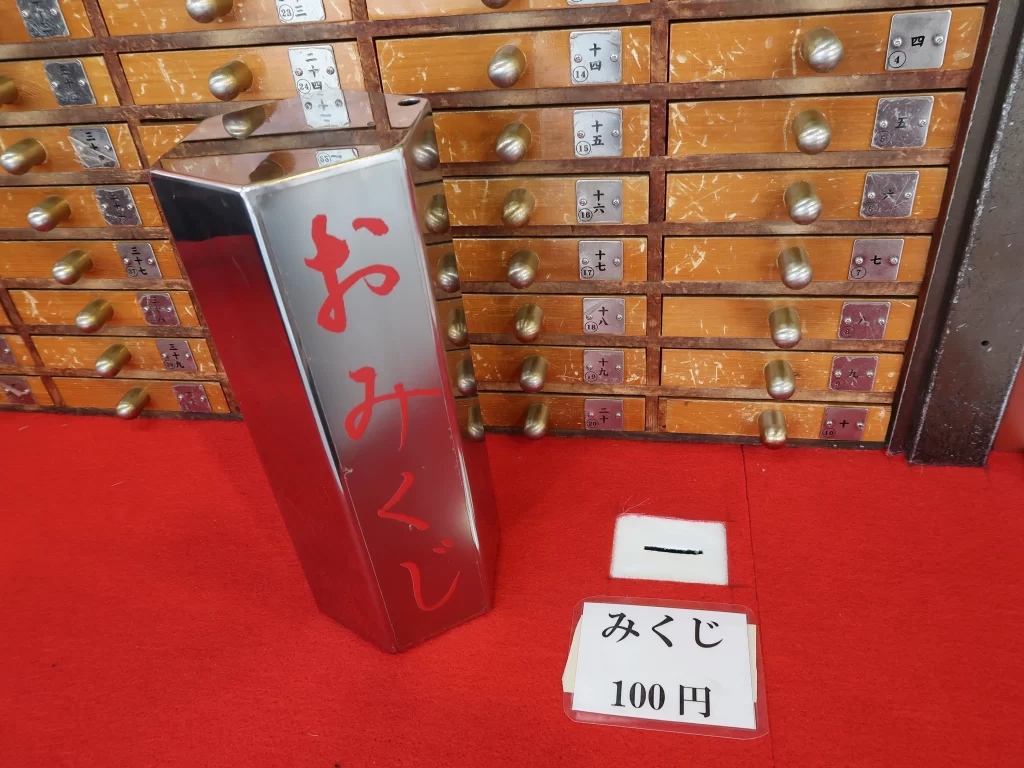
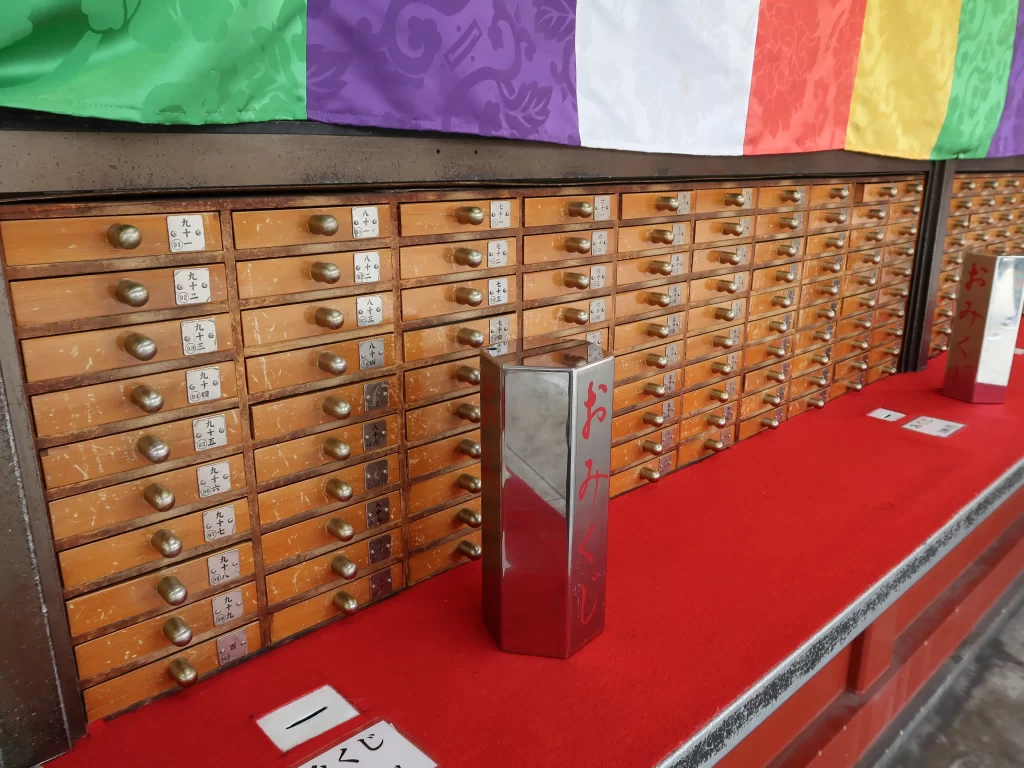
To receive an omikuji, you usually make a small offering and then draw a slip of paper from a box or shake a wooden container until a numbered stick comes out. Staff members will then give you the fortune slip that matches the number.
Types of Fortunes
The omikuji will tell you your overall luck, from great blessing (大吉 / daikichi) to great curse (大凶 / daikyo).
It also provides advice for different areas of life, such as:
- Health
- Love and relationships
- Business and studies
- Travel
- Wishes and long-term goals
Even if you receive a “bad” fortune, it is meant to be helpful guidance, not something scary.
Tying Your Omikuji
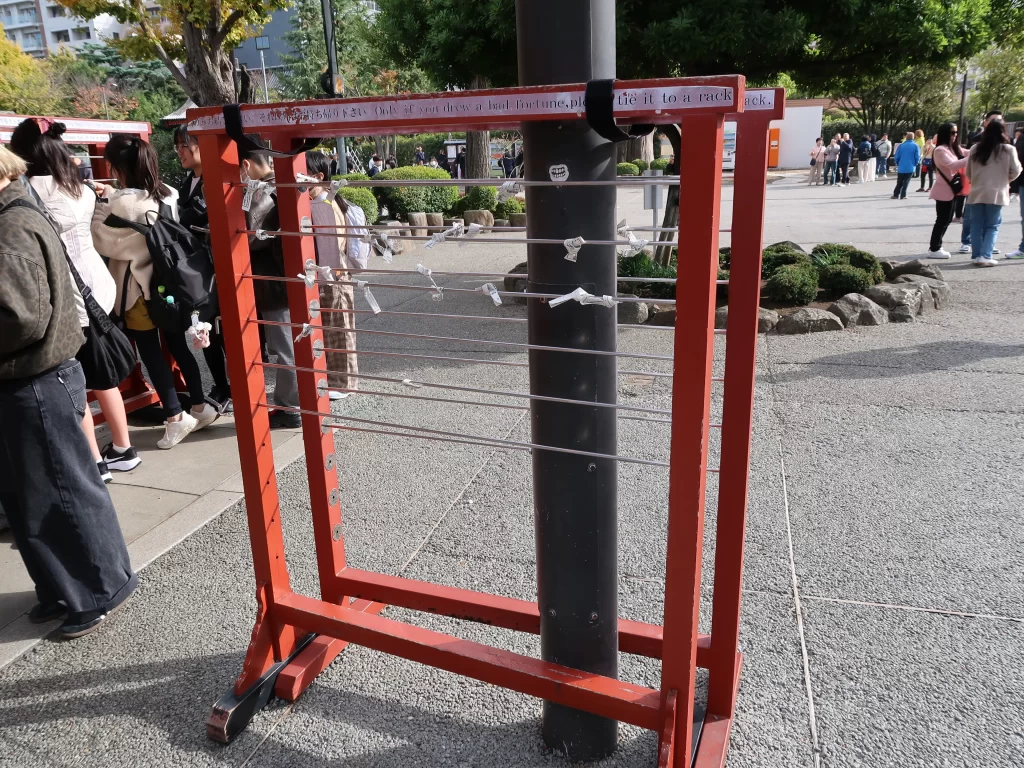
If you get a fortune you don’t like, you can tie the slip to a special rack or tree within the shrine or temple grounds. This symbolically “leaves the bad luck behind” and encourages better fortune.
If you receive a good fortune, you may take the paper home as a lucky charm.
A Cultural Experience
Drawing an omikuji is a simple and enjoyable way to experience Japanese spirituality. It blends faith, tradition, and a little bit of luck—making it a memorable part of any visit to a Japanese shrine or temple.
If you’re interested in Japanese fortune-telling traditions, you might also enjoy learning about the Japanese zodiac (eto), which is based on a 12-year cycle of animals and is often associated with personality traits and luck.
FAQ About Omikuji
Is it bad luck to get Daikyo?
No. Getting Daikyo (Great Curse) does not mean something bad will definitely happen. In Japanese belief, a bad fortune is simply a warning to be careful and make better choices. Many people see it as helpful guidance rather than bad luck.
Can you draw omikuji more than once?
Yes. There is no strict rule limiting how many times you can draw omikuji. However, many people draw only once per visit so they can reflect on the message sincerely. Drawing again immediately is sometimes discouraged because it may be seen as testing fate.
Should you keep or tie your fortune?
Both are correct.
- Keep it → if the fortune is good, people often carry it in their wallet or bag for luck.
- Tie it → if the fortune is bad, people tie it to a rack or tree at the shrine or temple to leave the bad luck behind.
There is no wrong choice — it depends on personal preference and local custom.
Do all shrines have the same rankings?
No. The ranking order of fortunes can differ depending on the shrine or temple. While many places use a standard system, some locations include unique ranks or omit certain ones. That’s why your result may look different from charts you see online.
Can tourists draw omikuji?
Yes. Omikuji are open to everyone, including international visitors. Many popular shrines provide English or multilingual versions, and instructions are usually simple:
- Insert a coin (usually ¥100–¥200)
- Shake a box or draw a stick
- Receive your fortune slip
No religious membership or special knowledge is required.
If you’re interested in another traditional way to make wishes at shrines, you may also want to learn about Ema wooden prayer plaques.
After drawing your omikuji, try collecting a goshuin — a traditional Japanese stamp that becomes a meaningful souvenir of your visit.

No comments yet.