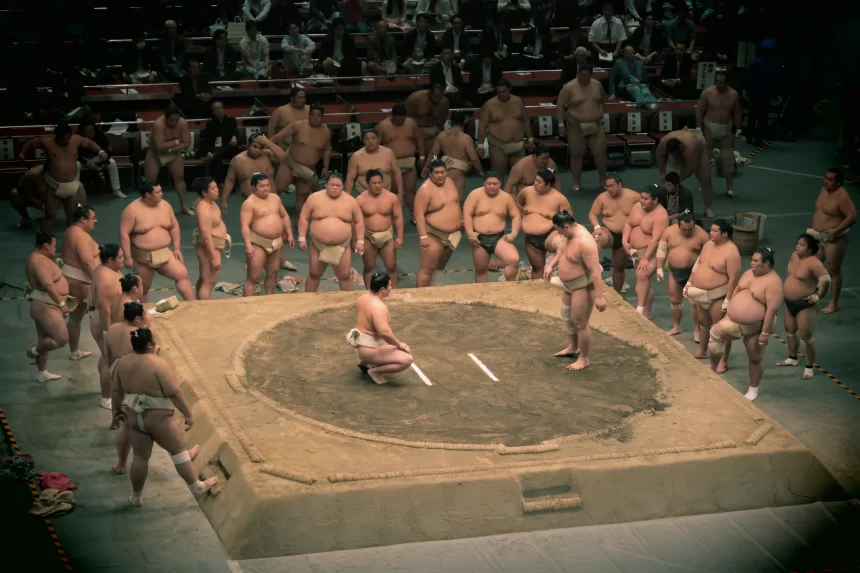
Sumo, Japan’s national sport, is far more than a wrestling match. It is a living tradition that combines athletic power, ritual, and spirituality, dating back over 1,500 years. Rooted in Shinto, Japan’s indigenous religion, sumo was originally performed as a sacred ceremony to entertain the gods and pray for a good harvest. Today, while it is a professional sport, its rituals and atmosphere still carry the essence of ancient Japan.
Origins and History
The origins of sumo can be traced to Japanese mythology, where gods tested their strength in contests that determined the fate of the nation. During the Nara period (8th century), sumo was performed at the Imperial Court as a ceremonial event. In the Edo period (17th–19th century), it evolved into a form of public entertainment. The system of ranking wrestlers, building clay rings called dohyō, and appointing referees known as gyōji all began in this era.
By the 18th century, sumo had become deeply integrated into Japanese society, admired not just as sport but as a cultural performance reflecting the nation’s values—discipline, respect, and honor.
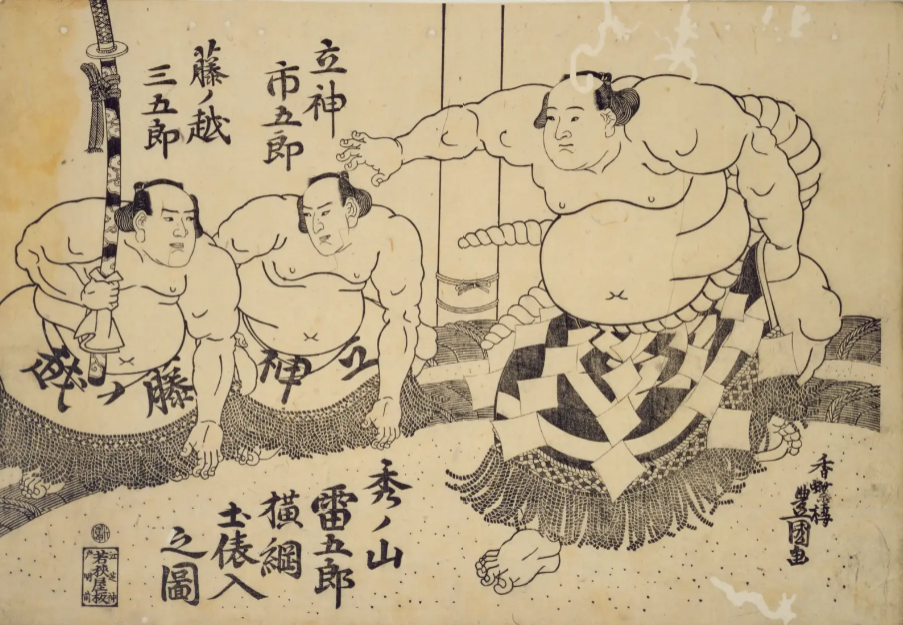
National Diet Library Digital Collection
Modern Sumo Tournaments
Today, professional sumo is organized by the Japan Sumo Association, which holds six major tournaments, known as honbasho, every year. They take place in Tokyo (January, May, September), Osaka (March), Nagoya (July), and Fukuoka (November). Each tournament lasts for 15 days, and wrestlers—called rikishi—compete once per day. Their win-loss record determines their ranking, called banzuke.
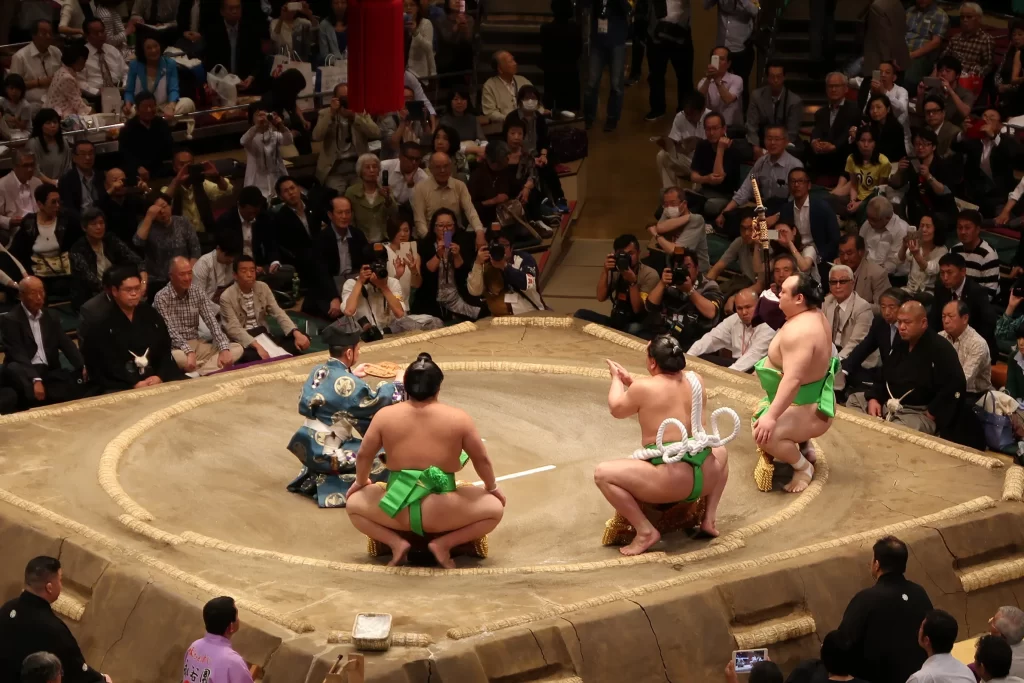
The highest rank in sumo is Yokozuna, the grand champion. A Yokozuna is not only expected to be the strongest but must also demonstrate dignity, humility, and perfect discipline. Once promoted, a Yokozuna can never be demoted; instead, he retires when he can no longer uphold his high standard of performance. The Yokozuna ring-entering ceremony (dohyō-iri), performed in a majestic white rope belt, is one of the most sacred moments in the sport.
The Dohyō and Rituals
Sumo bouts take place in a dohyō, a raised clay ring about 4.55 meters in diameter. The ring is considered a sacred space. Before each match, wrestlers perform elaborate rituals—clapping their hands to attract the gods’ attention, stomping their feet (shiko) to drive away evil spirits, and sprinkling purifying salt to cleanse the ring.
A match begins when both wrestlers crouch and place their fists on the ground. The moment both are ready, they explode into motion. The rules are simple: the first to touch the ground with anything other than the soles of their feet, or to step outside the ring, loses. Most matches last only a few seconds, but they contain explosive power, skill, and strategy.
Life of a Sumo Wrestler
Sumo wrestlers live in sumo stables (heya), where they train, eat, and sleep together under strict discipline. Their daily routine begins early in the morning with hours of practice. Their famous diet, chanko nabe, is a hearty hot pot filled with meat, fish, and vegetables—essential fuel for building the wrestlers’ large physiques.
Outside the ring, wrestlers are expected to maintain a traditional appearance. They wear kimono in public, keep their hair tied in the distinctive chonmage topknot, and follow strict rules of behavior. Their lifestyle reflects Japanese values of respect, humility, and endurance.
Watching a Sumo Tournament
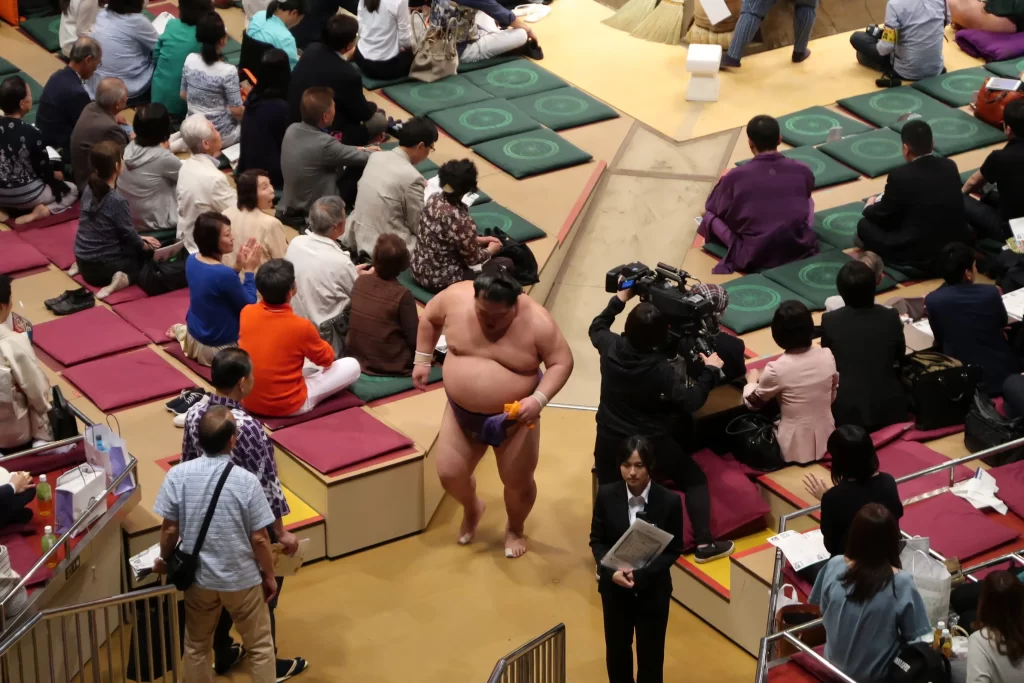
Attending a sumo tournament is one of the most unique cultural experiences for visitors to Japan. The most famous venue is the Ryogoku Kokugikan in Tokyo, known as the “home of sumo.” Inside the arena, fans can enjoy matches throughout the day, from lower-ranked wrestlers in the morning to the top division in the afternoon. The atmosphere is a fascinating blend of solemn ritual and lively excitement.
Between matches, traditional drumming echoes through the hall, referees chant in formal Japanese, and the crowd cheers for their favorite wrestlers. Spectators can also enjoy bento lunches or chanko nabe while watching. The venue houses a Sumo Museum, displaying historical artifacts, ceremonial aprons, and photographs of past champions.
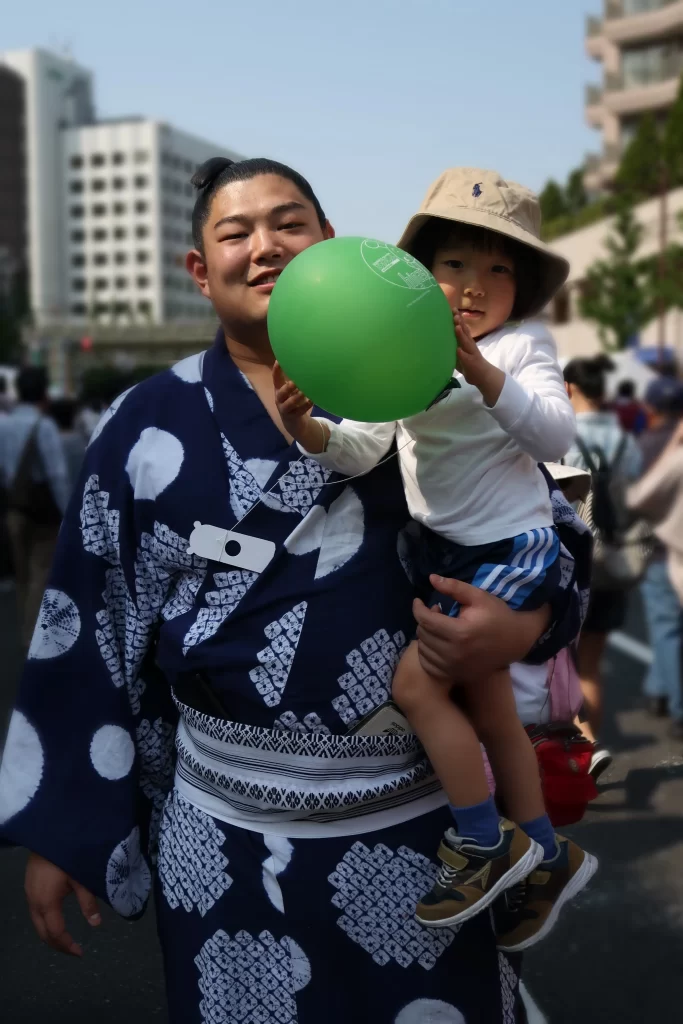
On April 13, 2026, you can witness a rare cultural event—Dedication Sumo (Hōnō Sumo), a traditional offering ceremony—held at 靖国神社. Featuring rituals, matches, and appearances by top-ranked wrestlers, this event offers a unique glimpse into Japan’s deep connection between sumo and Shinto traditions. Admission is free, but entry may be limited due to capacity.
International Influence
In recent decades, many foreign wrestlers have become stars in the world of sumo. Champions from Mongolia and Ukrainians have earned high ranks, showing that the spirit of sumo transcends nationality. These athletes embrace Japan’s customs and discipline, earning deep respect from fans and fellow wrestlers alike.
More Than a Sport
Sumo is not only a competition of strength—it is a reflection of Japan’s heart. Every gesture, from the salt-throwing to the bow at the end of a match, represents respect, purity, and harmony. Watching sumo is like witnessing a piece of living history, where ancient rituals continue to thrive in the modern age.
For travelers, a visit to a sumo tournament offers a rare opportunity to experience Japan’s national spirit firsthand. The combination of ritual, athleticism, and human drama makes it unforgettable. When two wrestlers clash in the sacred ring, you are not just watching a sport—you are watching the spirit of Japan itself.
Want to learn more about sumo culture? Visit the Sumo Museum in Ryogoku, where you can explore the history, rituals, and traditions of Japan’s national sport.


No comments yet.