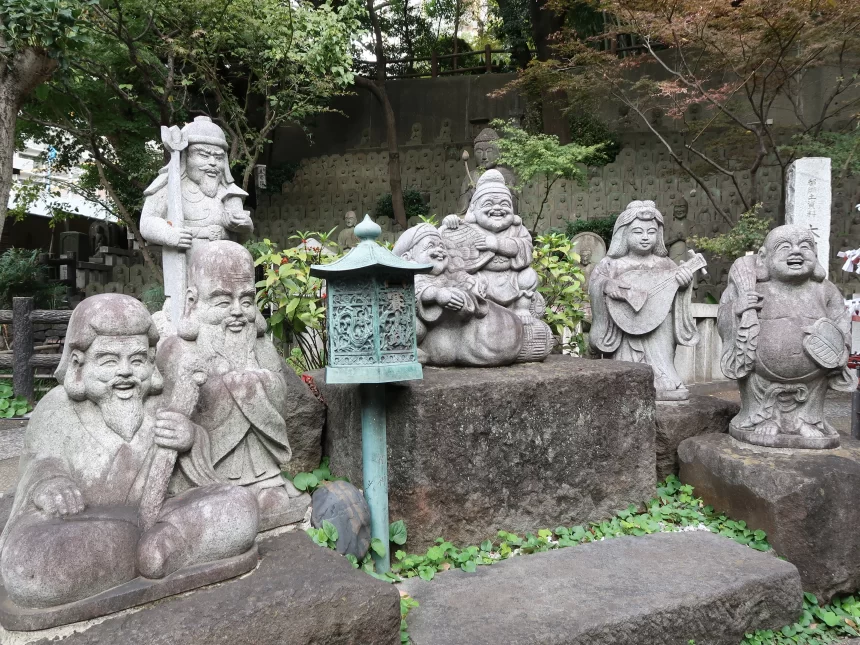
In Japan, good fortune is often symbolized by the Seven Lucky Gods, known as Shichifukujin (literally “Seven Gods of Good Fortune”). These deities are beloved figures in Japanese folklore and religion, representing happiness, prosperity, wisdom, and long life. Their origins come from a blend of Buddhism, Shinto, Taoism, and Hinduism, reflecting Japan’s long tradition of combining ideas from different cultures into something unique and harmonious.
Each of the Seven Gods has a distinct personality, appearance, and blessing to offer. Together, they are thought to bring balance and happiness to people’s lives, much like seven colors make a rainbow.
Let’s meet these seven cheerful deities one by one.
Ebisu (恵比須) – The God of Honest Work and Prosperity
Ebisu is the only one of the seven who originated in Japan. He is the patron of fishermen, farmers, and merchants, and represents good fortune through hard work. You can recognize him by his fishing rod and the red sea bream he carries — symbols of success and abundance. Ebisu’s smiling face reminds people that happiness often comes from steady effort and gratitude.
Daikokuten (大黒天) – The God of Wealth and Agriculture
Daikokuten, often shortened to “Daikoku,” came from Hindu and Buddhist traditions. He is usually shown standing on rice bales, holding a mallet that grants wishes and a bag full of treasures. He is associated with food, harvest, and household prosperity. Many small businesses and restaurants display his statue as a charm for good luck and financial success.
Bishamonten (毘沙門天) – The God of Warriors and Protection
Bishamonten is a guardian deity originally from India, known as Vaisravana in Buddhism. Wearing armor and holding a spear, he represents courage, defense, and victory. In modern times, he is also seen as a protector of justice and success in business. People pray to him for strength in overcoming challenges.
Benzaiten (弁才天 / 弁財天) – The Goddess of Art and Music
The only female member of the group, Benzaiten is the goddess of beauty, art, knowledge, and eloquence. She is adapted from the Hindu goddess Sarasvati. Benzaiten is often depicted playing a biwa, a Japanese lute, symbolizing the harmony of sound and the richness of creativity. Artists, musicians, and students often visit her shrines to seek inspiration and talent.
Fukurokuju (福禄寿) – The God of Longevity and Wisdom
Fukurokuju’s name combines three Chinese characters meaning “happiness,” “wealth,” and “long life.” He is recognized by his extremely long forehead and a staff with a scroll containing the secrets of life. People pray to him for a healthy, wise, and fulfilling life. Sometimes he is accompanied by a crane or a turtle, traditional symbols of long life in Japan.
Jurōjin (寿老人) – The God of Long Life
Similar to Fukurokuju, Jurōjin is also a deity of longevity. He carries a staff and a scroll, and is often accompanied by a deer. He represents not only a long life, but also a calm spirit and the wisdom that comes with age. Together, Fukurokuju and Jurōjin are said to bless families with peace and good health through the generations.
Hotei (布袋) – The God of Happiness and Contentment
Hotei is perhaps the most recognizable of them all. Known as the “Laughing Buddha,” he is based on a real Zen monk who lived in China over a thousand years ago. With his large belly and joyful smile, Hotei symbolizes generosity and satisfaction. He carries a big cloth bag full of gifts, representing the idea that true happiness comes from sharing with others.
The Tradition of the Shichifukujin Meguri
One of the most charming Japanese customs related to the Seven Lucky Gods is the Shichifukujin Meguri, or “Seven Gods Pilgrimage.” During the New Year season, people visit seven temples or shrines in their local area, each dedicated to one of the gods. Pilgrims collect stamps or small figurines at each site, completing the set as a symbol of receiving all seven blessings for the year ahead.
This pilgrimage is not only a religious activity but also a joyful walk through traditional neighborhoods, where people enjoy food stalls, local crafts, and scenic views. Famous routes exist in places like Asakusa (Tokyo), Kamakura, and Kyoto, where visitors can experience both spiritual and cultural charm.
Symbolism and Cultural Meaning
The Seven Lucky Gods together represent the human wish for balance and happiness in every part of life — work, family, health, learning, and creativity. They are often seen sailing on a treasure ship called Takarabune, which appears in New Year decorations. People place pictures of the Takarabune under their pillows on New Year’s Eve, hoping to have a lucky dream that night.
The Seven Lucky Gods are not distant or solemn deities; they are friendly and approachable, reflecting the Japanese way of finding joy in daily life. Their smiling faces remind us to appreciate small blessings, stay positive, and share kindness with others.
Conclusion
The story of the Shichifukujin is a beautiful example of Japan’s spiritual diversity and optimism. Blending ideas from across Asia, these seven deities have become symbols of happiness for everyone, regardless of religion or nationality. Whether seen in temples, statues, or traditional art, the Seven Lucky Gods continue to inspire people to live cheerfully, work honestly, and hope for good fortune in the future.


No comments yet.