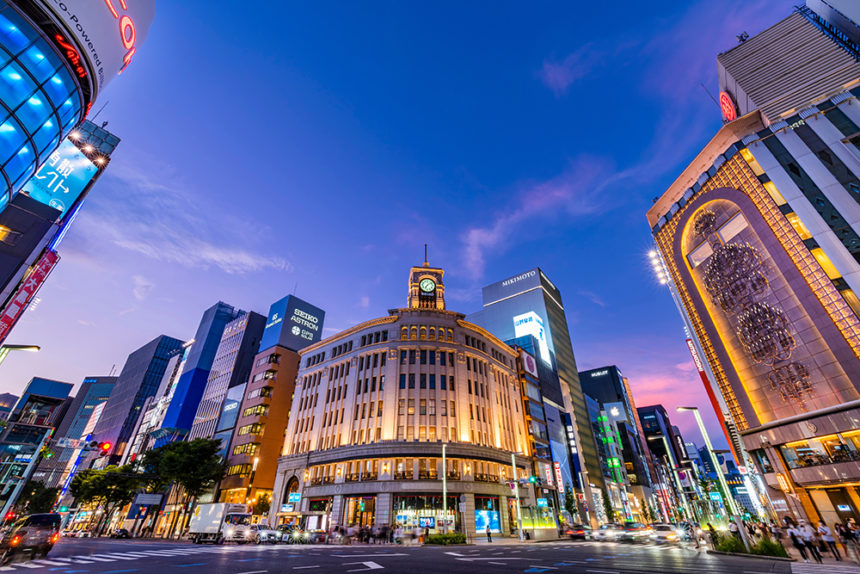
Ginza is one of Tokyo’s most famous and sophisticated districts, known worldwide for its luxury shopping, fine dining, and refined atmosphere. Located in the heart of the city, just a short walk from Tokyo Station, Ginza represents the perfect blend of Japan’s tradition and modernity. For more than a century, it has been the symbol of style, culture, and innovation in Tokyo.
The name “Ginza” means “silver mint,” as the area once housed a silver coin mint during the Edo period in the 17th century. Later, after a great fire in 1872, Ginza was redesigned with Western-style brick buildings and wide streets, making it Japan’s first modern shopping district. From that time onward, it became a place where the latest trends in fashion, art, and technology gathered — a reputation it continues to hold today.
Walking through Ginza is a visual delight. The main avenue, Chuo-dori, is lined with elegant department stores such as Mitsukoshi, Matsuya, and Wako — each with its own unique architecture and history. The famous Wako building, with its clock tower, has been a landmark since the 1930s and stands as a symbol of Ginza’s timeless charm. On weekends, the street becomes a pedestrian paradise, as cars are restricted and visitors stroll freely among cafés and boutiques.
Ginza is a true paradise for shoppers. Here you can find flagship stores of global luxury brands such as Chanel, Louis Vuitton, and Dior, alongside Japanese fashion houses like Issey Miyake and Shiseido. But Ginza is not only about high-end shopping; it also celebrates craftsmanship and tradition. Small specialty shops sell items like fine ceramics, handmade fans, and traditional Japanese sweets. This mix of old and new gives Ginza its distinctive cultural richness.
Food is another major attraction. Ginza has one of the highest concentrations of Michelin-starred restaurants in the world. From elegant sushi bars and tempura counters to stylish French and Italian restaurants, the district offers world-class dining experiences. At the same time, you can enjoy more casual pleasures such as coffee at long-established cafés like Café de L’Ambre, famous for its vintage brews, or Japanese desserts at long-standing wagashi shops.
Cultural experiences are also abundant. The Kabuki-za Theatre, located on the eastern side of Ginza, is the home of Japan’s traditional Kabuki drama. Even if you do not understand Japanese, watching a short Kabuki performance allows you to feel the beauty of Japanese stage art, colorful costumes, and music. Nearby art galleries and exhibition spaces showcase contemporary and traditional works, reflecting the area’s long association with art and design.
As night falls, Ginza transforms again. Neon lights and illuminated shop windows create a magical atmosphere, while rooftop bars and lounges offer stunning views of Tokyo’s skyline. Despite its luxurious image, Ginza remains calm, safe, and welcoming — a place where visitors can stroll leisurely and feel the refined rhythm of Tokyo life.
For many people, Ginza is more than just a shopping district. It represents Japan’s dedication to quality, aesthetics, and hospitality. Every detail — from the perfect window displays to the courteous bow of store clerks — reflects the Japanese spirit of omotenashi, or thoughtful service.
Whether you come to shop, dine, watch a Kabuki show, or simply enjoy the atmosphere, Ginza offers an experience that captures the essence of Tokyo: elegant, dynamic, and deeply connected to both tradition and the future. Standing at the intersection of Chuo-dori, surrounded by lights and history, you can truly feel why Ginza has been — and remains — the shining heart of Tokyo.



No comments yet.