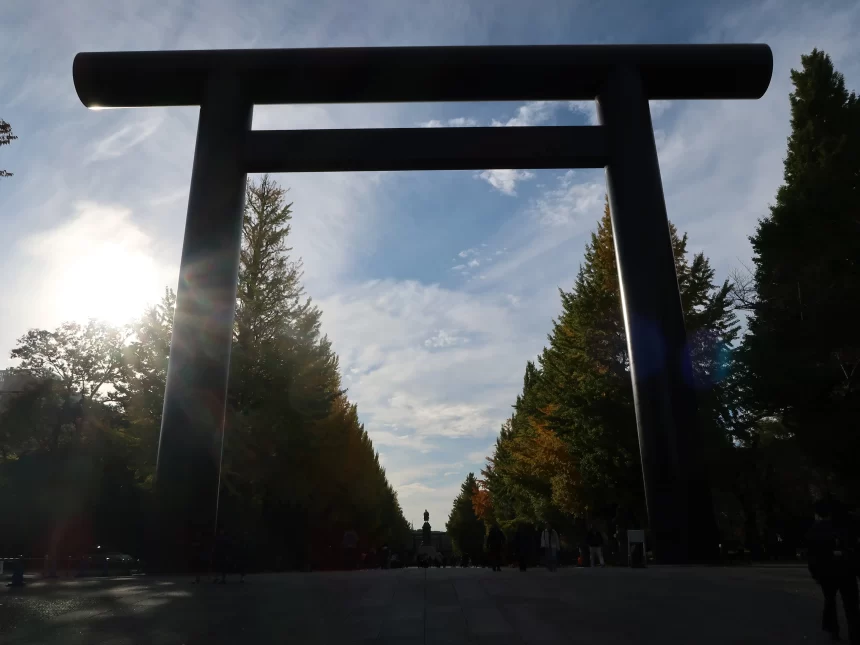
What Is Yasukuni Shrine?
First and foremost, I wish to convey to travelers visiting Japan for the first time that Yasukuni Shrine is by no means a place symbolizing Japanese approval of past wars. Yasukuni Shrine enshrines the spirits of those who died in war, including individuals historically accused of waging aggressive wars and who were tried at the postwar Tokyo Trials. The fact remains that much blood has been shed in the past, not only within Japan but across nations worldwide. I believe this resulted from various speculations within and between countries intricately overlapping, ultimately leading to tragic outcomes. Furthermore, war may have been considered commonplace at that time. Today, it is common sense to engage in diplomacy and dialogue between nations to prevent war as much as possible, yet war still persists in the world. Now, let me ask again. What do you think it leads to when people who can freely travel to various countries learn about other nations’ cultures and histories? We are grateful that visitors to Japan take an interest in our culture and history. We hope they experience this culture and history, understand what the wars of the past were like, and consider the significance of Yasukuni Shrine.
What matters most is that the world moving forward is peaceful, that everyone can learn about other cultures, and that all people worldwide can live peaceful and secure lives.
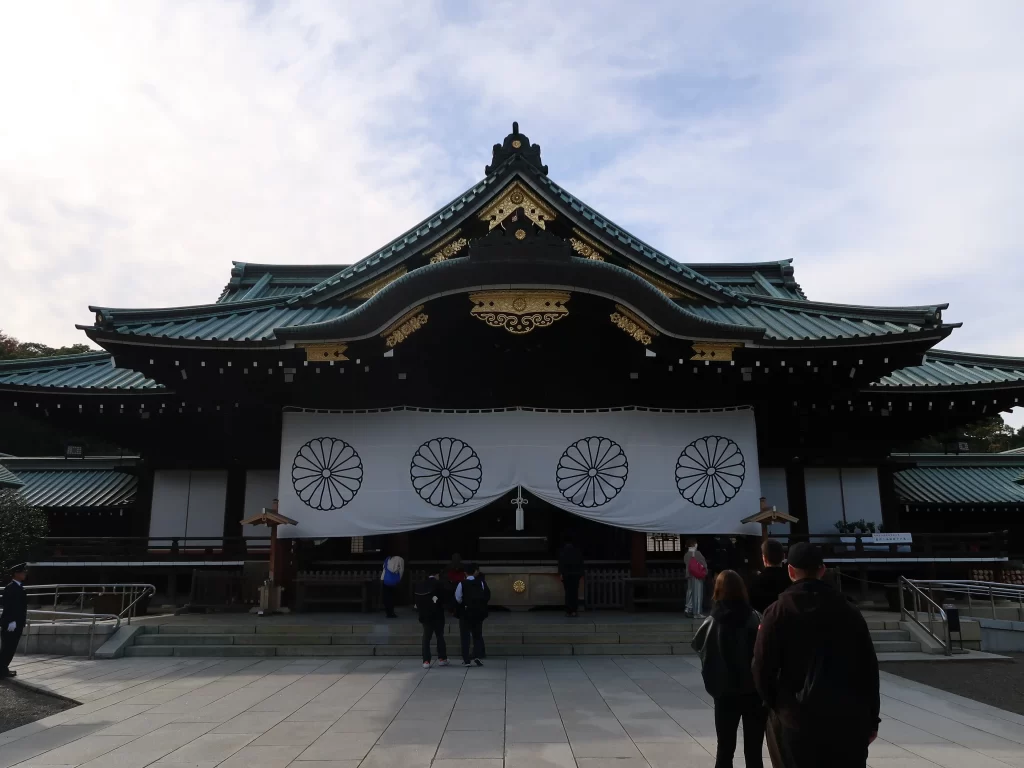
The Chrysanthemum Crest – Symbol of the Japanese Imperial Family
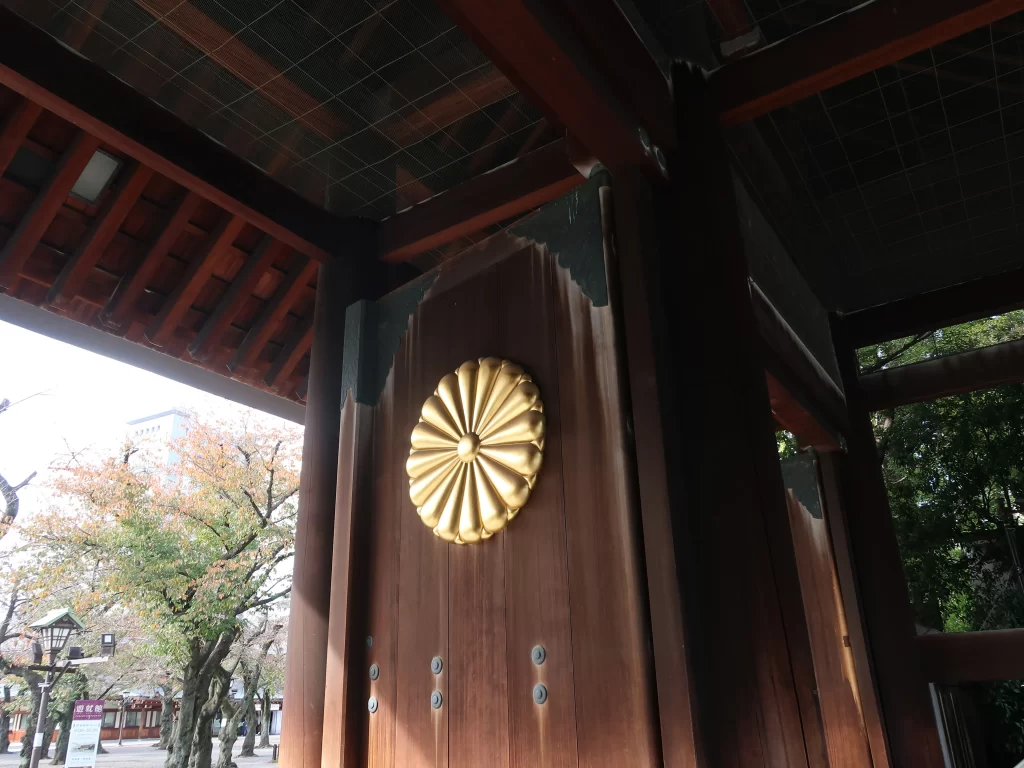
The Chrysanthemum Crest, known in Japanese as Kiku no Gomon, is one of the most important and recognizable symbols of Japan. It represents the Japanese Imperial Family, particularly the Emperor, and has been a mark of dignity, tradition, and authority for centuries.
The crest features a stylized chrysanthemum flower with 16 petals in the front and another 16 petals behind them, creating a sense of layered beauty and harmony. This design symbolizes the elegance and perfection of the chrysanthemum, which is a flower deeply loved in Japanese culture.
The origin of the Chrysanthemum Crest dates back to the Heian period (794–1185), when noble families used floral motifs as emblems. The chrysanthemum became associated with the Emperor during the Kamakura period (1185–1333), and it was later adopted as the official Imperial Seal of Japan.
Today, the Chrysanthemum Crest can be seen on the cover of Japanese passports, Imperial Family buildings, official documents, and the gates of the Imperial Palace in Tokyo. It is also used on decorations and medals awarded by the Emperor, such as the Order of the Chrysanthemum, which is the highest honor in Japan.
The chrysanthemum itself is also the national flower of Japan and symbolizes longevity and rejuvenation. Every autumn, Japan celebrates the Chrysanthemum Festival (Kiku Matsuri), where people display beautiful chrysanthemums in temples and gardens.
The Chrysanthemum Crest thus represents not only the Imperial Family but also the Japanese spirit — graceful, enduring, and ever-blooming.
Experiencing the Yūshūkan Museum at Yasukuni Shrine
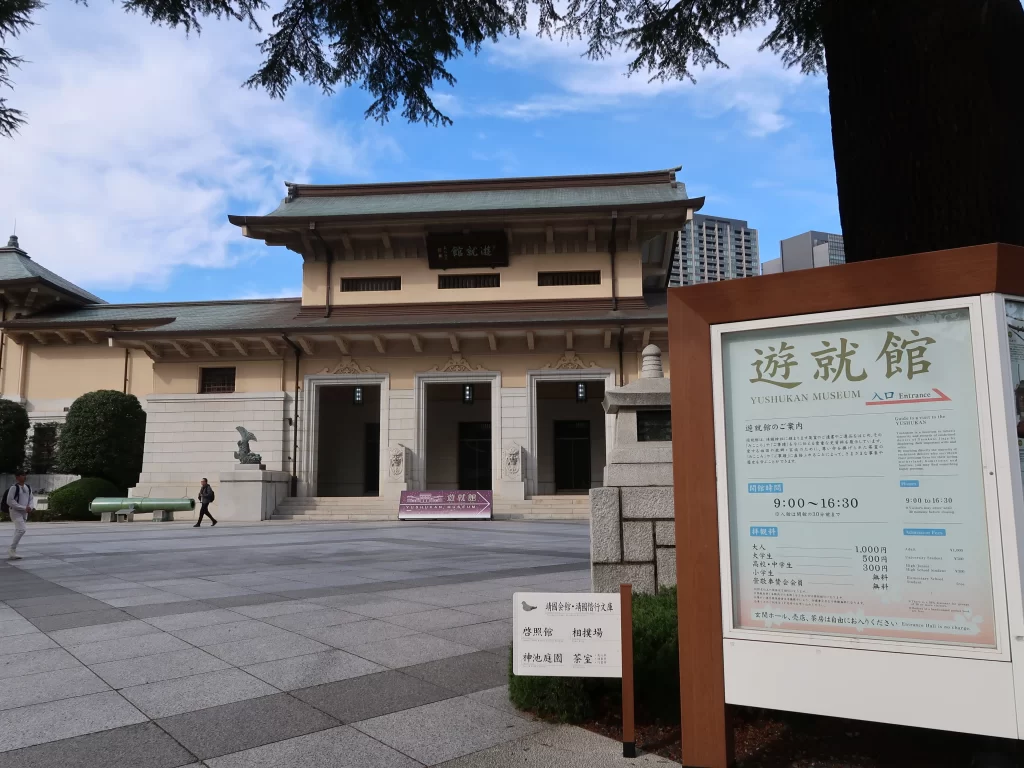
Located within the grounds of Yasukuni Shrine in central Tokyo, the Yūshūkan Museum is one of Japan’s oldest and most significant war museums. Established in 1882, it was created to honor the spirits of those who lost their lives in service to Japan and to present the nation’s modern history from the Meiji era onward. Today, it serves as both a memorial and an educational museum, offering visitors a deep and often emotional insight into Japan’s military past and its journey toward peace.
When you step inside the Yūshūkan, you immediately enter a quiet and reflective atmosphere. The museum’s architecture, built in a modern yet solemn style, reflects the sacred setting of Yasukuni Shrine. Visitors can explore a wide variety of exhibits that chronicle more than 150 years of Japanese history, from the Meiji Restoration in the late 19th century to World War II and the postwar era.
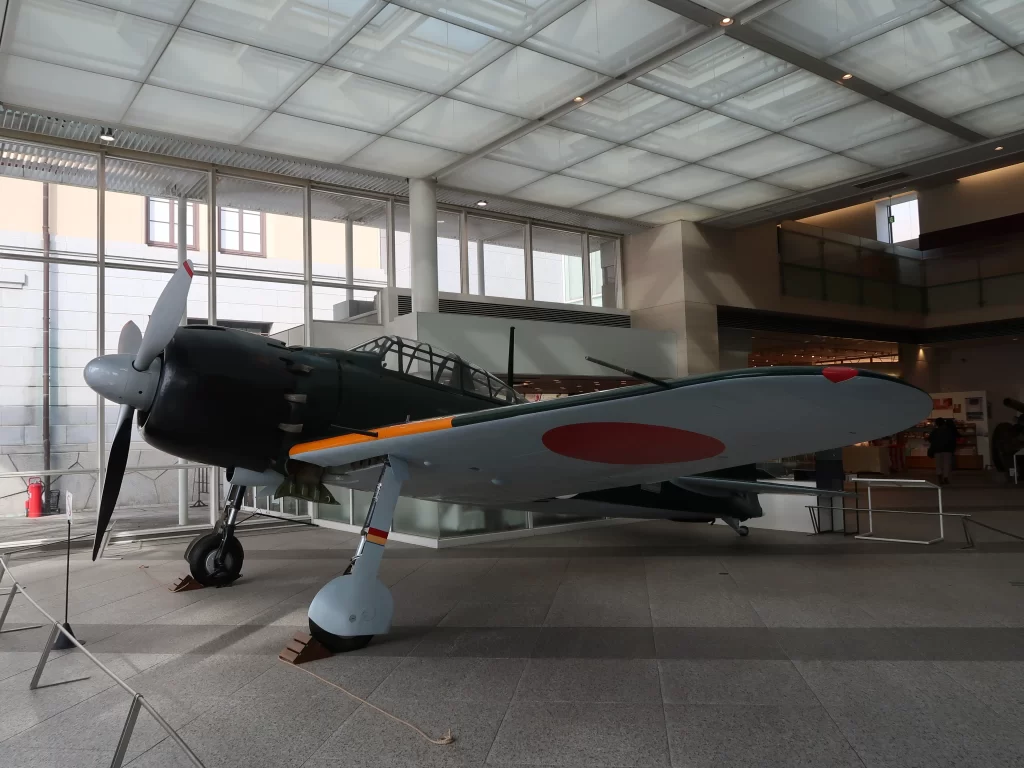
The exhibitions feature thousands of historical artifacts, including weapons, uniforms, letters, and personal belongings of soldiers. These items bring history to life, showing the human side of conflict and sacrifice. One of the highlights of the museum is the display of large military equipment, such as tanks, artillery, and especially the famous Zero Fighter aircraft, a symbol of Japan’s wartime technology. Seeing the actual aircraft suspended from the ceiling leaves a strong impression on many visitors.
In addition to the physical exhibits, the museum offers multimedia presentations, dioramas, and documentary films that explain historical events in context. Many of these materials have English explanations, and audio guides are available in several languages, allowing international visitors to understand Japan’s perspective on its history.

The Yūshūkan does not focus solely on war. It also presents Japan’s modernization, the experiences of civilians, and the nation’s postwar recovery. Through its displays, visitors can reflect on the complex relationship between conflict, national identity, and peace. Whether you are a history enthusiast or simply curious about Japanese culture, the museum encourages thoughtful reflection rather than judgment.
After exploring the exhibits, many visitors take time to walk around the peaceful grounds of Yasukuni Shrine. The shrine itself was founded in 1869 by Emperor Meiji to enshrine those who died for Japan. With its grand torii gates, traditional architecture, and tranquil pond, it provides a serene contrast to the intense emotions often felt inside the museum.
There is also a museum shop and café within the Yūshūkan, where visitors can browse books, souvenirs, and educational materials related to Japanese history. From the café’s windows, you can enjoy views of the shrine garden, making it a quiet place to rest and reflect.
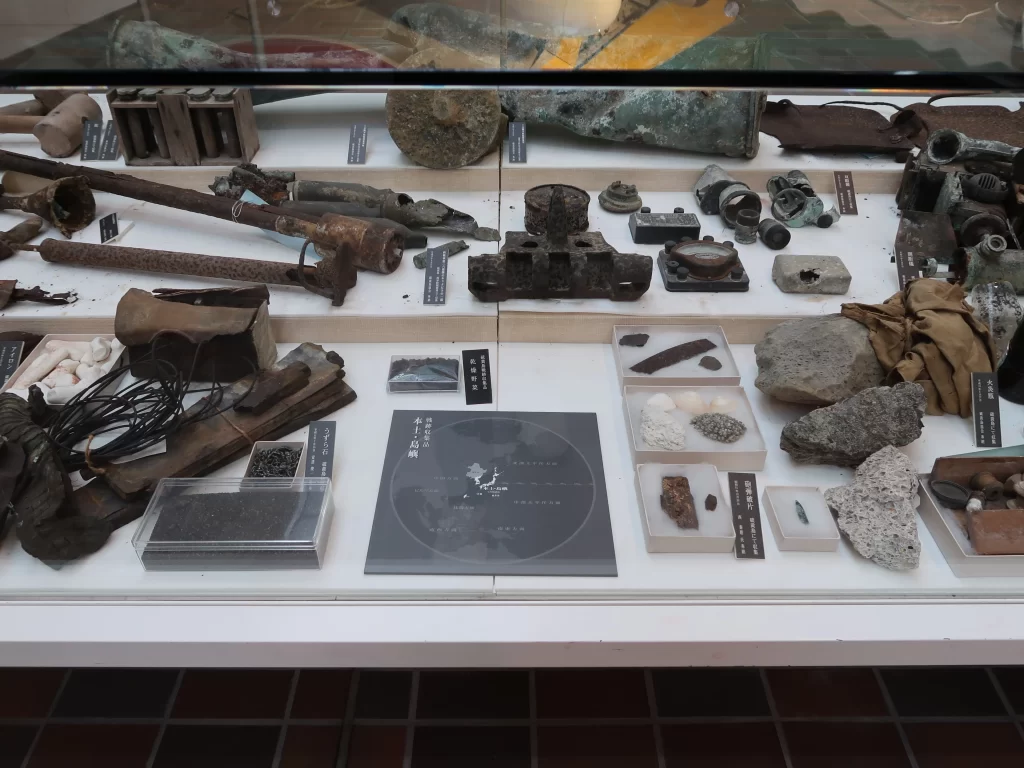
A visit to the Yūshūkan Museum is more than just a historical experience. It offers a chance to learn how Japan remembers its past, honors its fallen, and aspires for peace in the future. While some exhibits may evoke complex feelings, the museum provides a unique opportunity to understand Japan’s modern identity through its history and remembrance.
For those interested in history, culture, or simply a deeper understanding of Japan, the Yūshūkan Museum at Yasukuni Shrine is a place that combines education, reflection, and cultural discovery in a profoundly memorable way.
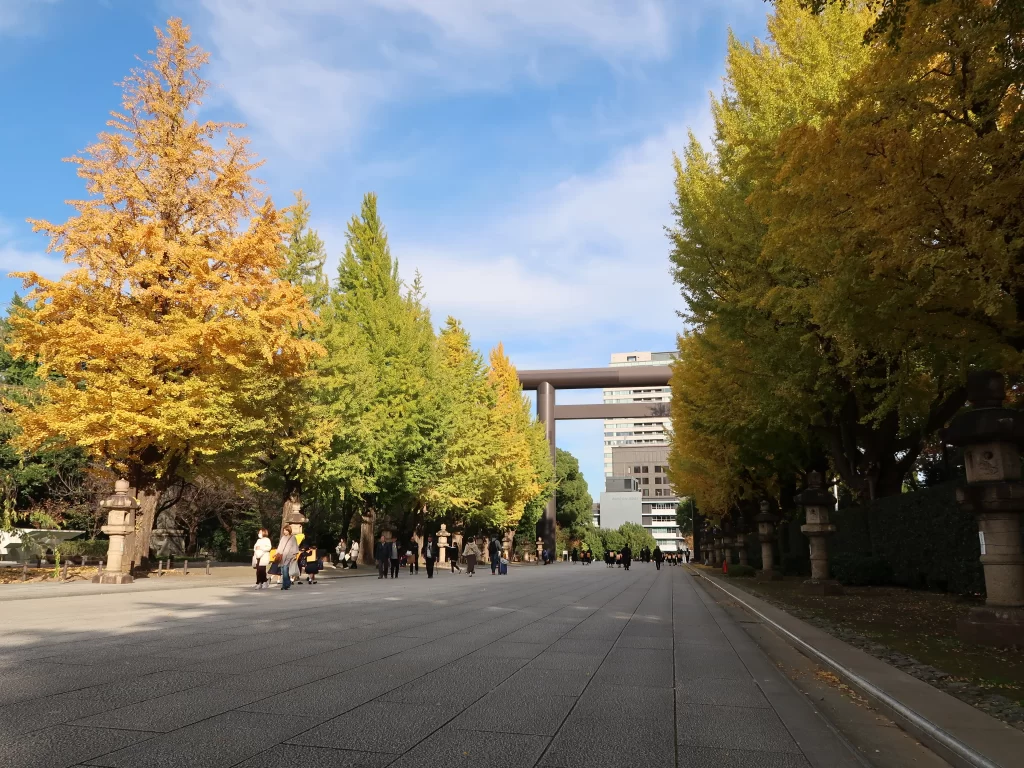
We pray for world peace from Yasukuni Shrine.
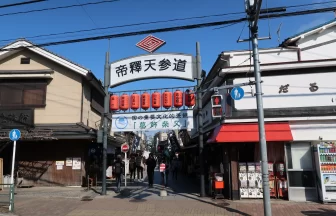
After visiting Yasukuni Shrine, consider taking a short walk to Kagurazaka, a charming area known for its traditional streets and great food.
How to get this place
Address:
3-1-1 Kudan-kita, Chiyoda-ku, Tokyo
Access:
From Tokyo Station(Ootemachi):

Take the Tozai Line to Kudanshita Station. The ride takes about 4 minutes. From there, it’s another 12 minutes on foot.
Information(Yushukan)
Opening Hours
9:00 AM to 4:30 PM
*Last admission is 30 minutes before closing.
*Opening hours may change due to festivals and events such as New Year’s and the Mitama Festival. Details will be posted on the Latest News page.
Closed Days
December 25 (Thu) to 30 (Tue), 2025
Admission Fees
Adults: ¥1,000
College Students: ¥500 (including junior college and vocational school students)
Middle/High School Students: ¥300
Elementary School Students: Free
FAQ — Yasukuni Shrine Tokyo
What is Yasukuni Shrine?
Yasukuni Shrine is a Shinto shrine in Tokyo that commemorates the spirits of people who died in service to Japan. It was founded in 1869 and serves as both a religious site and a historical memorial.
Why is Yasukuni Shrine controversial?
The shrine is sometimes considered controversial because it enshrines individuals connected to Japan’s wartime past, including figures associated with World War II. This has made it a subject of historical and political discussion, especially internationally.
Is Yasukuni Shrine worth visiting?
Yes. It is worth visiting for travelers interested in Japanese history, culture, and religion. The grounds are peaceful, architecturally impressive, and offer insight into how Japan commemorates its past.
How long should I spend there?
Most visitors spend about 1 to 2 hours exploring the shrine grounds and the adjacent museum. A short visit of 30–45 minutes is also possible if you only walk through the main area.
What should visitors know before going?
Visitors should know that it is a solemn memorial space, so respectful behavior is expected. Dress modestly, speak quietly, and follow shrine etiquette such as bowing and washing hands at the purification fountain.



No comments yet.