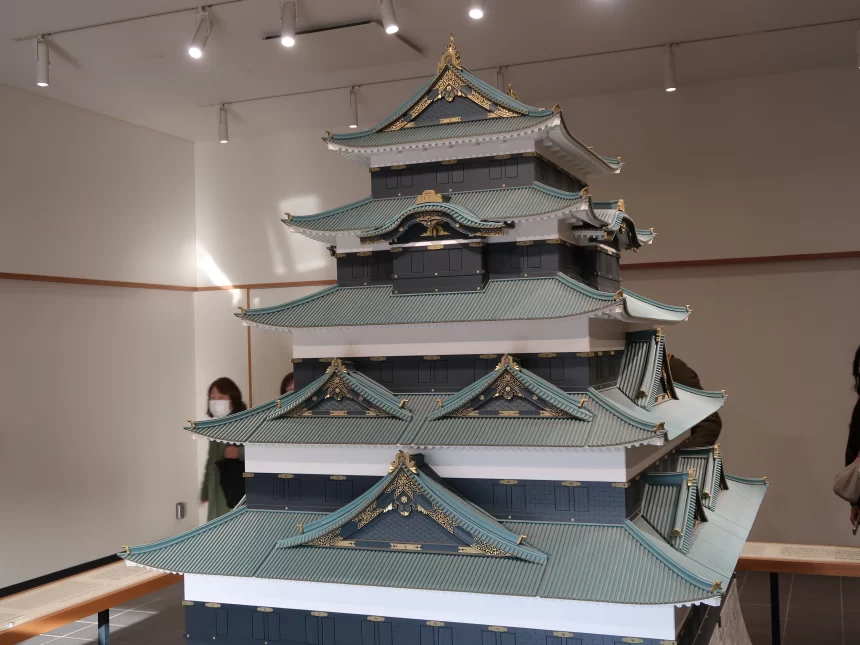
The East Gardens of the Imperial Palace, located in the very center of Tokyo, offer visitors a rare combination of natural beauty, deep history, and peaceful atmosphere. While the Imperial Palace itself is the residence of Japan’s Emperor and generally closed to the public, the East Gardens are open throughout the year and provide an excellent opportunity to experience the cultural and historical essence of Japan.
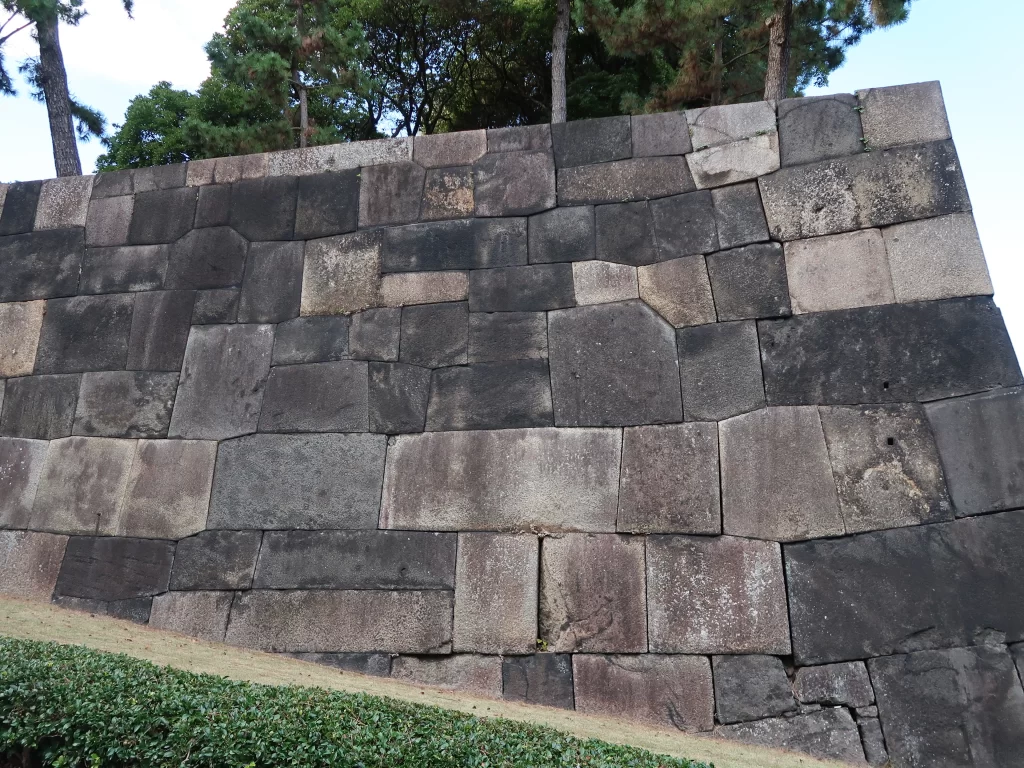
The gardens sit on the former grounds of Edo Castle, once the seat of the powerful Tokugawa shogunate that ruled Japan for more than 260 years until 1868. As you walk through the gardens, you are essentially exploring the remains of one of the most important political centers in Japanese history. Several original structures and stone walls survive, allowing visitors to imagine the grand scale of the former castle.
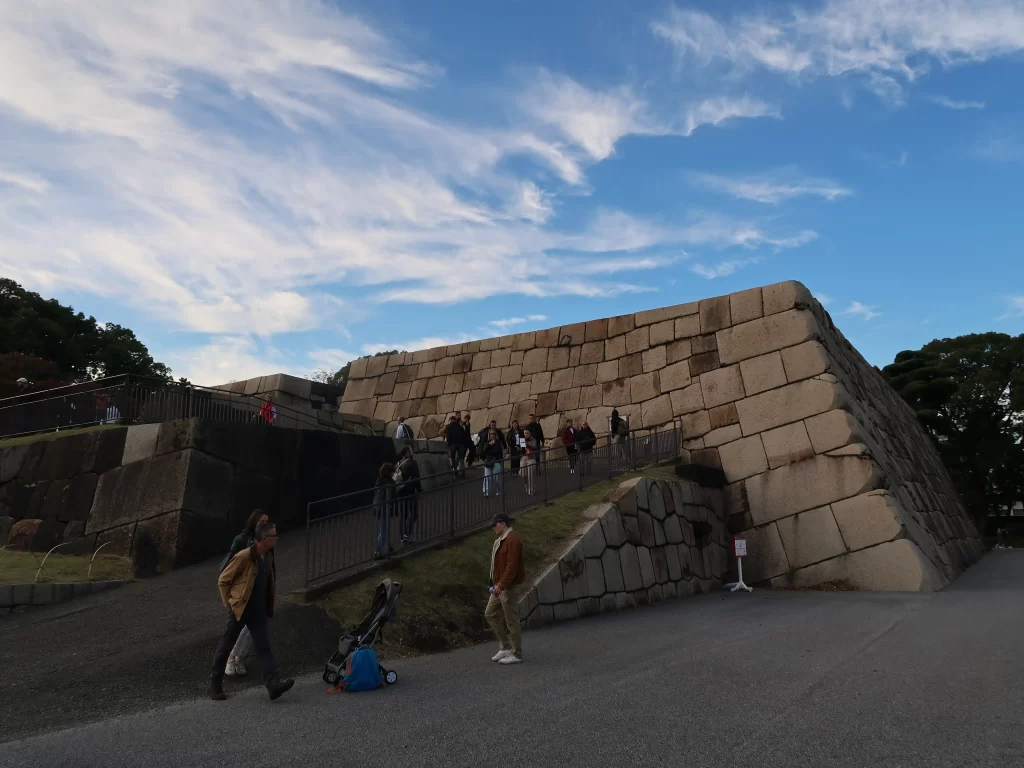
One of the most impressive areas is the Honmaru (the main enclosure), where the central keep of Edo Castle once stood. Although the five-story castle tower was destroyed by fire in the 17th century and never rebuilt, the massive stone foundations remain. Standing atop these foundations provides an excellent view of the surrounding landscape and a sense of the castle’s original power and scale.
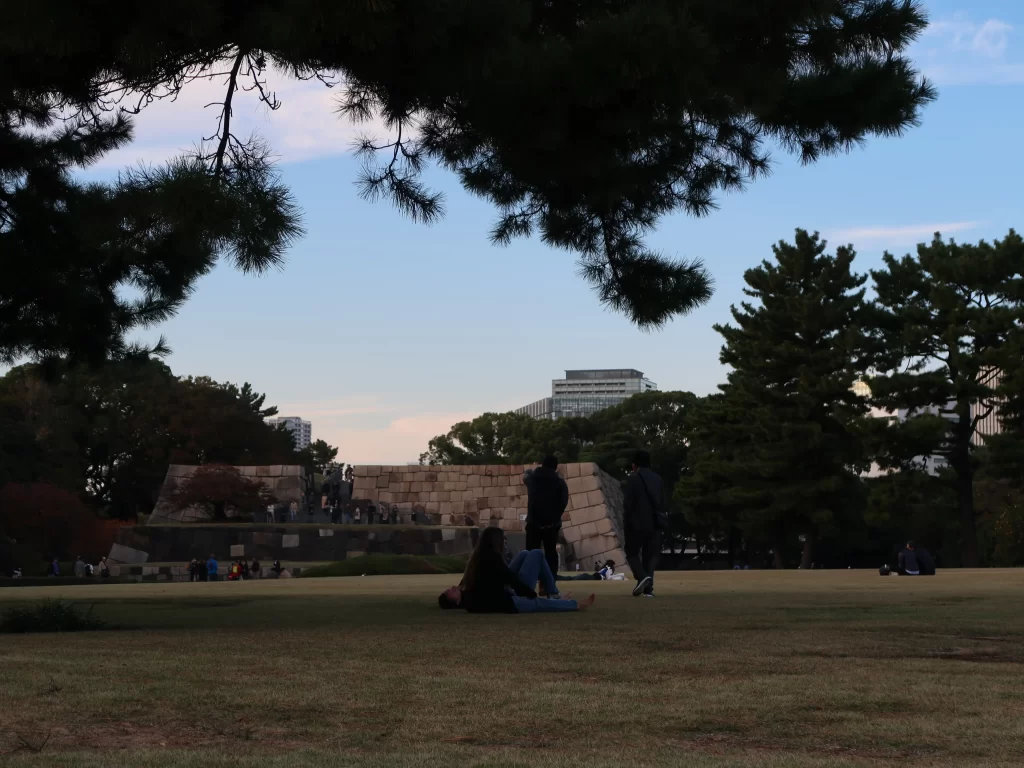
The Ninomaru Garden, located nearby, provides a striking contrast with its calm pond, manicured pine trees, seasonal flowers, and walking paths. This traditional Japanese garden was restored to reflect designs from the Edo period and offers a quiet space for reflection. In spring, the garden is especially beautiful when its plum blossoms and cherry blossoms begin to bloom.
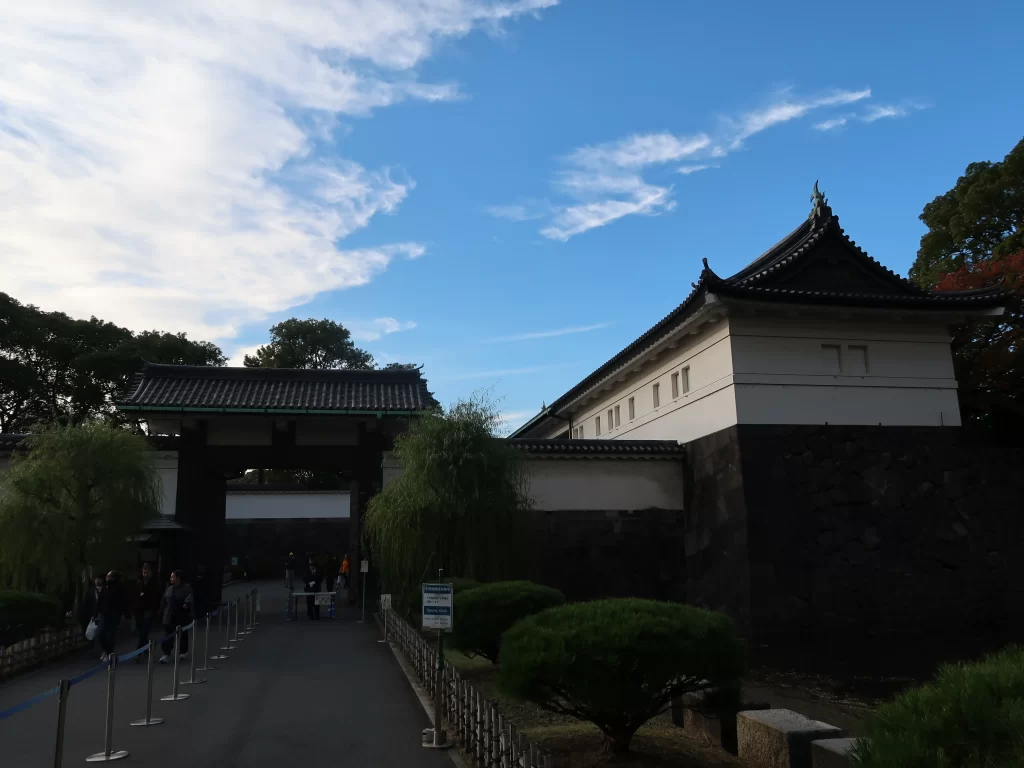
Another highlight is the Otemon Gate, one of the main entrances to the East Gardens. Originally part of Edo Castle’s defensive network, this gate demonstrates the careful architectural design used to protect the castle from intruders. The impressive stonework and strong wooden beams reveal the engineering skills of the period.
Throughout the gardens, visitors will find informative signs explaining the history of the structures, ruins, and natural areas. This makes the East Gardens an excellent place to learn about the evolution from feudal Edo Castle to the modern Imperial Palace that symbolizes today’s Japan.
In addition to history, the East Gardens are a refuge of nature within the busy city. Wide lawns, wooded areas, and flower beds offer a refreshing environment that changes beautifully with the seasons. Spring brings cherry blossoms, summer offers lush greenery, autumn introduces warm tones of red and gold, and winter presents a clean, quiet landscape.
The East Gardens are free to enter, making them accessible to all travelers. They are also conveniently located near major stations such as Tokyo Station and Otemachi Station, making them a perfect stop for visitors exploring the city for the first time.
Whether you are interested in Japanese history, traditional garden design, or simply looking for a quiet place to relax, the East Gardens of the Imperial Palace offer an unforgettable experience. It is a space where the past and present coexist, allowing visitors to step away from the noise of the city and appreciate the beauty and depth of Japan’s cultural heritage.
How to get this place
Address:
1-1 Chiyoda, Chiyoda City, Tokyo
Access:
From Tokyo Station:7 minutes on foot.
Information
Opening Hours
March 1 to April 14 9:00 AM to 5:00 PM (Last admission at 4:30 PM)
April 15 to the end of August 9:00 AM to 6:00 PM (Last admission at 5:30 PM)
September 1 to September 30 9:00 AM to 5:00 PM (Last admission at 4:30 PM)
October 1 to October 31 9:00 AM to 4:30 PM (Last admission at 4:00 PM)
November 1 to February 28/29 9:00 AM to 4:00 PM (Last admission at 3:30 PM)
Closed Days
Mondays and Fridays [However, the park will be open on national holidays other than the Emperor’s Birthday. If Monday is a holiday and the park is open, it will be closed on Tuesday (excluding holidays).]
December 28th to January 3rd of the following year




No comments yet.