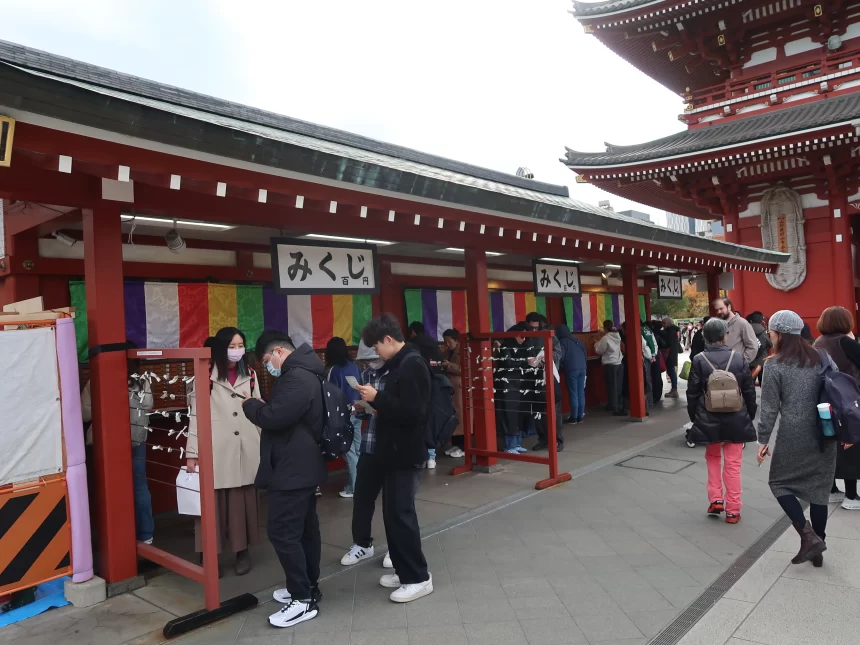
Omikuji are traditional Japanese fortune slips that you can find at many shrines and temples across Japan. They offer visitors a fun and meaningful way to learn what kind of luck may come their way. People usually draw omikuji when they pray for guidance, start a new year, or simply want to enjoy a cultural experience.
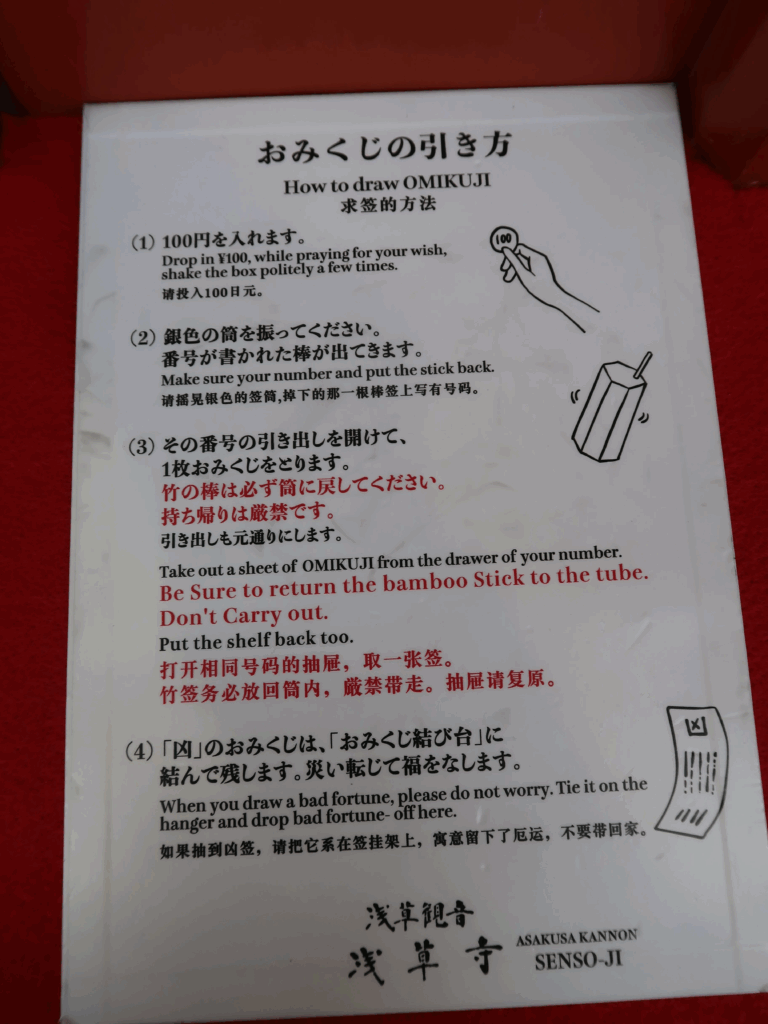
How It Works
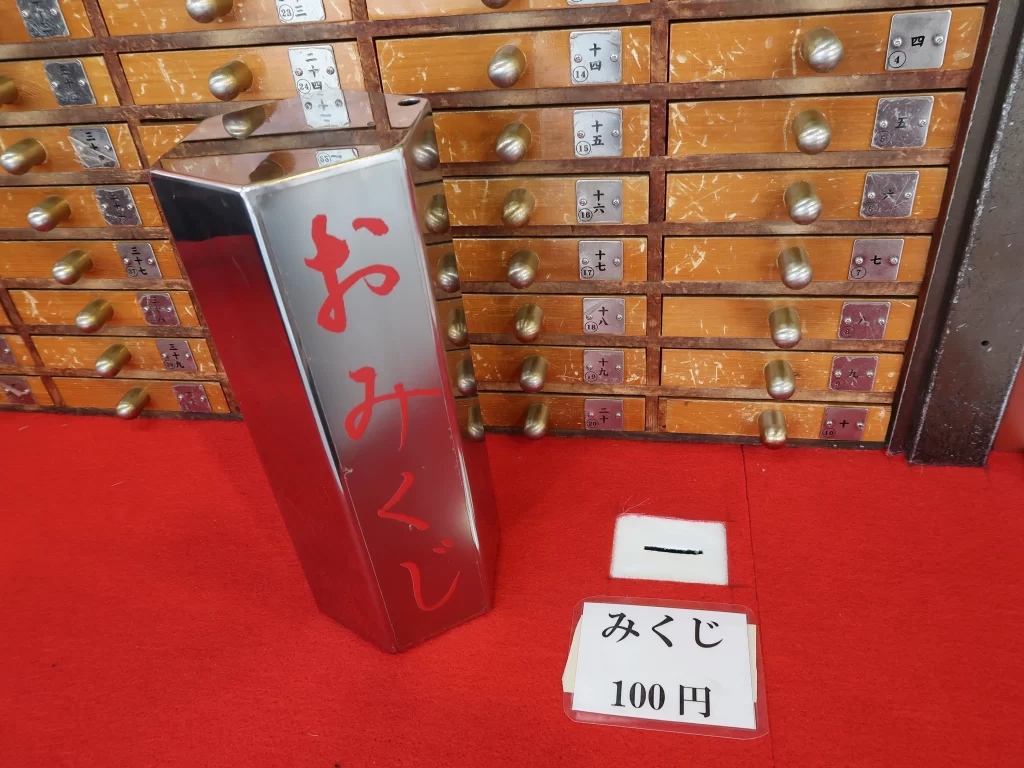
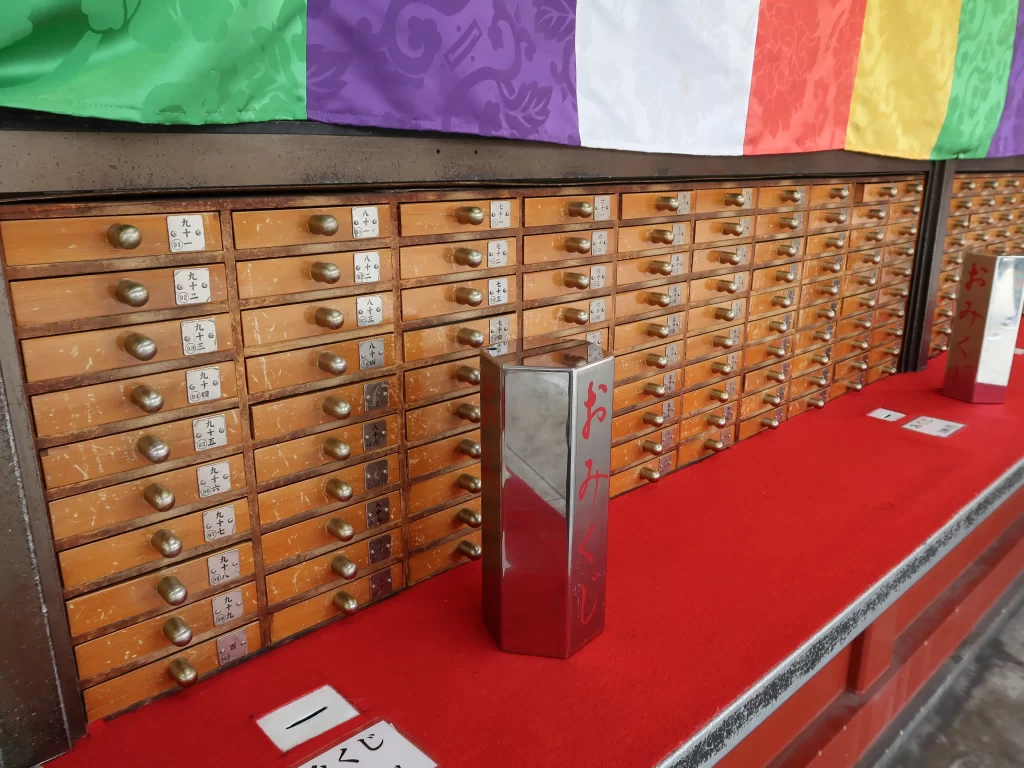
To receive an omikuji, you usually make a small offering and then draw a slip of paper from a box or shake a wooden container until a numbered stick comes out. Staff members will then give you the fortune slip that matches the number.
Types of Fortunes
The omikuji will tell you your overall luck, from great blessing (大吉 / daikichi) to great curse (大凶 / daikyo).
It also provides advice for different areas of life, such as:
- Health
- Love and relationships
- Business and studies
- Travel
- Wishes and long-term goals
Even if you receive a “bad” fortune, it is meant to be helpful guidance, not something scary.
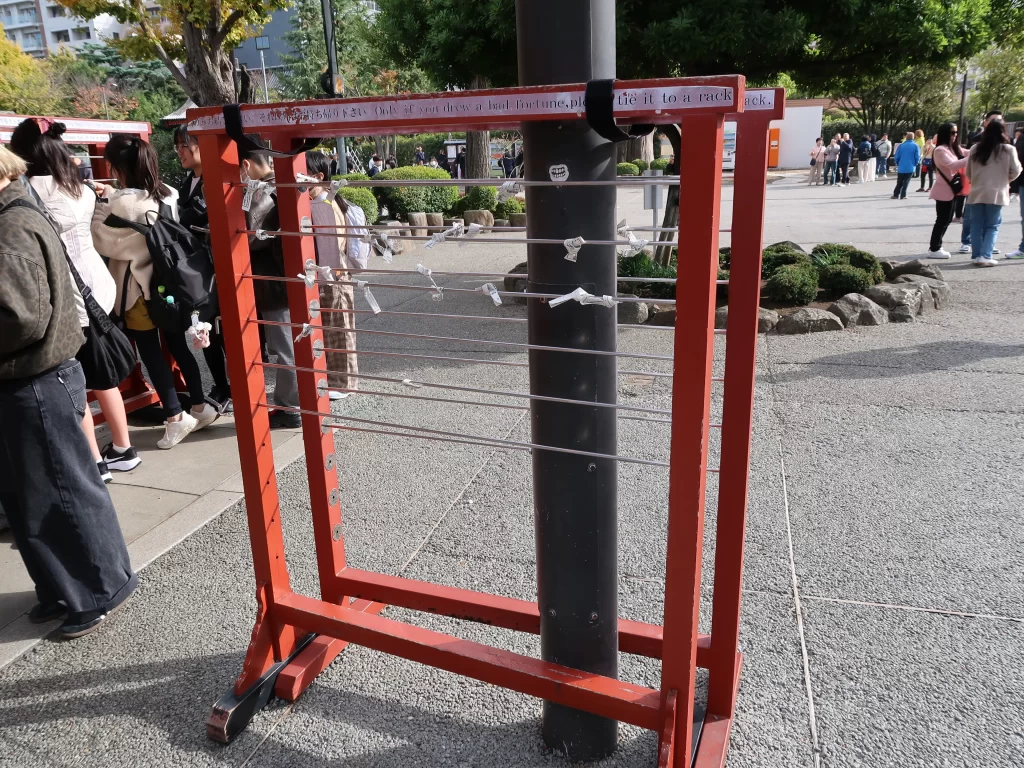
Tying Your Omikuji
If you get a fortune you don’t like, you can tie the slip to a special rack or tree within the shrine or temple grounds. This symbolically “leaves the bad luck behind” and encourages better fortune.
If you receive a good fortune, you may take the paper home as a lucky charm.
A Cultural Experience
Drawing an omikuji is a simple and enjoyable way to experience Japanese spirituality. It blends faith, tradition, and a little bit of luck—making it a memorable part of any visit to a Japanese shrine or temple.

No comments yet.