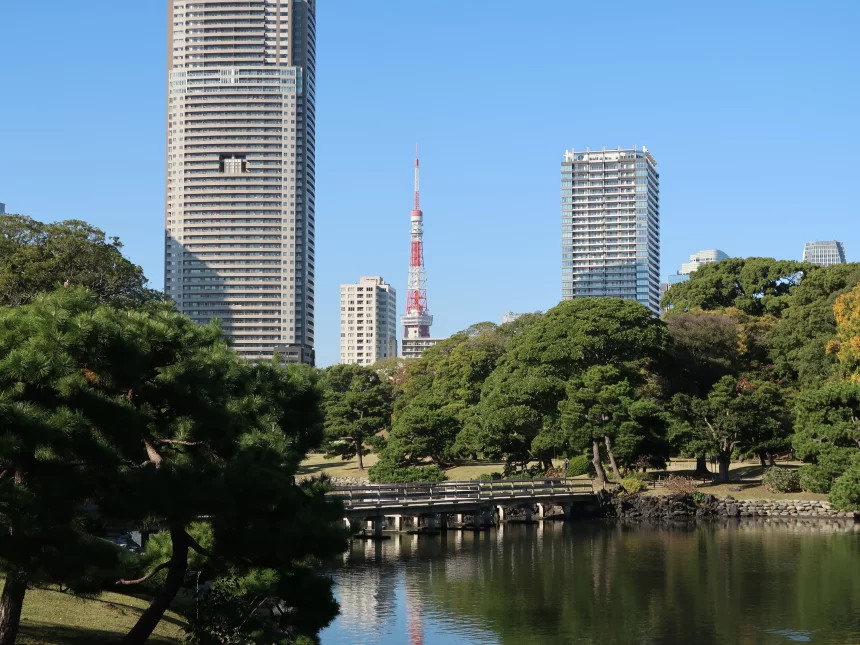
Hama-rikyū Gardens is one of Tokyo’s most beautiful and historically significant landscape gardens, offering a peaceful escape in the heart of the city. Located near Tokyo Bay and within walking distance of popular districts like Ginza and Shimbashi, the garden blends traditional Japanese design with the modern skyline, creating a unique and memorable experience for visitors.
The history of Hama-rikyū dates back to the Edo period. Originally used as a duck-hunting ground and a retreat for the Tokugawa shoguns, the garden served as a private space where they could relax, enjoy seasonal scenery, and entertain important guests. During the Meiji era, it became a detached palace for the Imperial family. Today, it is managed by the Tokyo Metropolitan Government and is open to the public as an “Imperial Gift Garden,” or Onshi-teien.
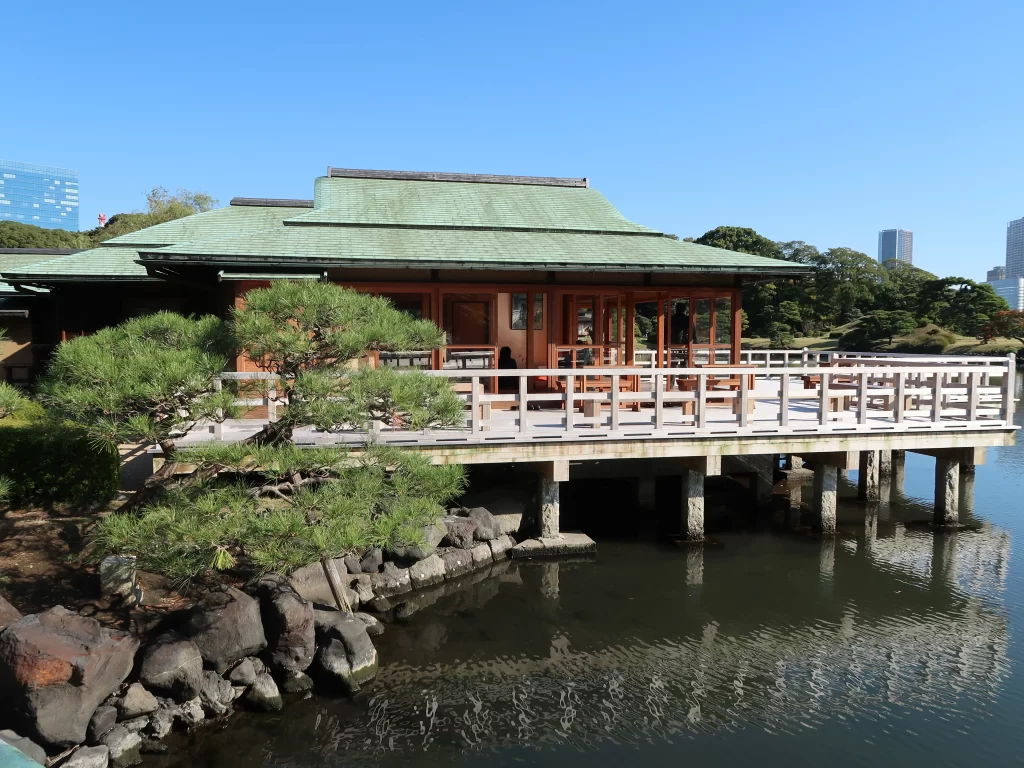
One of the garden’s most distinctive features is its tidal pond, known as Shioiri-no-ike. Unlike most Japanese gardens, this pond is connected directly to Tokyo Bay, allowing the water level to change naturally with the tides. This unique design highlights the ingenuity of Edo-period engineering and offers a nature-rich landscape right in the middle of Tokyo. Small islands, stone structures, and beautifully shaped pine trees surround the pond, creating a serene atmosphere for strolling.
At the center of the pond stands Nakajima Tea House, a traditional wooden teahouse that appears to float on the water. Visitors can enjoy matcha green tea and Japanese sweets while admiring views of the surrounding garden and reflecting pond. The tranquil setting makes it one of the most popular spots in Hama-rikyū, especially for those interested in Japanese culture.
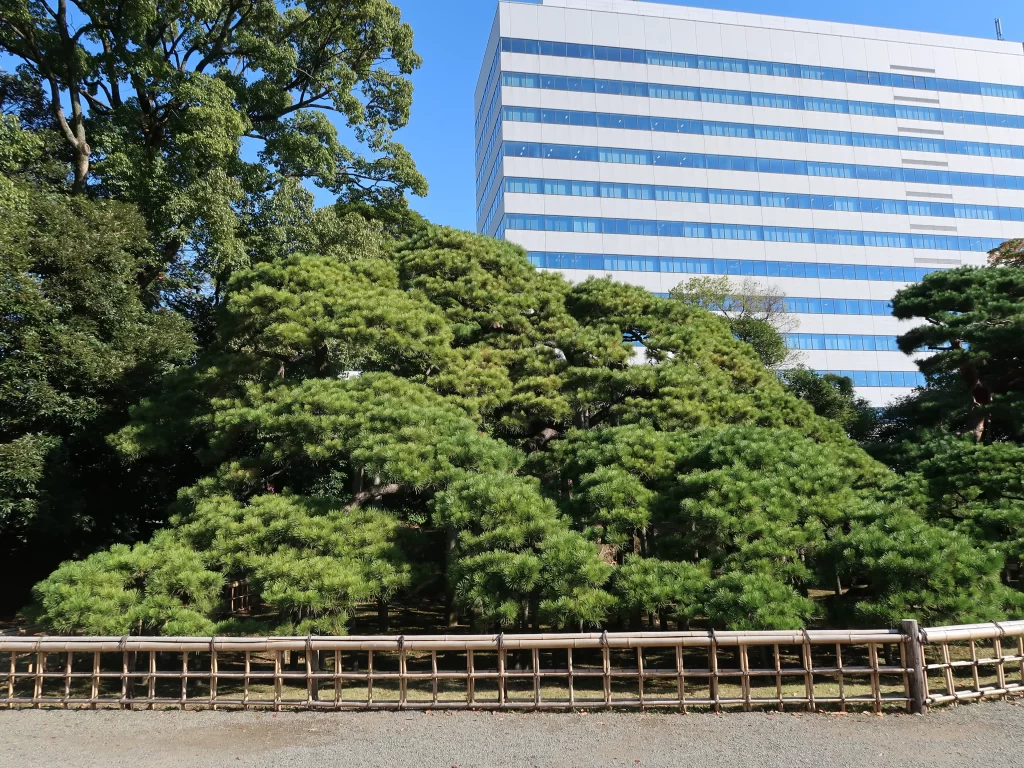
Another highlight is the “300-Year Pine,” an enormous black pine tree planted around the early 18th century. Its sprawling branches and impressive shape symbolize the longevity and strength of the garden. Many visitors stop to take photographs of this iconic tree, which has become one of the garden’s signature landmarks.
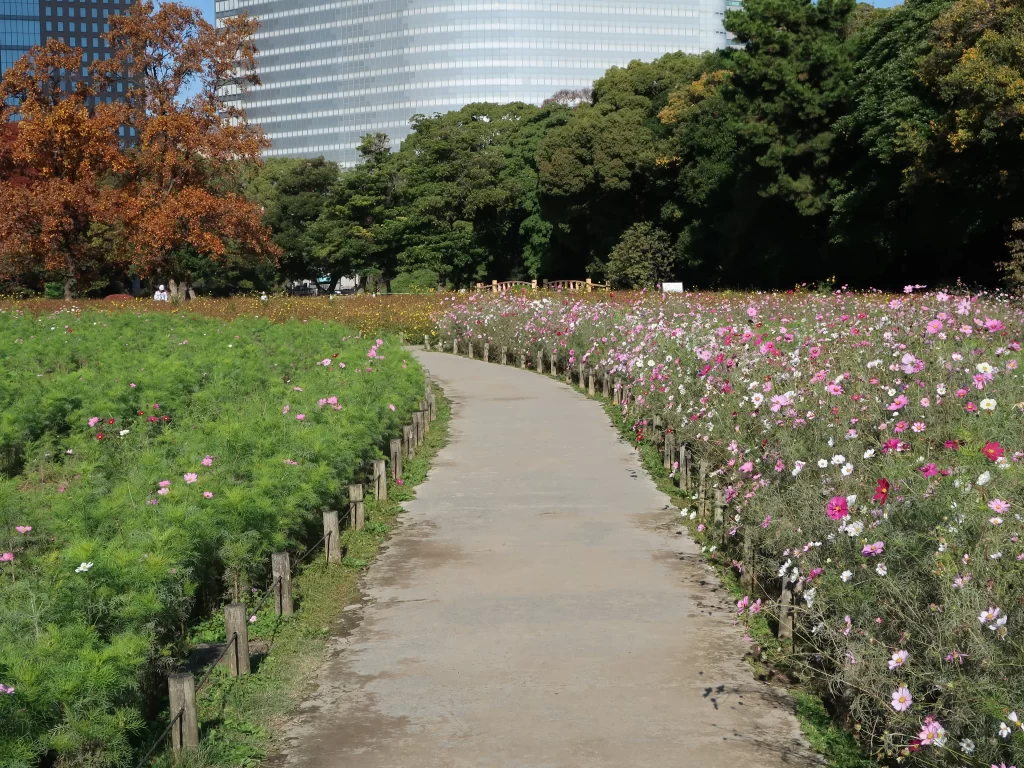
The garden also offers beautiful seasonal scenery throughout the year. In spring, fields of bright yellow rapeseed flowers bloom spectacularly, contrasting with the modern skyscrapers in the background. In autumn, maple trees create stunning shades of red and orange. This harmony between nature and cityscape is one of the defining features of Hama-rikyū Gardens.

Walking along the garden’s network of pathways, visitors can enjoy a peaceful environment far removed from the bustling streets of central Tokyo. Despite its convenient location, Hama-rikyū feels like a quiet retreat where traditional Japanese aesthetics blend seamlessly with the modern city around it. Many travelers also combine their visit with nearby attractions such as the former Tsukiji Market or the shops and restaurants of Ginza.
Rich in history, shaped by centuries of careful design, and blessed with natural beauty, Hama-rikyū Gardens offers an ideal introduction to Japanese landscape gardening. Whether you come to relax, take photographs, or learn about Edo-period culture, the garden provides a calm and captivating experience that remains unforgettable.
How to get this place
Address:
1-1 Hamarikyu Gardens, Chuo-ku, Tokyo
Access:
From Tsukiji:7 minutes on foot.
Information
Opening Hours
9:00 AM to 5:00 PM
(Last admission at 4:30 PM)
*Hours may be extended during event periods.
Closed
Year-end and New Year holidays
(December 29 to January 1)
Admission Fees
General: 300 yen
Ages 65 and over: 150 yen
(Free for elementary school children and younger, and junior high school students residing or attending school in Tokyo)*Children of elementary school age and younger must be accompanied by a guardian.
FAQ
Is Hama-rikyū worth visiting?
Yes. It offers a rare combination of historic scenery and modern skyline views, making it one of Tokyo’s most distinctive attractions.
Why is it famous?
It is famous for its tidal pond, historic teahouse, and its history as a shogun garden.
Can you drink tea there?
Yes. Visitors can enjoy traditional matcha and sweets inside the garden’s teahouse.
Is it good for photography?
Yes. The contrast between nature and skyscrapers makes it one of Tokyo’s best photo spots.


No comments yet.