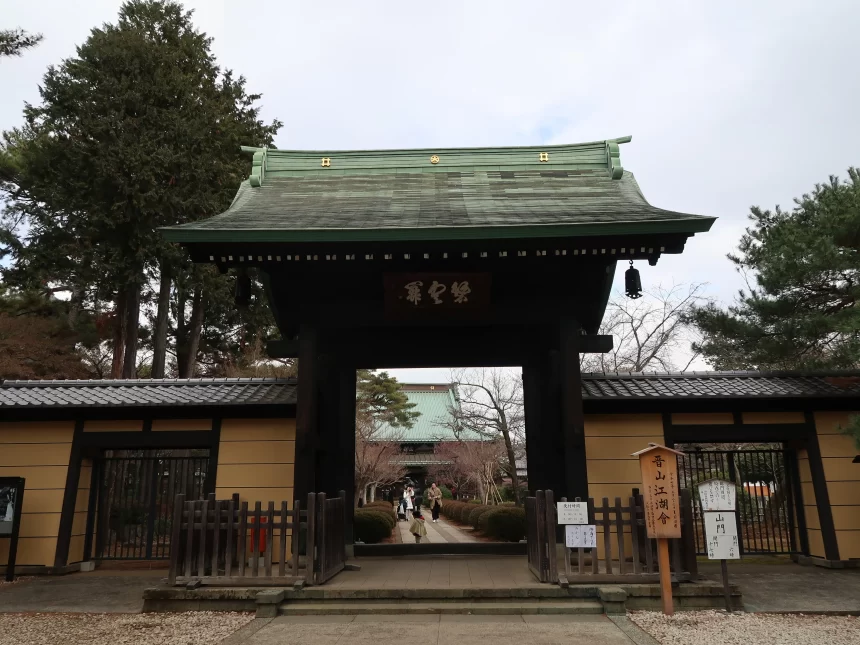
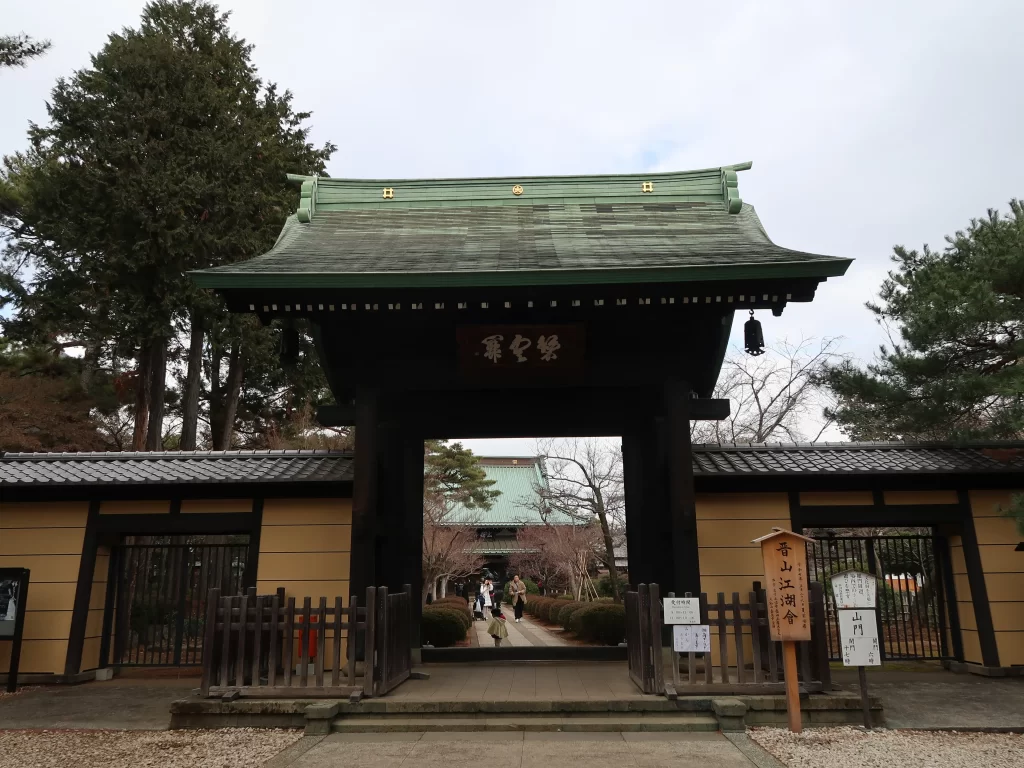
Early spring in Japan carries a very special feeling. Around Risshun (the traditional first day of spring), I visited Gotokuji temple, a peaceful temple tucked away in setagaya city. While Tokyo is famous for neon lights and crowds, this place shows a completely different side of Japan — calm, spiritual, and quietly beautiful.
The history of Gōtoku-ji Temple began in 1633 (Kan’ei 10), when Setagaya became part of the Hikone Domain.
The Ii clan, lords of Hikone, designated the temple “Kōtoku-in,” originally established in 1480 (Bunmei 12),
as their family temple in Edo.Later, in 1659 (Manji 2), it was renamed Gotokuji Temple, derived from the posthumous Buddhist name of the second lord of the Hikone domain, Ii Naotaka: “Kyushōinden Gōtokuten’ei Daikōji.”
It was then developed into a temple complex befitting a daimyō family burial ground, which remains to this day.
It well preserves the form of a daimyō burial ground from the Edo period and is the largest nationally designated historic site in the surrounding area.
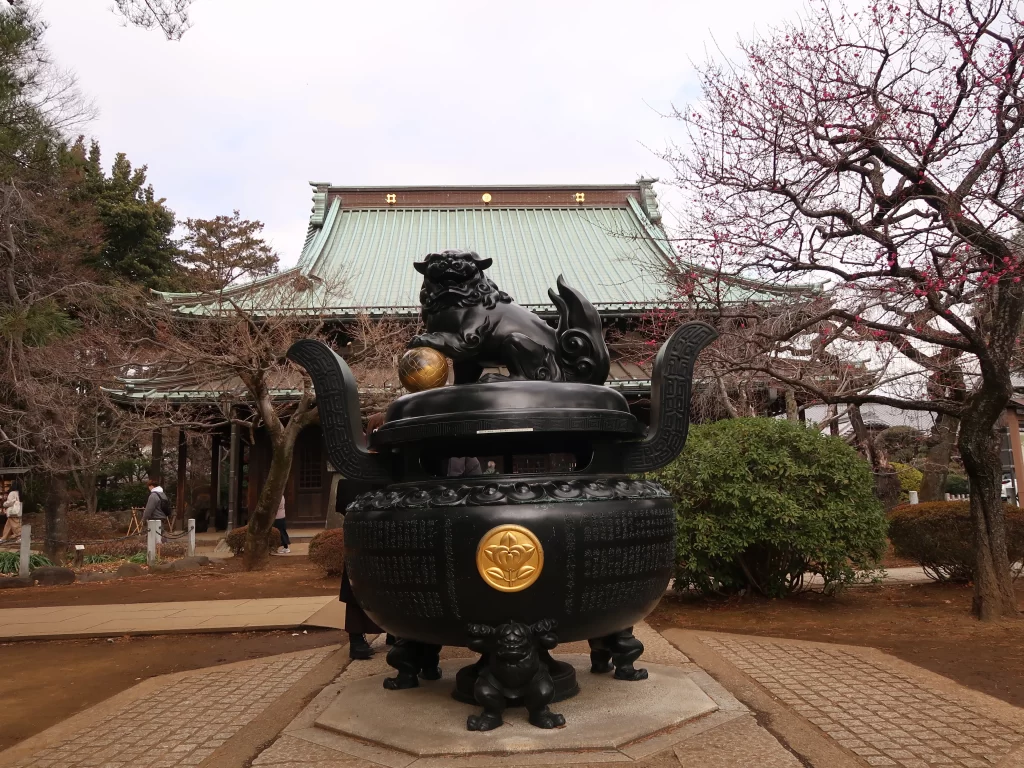
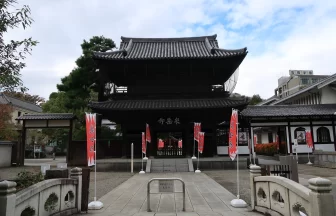
The mountain gate at the entrance bears the characters “Seiunkaku,”which signify “a gate erected to separate the outer world from the temple precincts.” Upon entering the temple grounds, guardian komainu seated atop an eternal incense burner greet visitors. The komainu hold golden balls, while three demon figures support the incense burner. The ball symbolizes sacred power, protection, and harmony, showing that the guardian controls its strength to protect the sacred space. The decorations on komainu—such as cubs, balls, horns, and curled hair—vary in meaning by region and era, making the differing interpretations at each temple and shrine an interesting point.
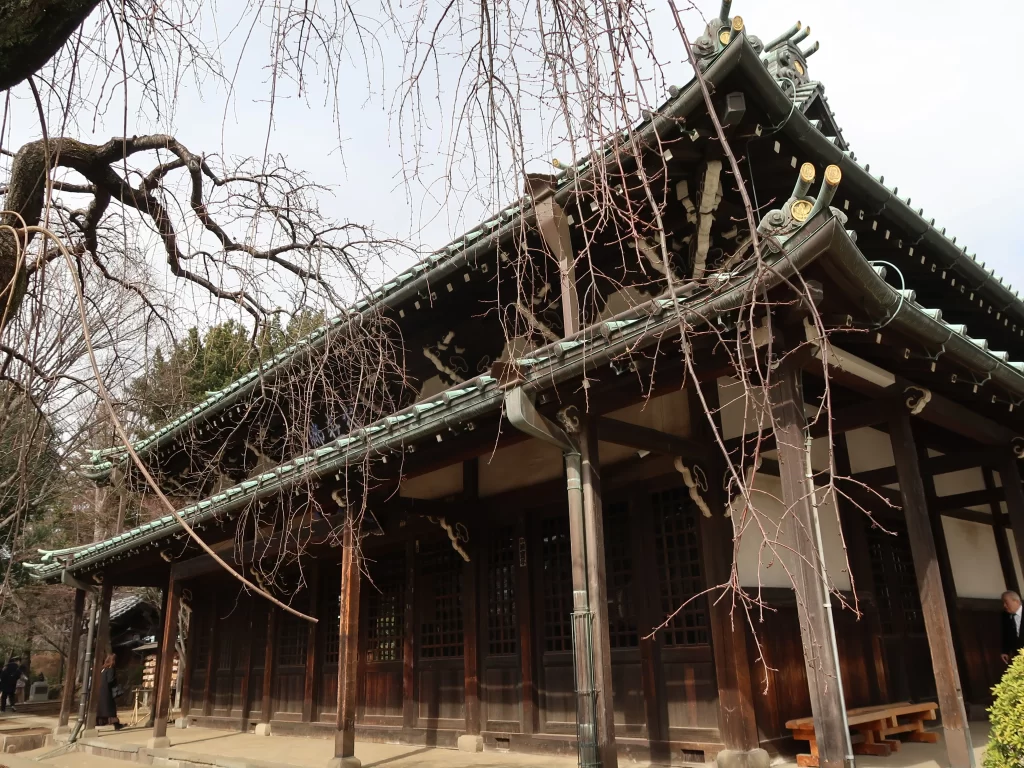
The Buddha Hall enshrines three Buddha statues and other deities.The Three Buddhas represent the Buddha of the past, present, and future, showing that Buddhist wisdom exists across all time.You can not enter the Buddha hall to view the interior, so you cannot open the door and go inside.

Upon entering the temple grounds, you will find a 22.5-meter-tall three-story pagoda on the left.
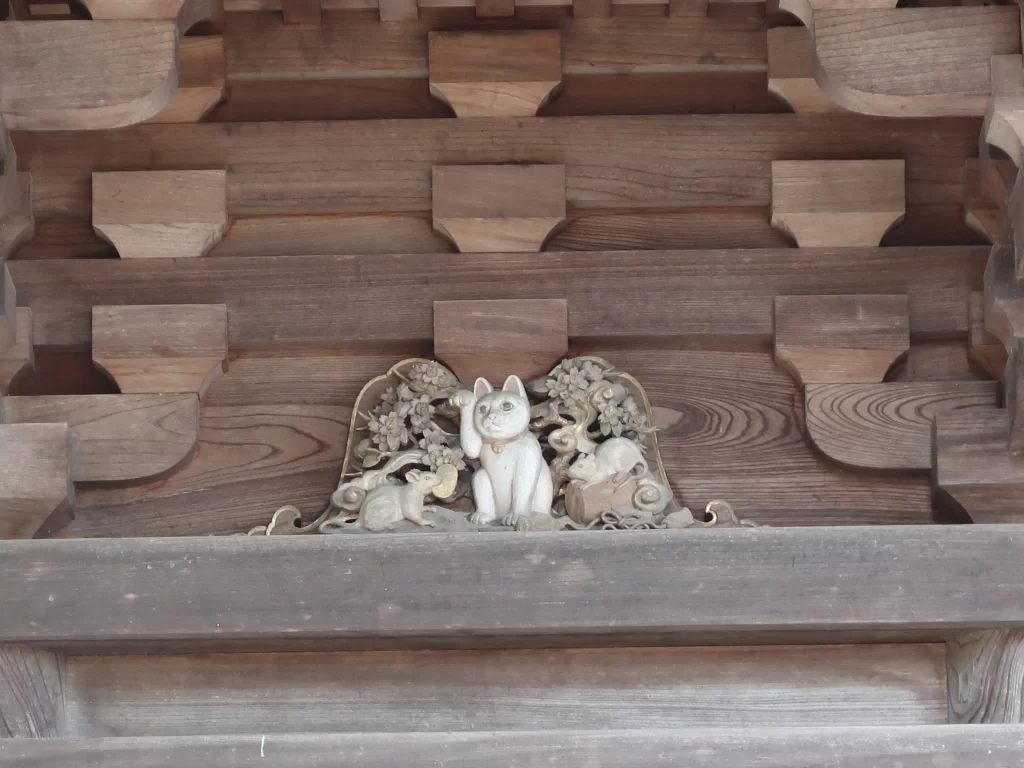

Take a closer look at the three-story pagoda and you’ll find a cute Manekineko(beckoning cat). There are also Eto(zodiac animal) carvings, so try finding your own Eto(zodiac animal) sign. The Eto(zodiac) is unique to the Asian region and is also common in Japan. It operates on a 12-year cycle, and the Eto(zodiac animal) assigned to the year of one’s birth becomes their personal guardian deity. Most Japanese people are conscious of their Eto(zodiac animal), and every 12 years, when their Eto(zodiac animal) year arrives, they are considered the “man of the year” or “woman of the year.” Incidentally, there is no Cat Year. Although cats are considered the natural enemy of mice in Japan, the cat and mouse on the three-storied pagoda appear to be playing together amicably.
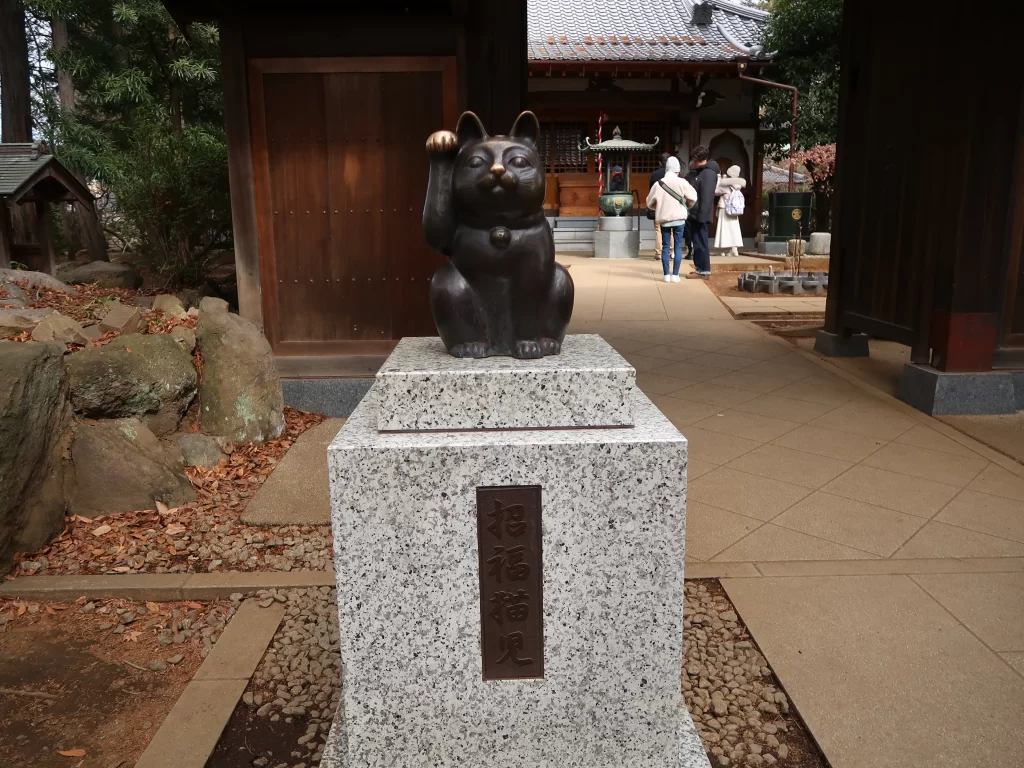
The origin of the Manekineko(beckoning cat) dates back to a time when this temple was very poor. The priest at the time adored cats and would speak to them, saying, “You too, bring fortune to this temple.” One day, a lord, presumably returning from falconry, rode past the temple gates on horseback. A cat standing before the gate raised its front paw as if beckoning, and the surprised samurai stopped at the temple. While resting, thunder suddenly roared and a heavy rain began. The lord rejoiced, saying, “Thanks to the cat’s invitation, we avoided the rain,” and was deeply moved by the priest’s teachings on Buddhism. This lord was Ii Naotaka, the feudal lord of Hikone. Following this incident, Ii Naotaka became devoted to the temple, and it became the family temple of the Ii clan. Receiving many donations, including farmland, the temple gradually prospered. Because of this, it became widely known as “the temple where the cat invited fortune,” gaining fame as a temple offering blessings for household safety, business prosperity, and the fulfillment of wishes. Furthermore, while beckoning cats in Japan generally hold a koban coin, Gotokuji’s beckoning cat holds no coin and raises its right paw. Gotokuji’s Manekineko(beckoning cat) invites people and brings “connections,” but it does not bestow fortune itself. Whether one can make the most of these precious “connections” depends on the person. Based on the teaching that if one has a heart of gratitude and appreciation, fortune will naturally come to them, the cat holds no gold coin and raises only its right paw.
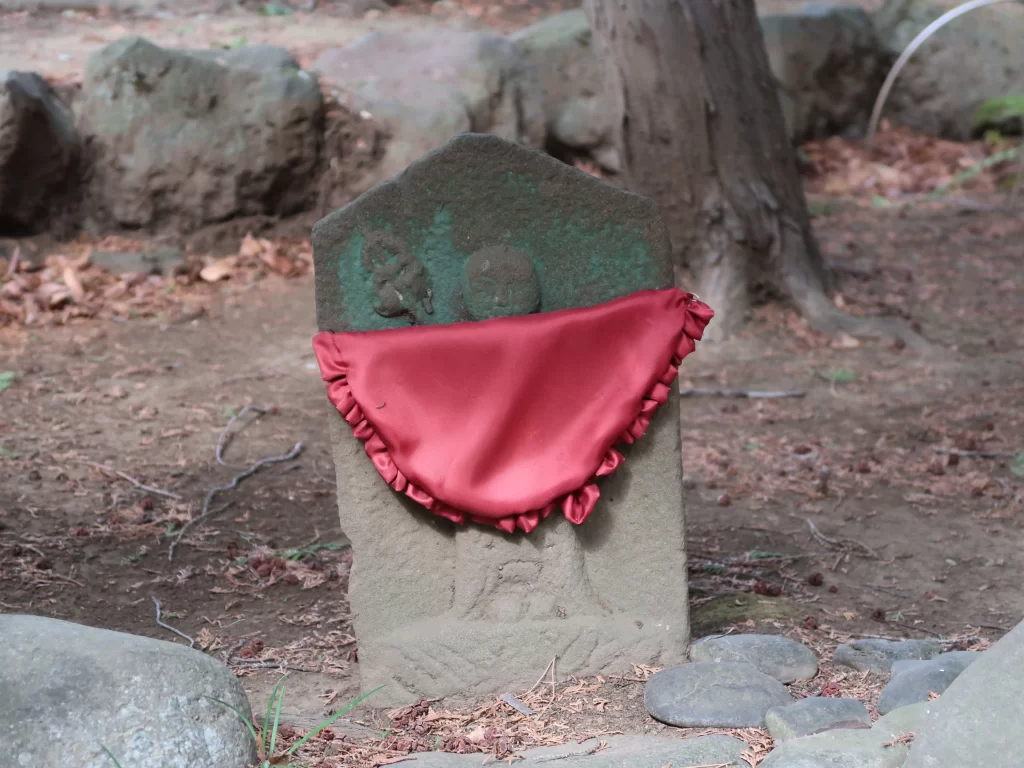
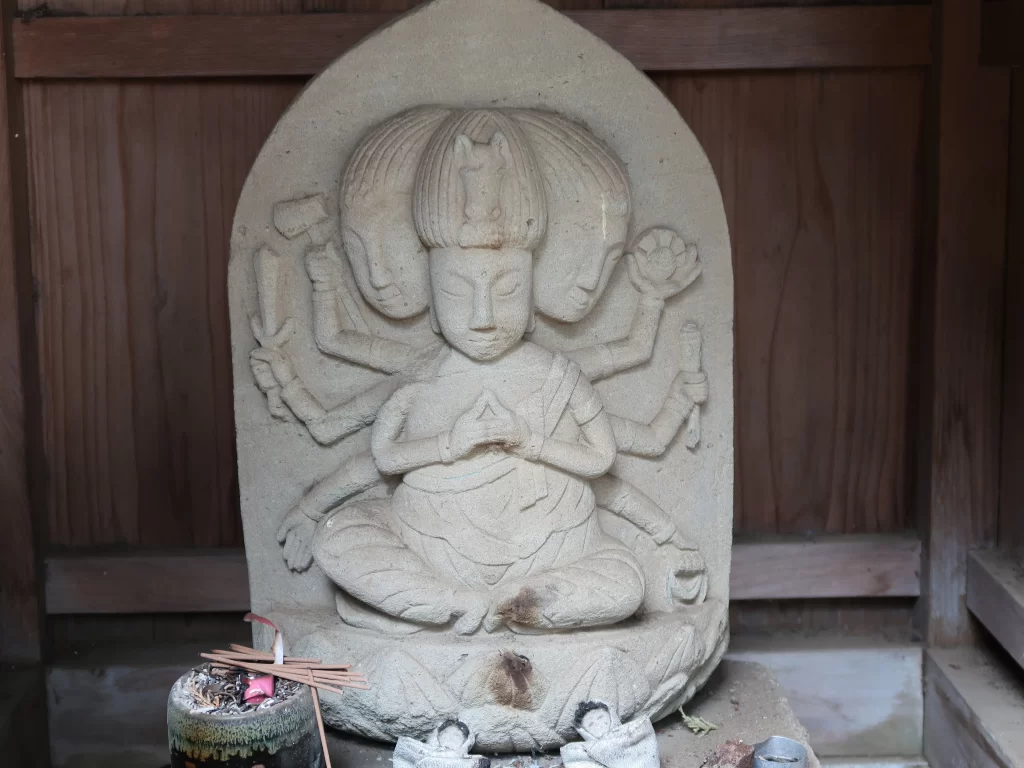
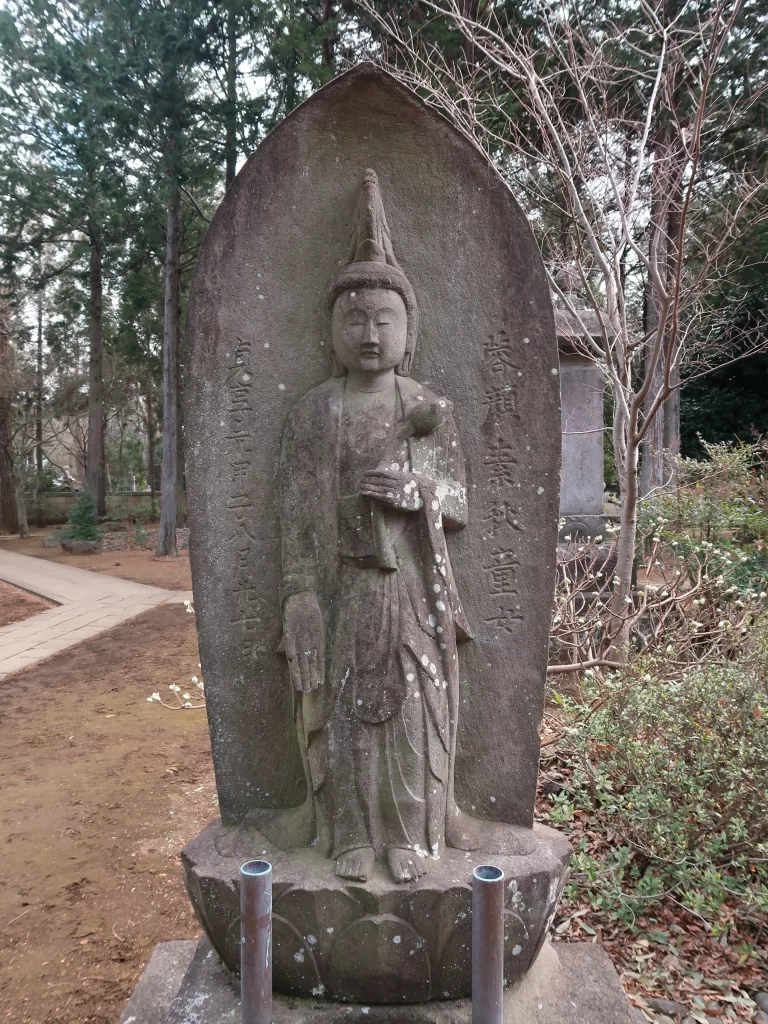
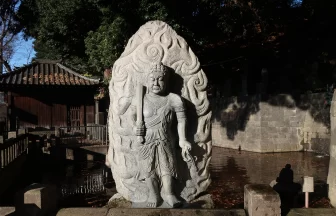
To the left of the gate entrance stand statues of Jizo Bosatsu holding a staff and Ashura. The Ashura statue holds a sword and rope similar to those wielded by Fudo Myo-o.
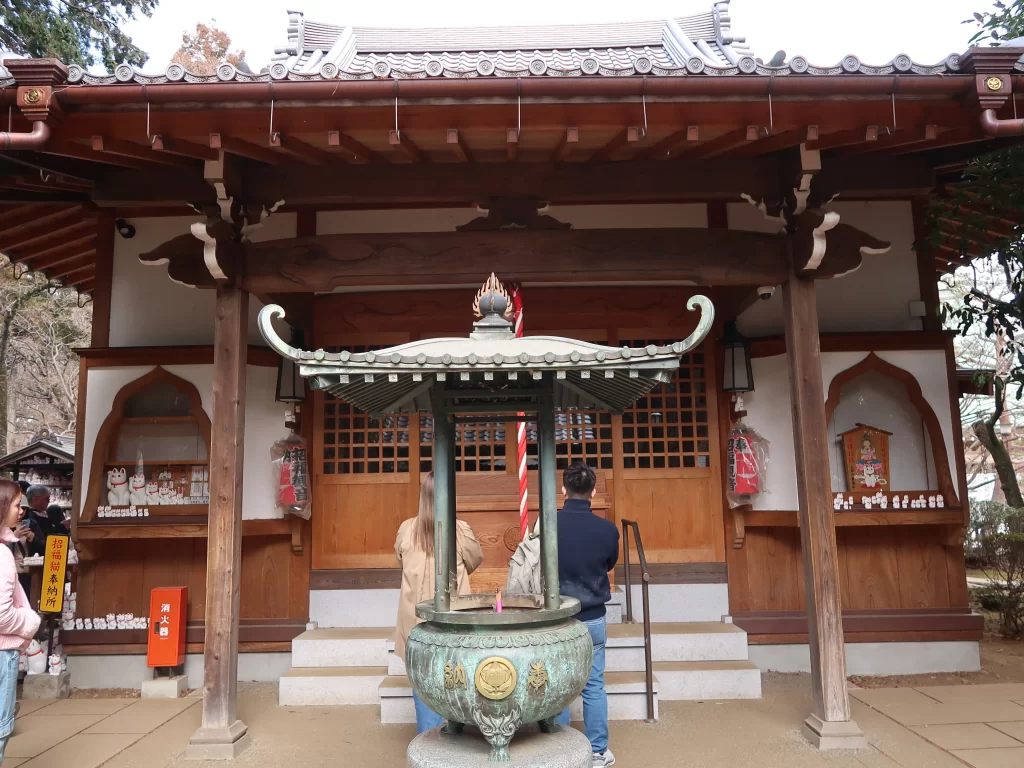
Although it was a weekday, many foreign tourists visiting Japan came to the main shrine, taking turns to worship and photograph their favorite spots.
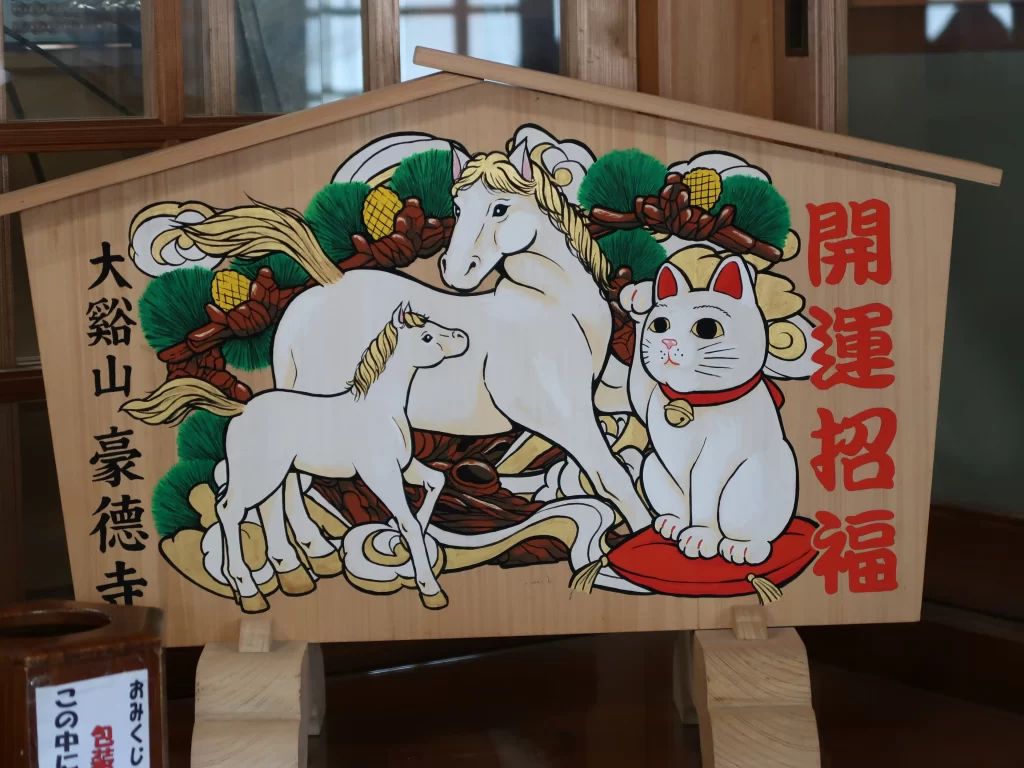
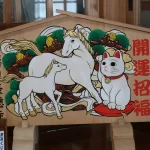
I find it quite interesting that the ema board inscribed with “Good Fortune and Happiness” features a Manekineko(beckoning cat). Ema are wooden boards with a horse design where people write their wishes to make a prayer. This year being the Year of the Horse, the ema uniquely depicts two horses: the horse of the zodiac and the horse drawn on the board itself. With the ema and the beckoning cat coinciding in this once-in-12-years Year of the Horse, I believe visitors this year are truly fortunate.
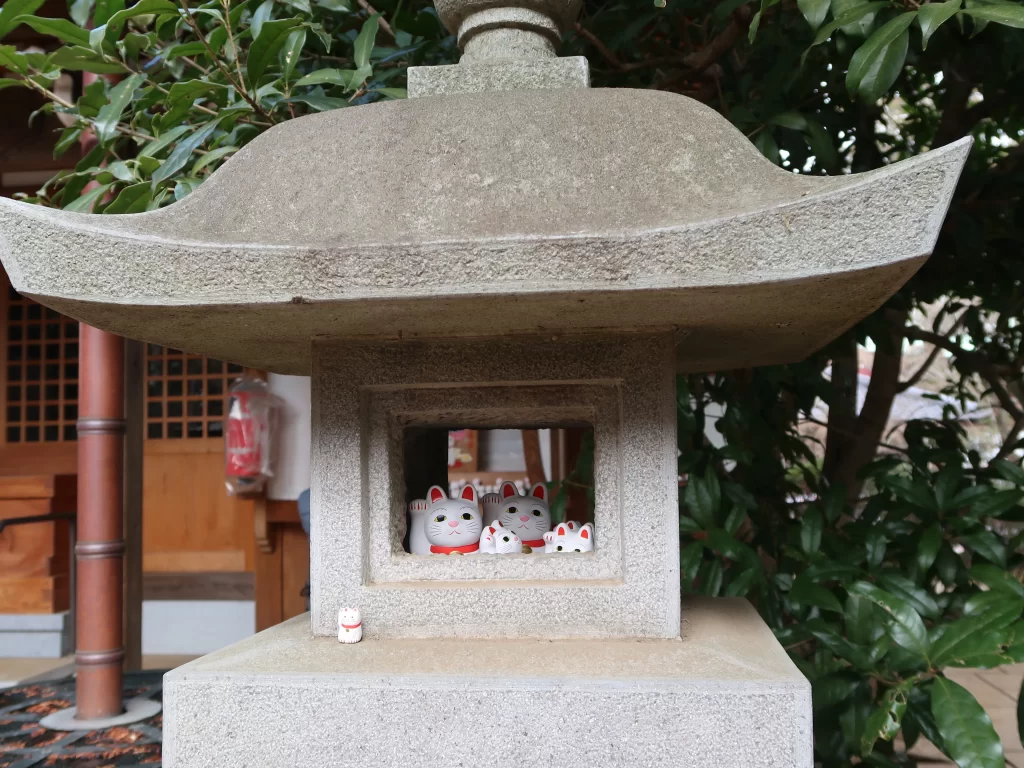
A very cute snapshot of a Manekineko(beckoning cat) peeking out from inside a lantern.
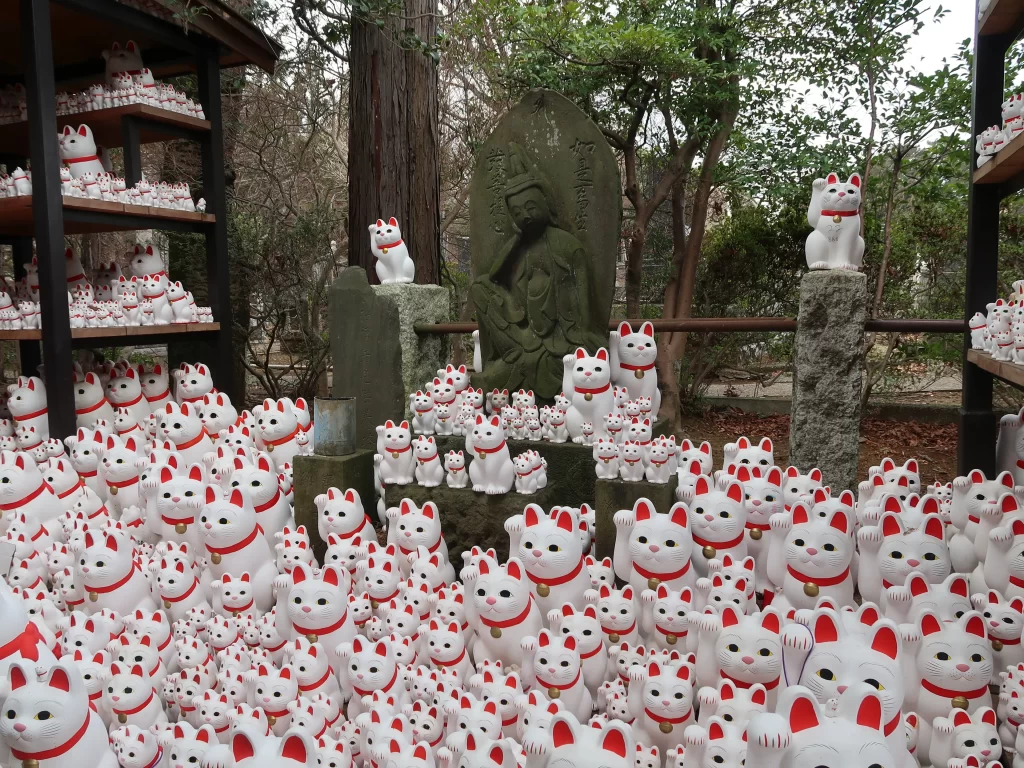
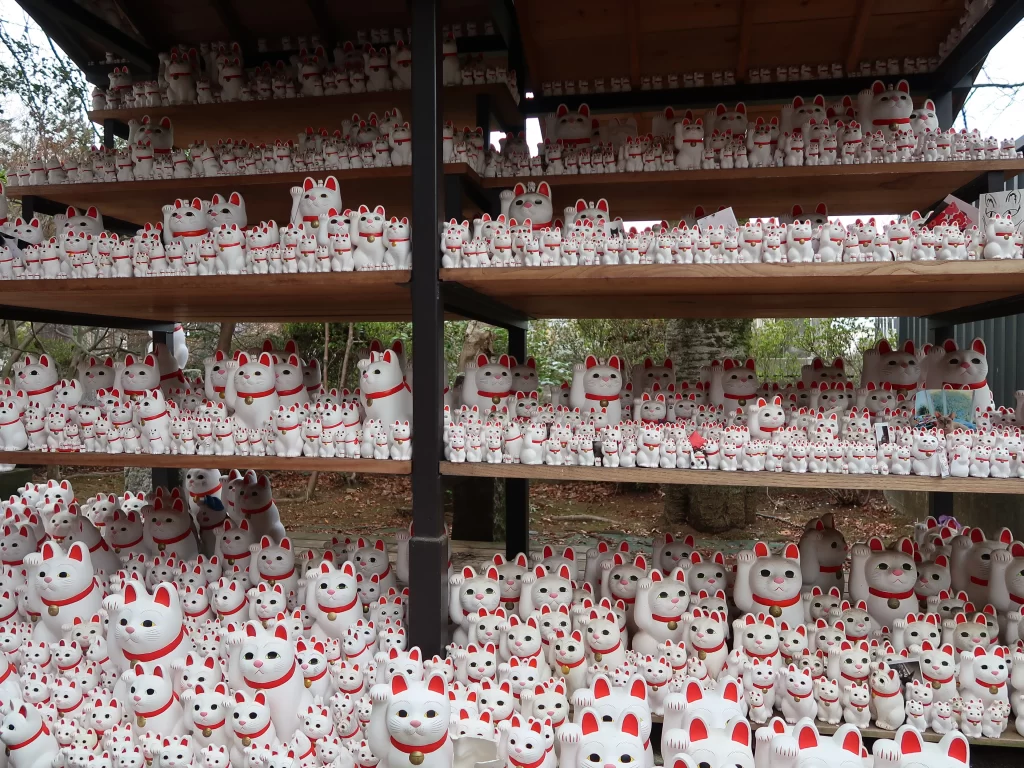
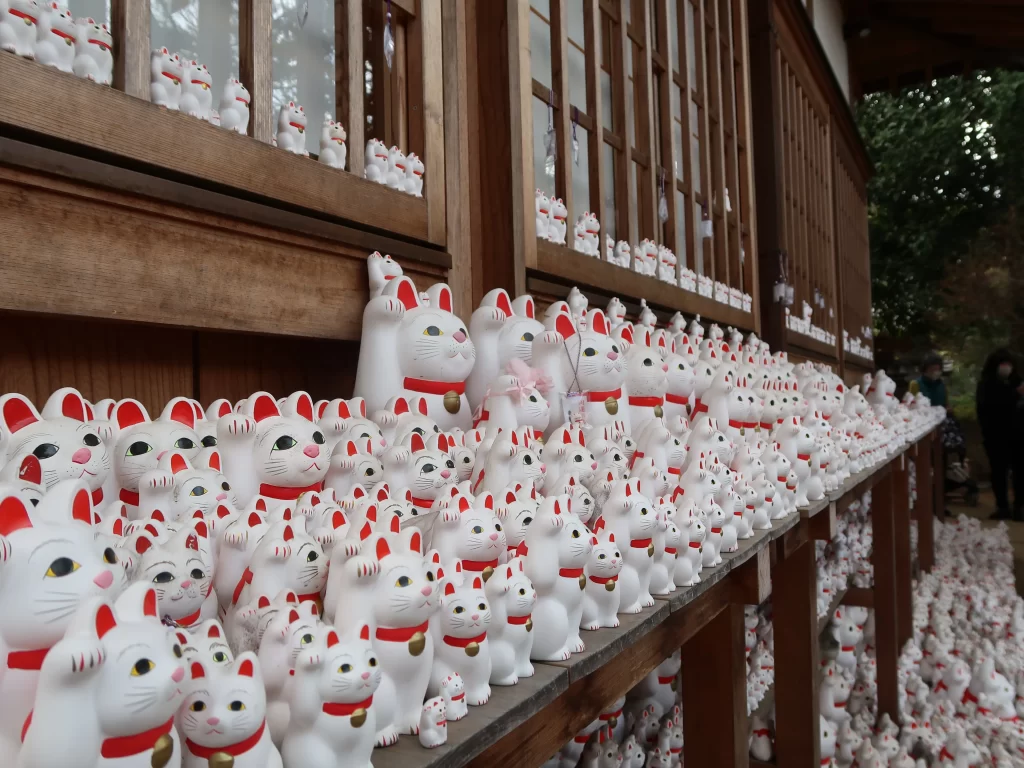
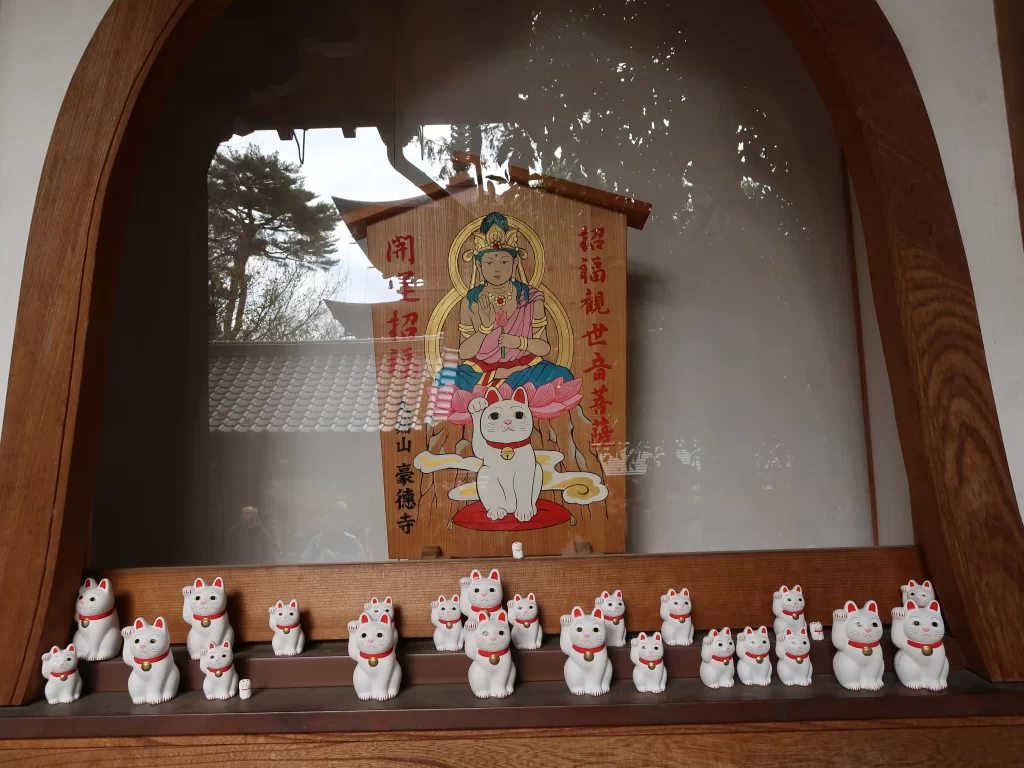
A truly large number of beckoning cats are enshrined here. They are neatly arranged, ranging from small to large. You can purchase Manekineko(beckoning cats) next to the main hall and make an offering. We hope foreign visitors to Japan will find good fortune and blessings during their trip.
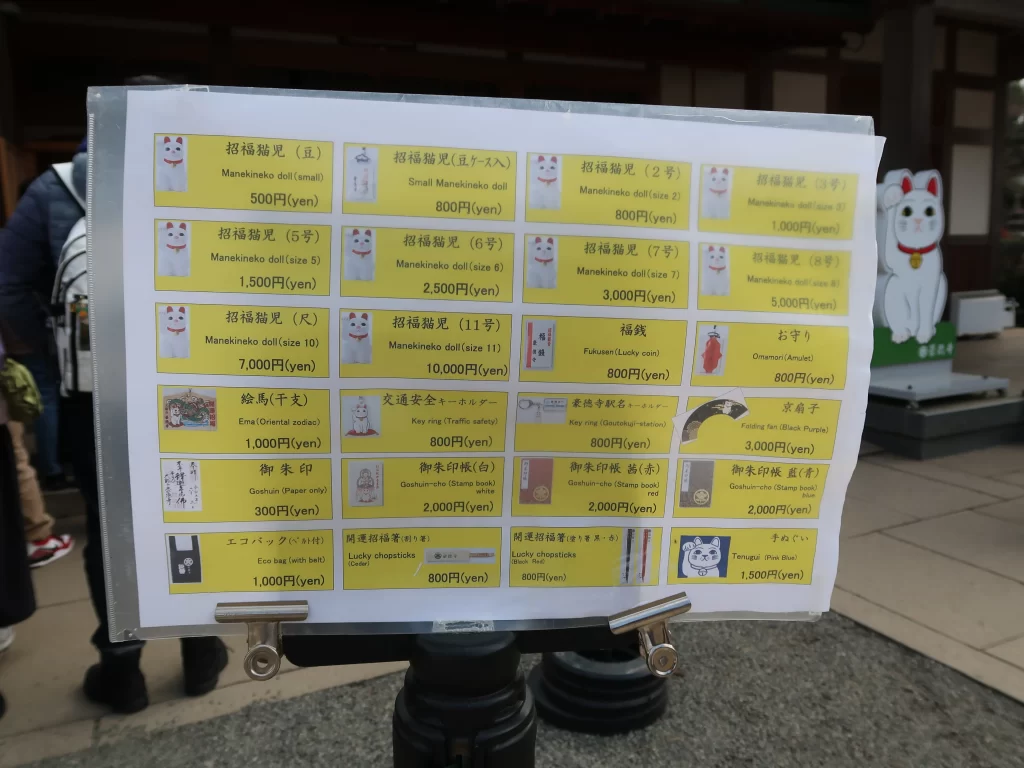
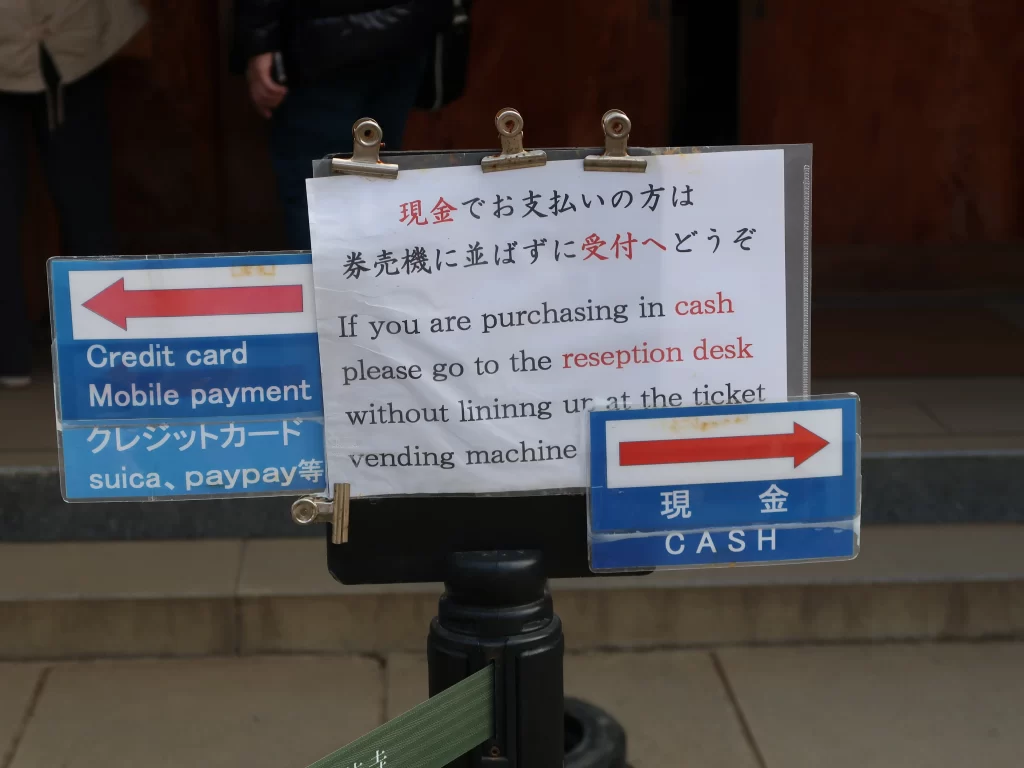
Purchases of items for sale can be made with cash or cashless payment methods.
National Historic Site: Tomb of the Ii Clan, Lords of Hikone Domain
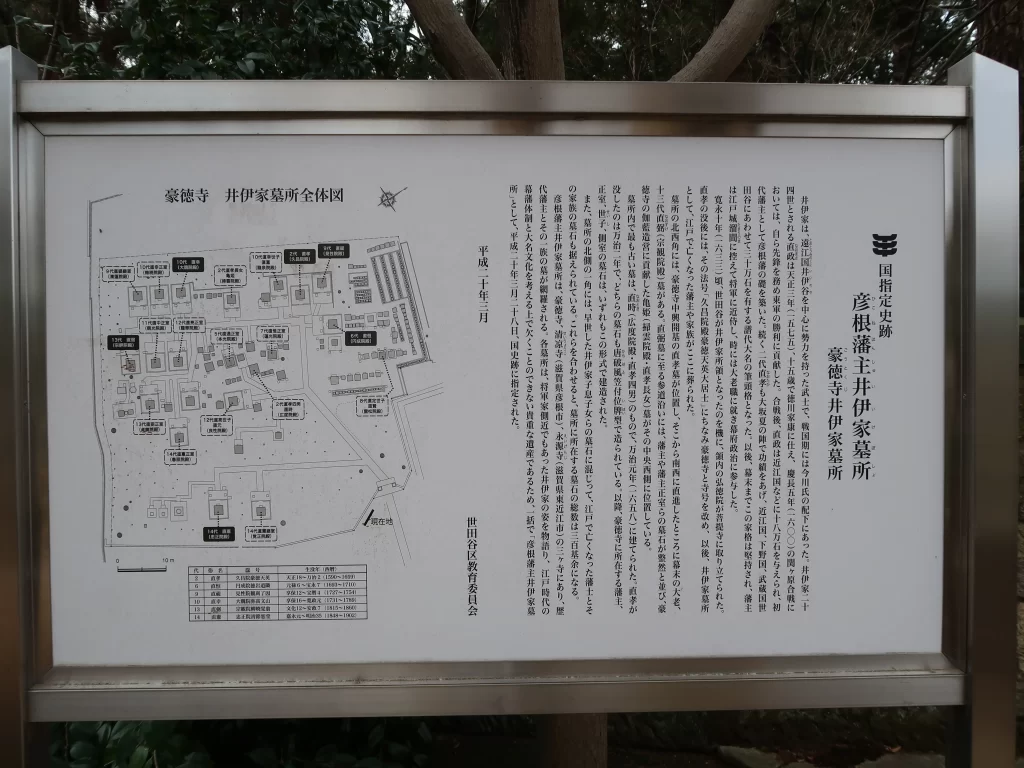
This site is the burial ground of the Ii family, which produced the Edo-period daimyo lord Ii Naosuke. The Ii family were hereditary vassals who served the Tokugawa shogunate for generations, with their main base being the Hikone domain. Their Kokudaka (the scale of their domain’s income) increased significantly due to their achievements at the Battle of Sekigahara, and they continued as a prominent family holding important positions within the shogunate throughout the Edo period.
Gotokuji Temple, where the gravesite is located, was originally established as the family temple (a temple for ancestral worship) of the Ii clan. Within the temple grounds, the gravestones of successive feudal lords and clan members stand in rows, conveying the history of this Edo-period daimyo family to the present day.
The tombstones are neatly arranged by era, clearly showing the Ii family’s longstanding crucial role in both political and military spheres. The entire burial ground holds significant historical value and is preserved as a local historic site.
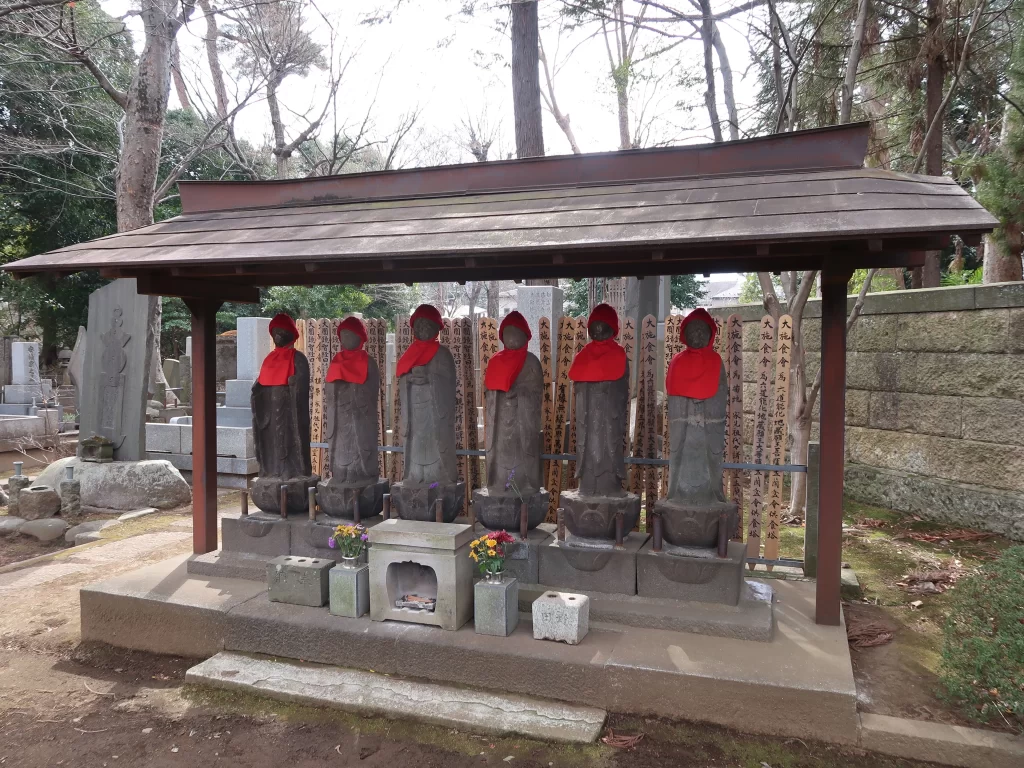
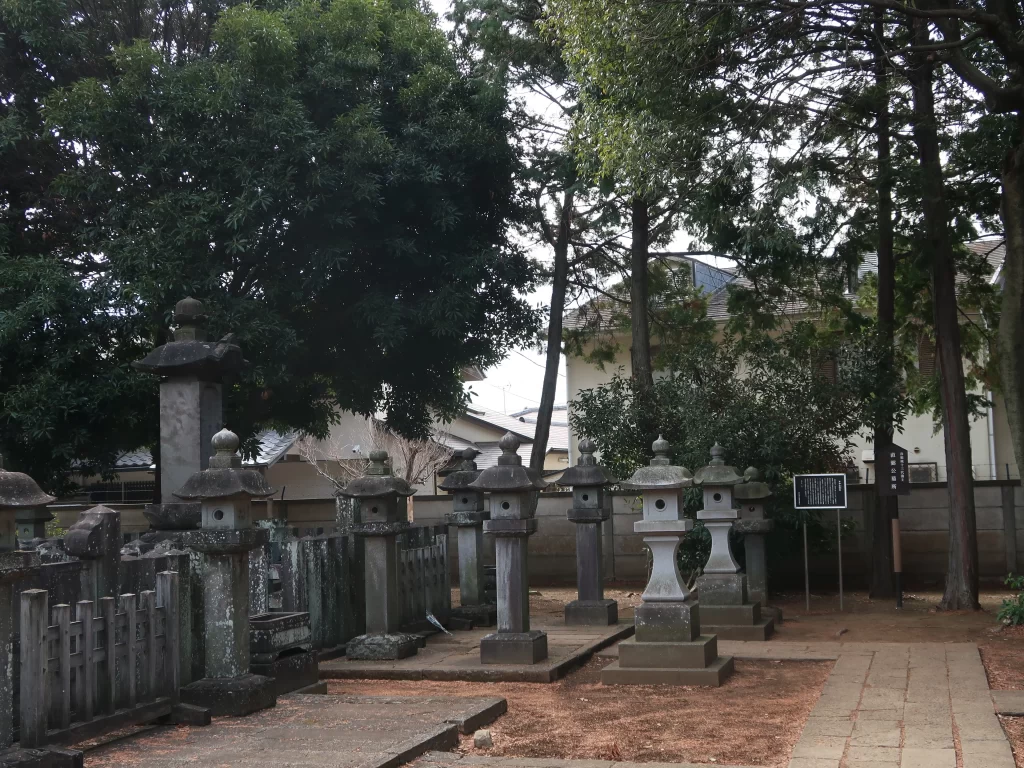
The graves of successive heads of the Ii clan stand in a row. The 16th feudal lord, Ii Naosuke, was a hereditary daimyo from the late Edo period through the Bakumatsu era who served as Grand Elder in the Edo shogunate. During the turmoil of the Bakumatsu period, as a proponent of opening Japan, Ii Naosuke signed the Treaty of Amity and Commerce with the United States, deciding on Japan’s opening and modernization. He purged forces opposing opening. Consequently, he was assassinated by opponents at the Sakurada Gate outside the Imperial Palace, where the Imperial Palace stands today. This event is recorded in school textbooks as a significant turning point in Japanese history.
For Visitors to Japan ― Gotokuji Temple: The Complete Guide
Just a few minutes from the bustle of Tokyo lies a place where you can quietly experience the spirituality and historical depth of Japanese culture. That place is Gotokuji Temple.This temple is not merely a tourist attraction. Within its grounds lies the burial site of the Ii clan, who produced figures central to samurai politics, where Japan’s early modern history itself rests. The presence of Ii Naosuke, who bore the weight of national decisions during the Bakumatsu period, makes this place a “crossroads of history.”
■ Why is Gotokuji special?
While famous tourist destinations around the world are “places to see,” Gotokuji is a place to feel.
A Zen-like space for quiet self-reflection
A burial ground preserving samurai spiritual culture
A living example of Japan’s unique faith (ancestors, guardians, prayers)
A flow of time unimaginable in urban Tokyo
The temple that gave birth to the beckoning cat legend
This concentrated experience leaves travelers with “memories beyond mere sightseeing.”
■ The Essence We Want Travelers to Experience
Japanese culture values not flashiness, but space, stillness, and symbolism.Gotokuji embodies this philosophy perfectly.If you seek to experience “authentic Japan” in just one place in Tokyo, visit this temple in Setagaya Ward.There lies a Japan that photos cannot capture, and a spirituality beyond guidebook understanding.
How to get this place
Address:2-24-7 Gotokuji,Setagaya City, Tokyo
Access:
From Shinjuku Station:

Take the Odakyu Line to Gotokuji Station. The ride takes about 15 minutes. From there, it’s another 7 minutes on foot.
From Shibuya Station:

Take the Den-en-toshi Line and transfer to the Tokyu Setagaya Line at Sangenjaya Station. It’s a 5-minute walk from Miyanosaka Station.
Information
Opening Hours
6:00 AM to 7:00 PM
(※Temple office reception hours: 8:00 AM to 3:00 PM)
People Also Ask about Gotokuji Temple & Maneki-neko
Why is Gotokuji Temple famous?
Gotokuji Temple is famous for being closely associated with the origin legend of the maneki-neko (beckoning lucky cat). According to tradition, a feudal lord was saved from lightning after following a beckoning cat into the temple, and in gratitude he restored it.
What does the raised paw mean?
The raised paw represents an inviting gesture in Japan—not waving goodbye but signaling “come here.” The left paw invites customers, while the right paw attracts wealth or success.
Why are there so many cats at Gotokuji Temple?
Visitors often bring maneki-neko statues back to the temple after their wishes come true and dedicate them there as a gesture of gratitude. This is why rows of lucky cats line the grounds.
Can you buy lucky cats at Gotokuji Temple?
Yes. The temple office sells maneki-neko figurines in different sizes, ranging from small souvenir-size pieces to larger statues, though some sizes may sell out quickly.
What happens after your wish comes true?
Traditionally, people return their lucky cat to the temple once their wish is fulfilled and sometimes buy a larger one afterward, symbolizing continued prosperity.
What should visitors know before visiting?
Gotokuji is located in a quiet residential neighborhood, so visitors are encouraged to explore respectfully and quietly.
No comments yet.