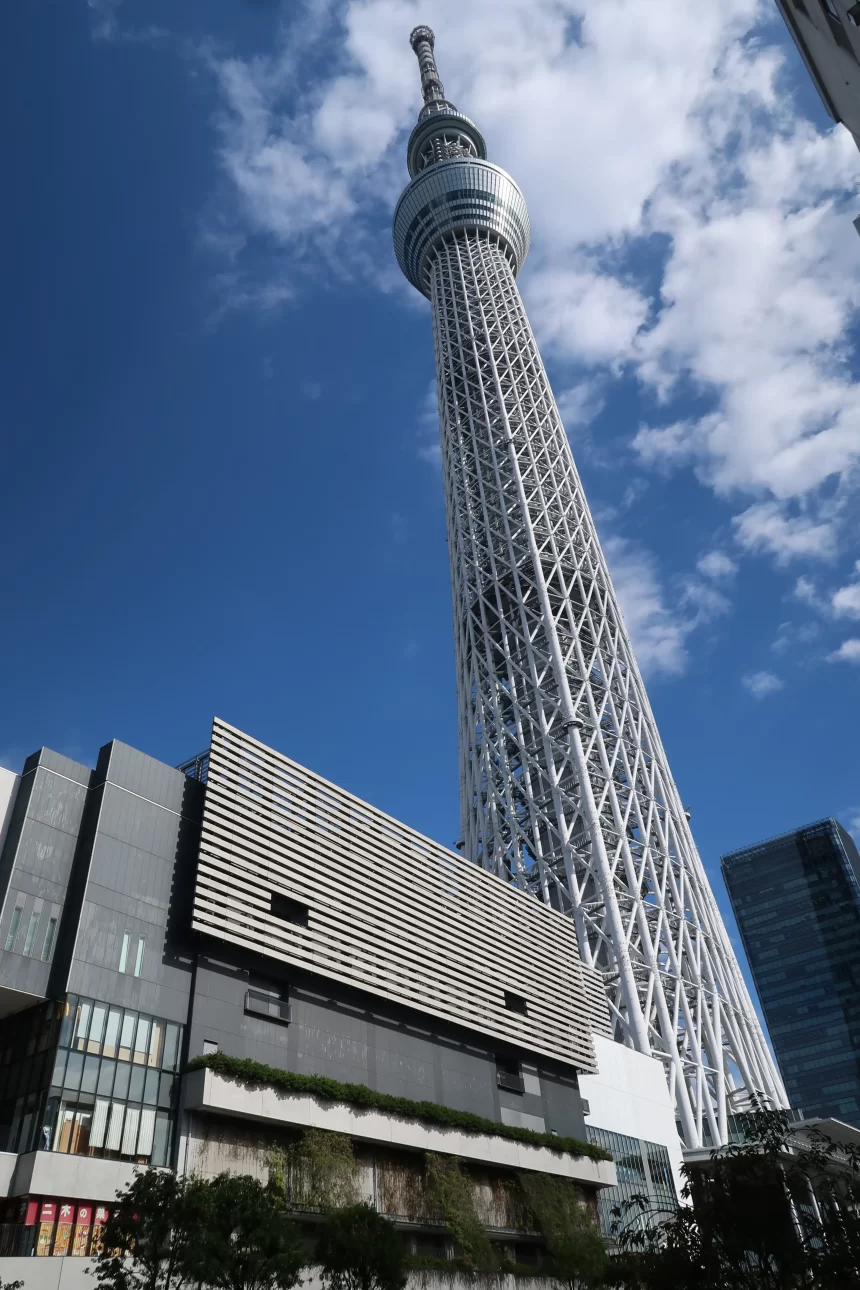
Tokyo Skytree, standing proudly in Sumida Ward, is one of Japan’s most iconic modern landmarks. Completed in 2012, this broadcasting and observation tower rises to a height of 634 meters (2,080 feet), making it the tallest freestanding tower in the world. Recognized by the Guinness World Records, it represents both Japan’s cutting-edge technology and its deep respect for tradition. The Skytree beautifully bridges the old and the new — linking the nostalgic downtown atmosphere of Edo-era Tokyo with the futuristic skyline of the modern metropolis.
Design Inspired by Tradition and Technology
The concept behind Tokyo Skytree’s design is the fusion of traditional Japanese aesthetics with advanced engineering. Its elegant shape incorporates the gentle curves of “sori” and “mukuri,” forms often found in traditional Japanese architecture such as temples and shrines. From below, the tower’s sleek silhouette resembles a samurai sword pointing toward the sky.
The exterior color, called “Skytree White” or “Skytree Blue,” is a custom light blue inspired by “aizome,” the traditional Japanese indigo dye. This subtle tone reflects both the color of the sky and the refined beauty of Japanese design, creating a calm and graceful impression.
Two Stunning Observation Decks
Tokyo Skytree features two main observation areas. The first, the Tembo Deck, is located 350 meters above ground, offering a wide panoramic view of Tokyo’s sprawling cityscape. Visitors can even step onto a section of the glass floor, where they can look straight down to the streets far below — a thrilling experience for those who dare.
The second, the Tembo Galleria, is situated 450 meters high and designed as a spiraling glass corridor that ascends around the tower. Walking through the Galleria feels like floating in the sky, surrounded by breathtaking views of the city. On clear days, visitors can see Mount Fuji, Tokyo Bay, and even distant mountain ranges. At night, the view transforms into a mesmerizing sea of lights, revealing the dazzling charm of Tokyo after dark.
Light-Up Themes: A Tribute to Edo Culture
One of the most memorable features of Tokyo Skytree is its illumination, which changes depending on the season or event. The regular light-up patterns include three traditional themes: Iki (chic), Miyabi (elegant), and Nobori (banner).
- Iki uses cool shades of white and blue, inspired by the water of the nearby Sumida River and the refined aesthetic of Edo’s townspeople.
- Miyabi glows in a graceful purple, representing the noble beauty of traditional Japanese culture.
- Nobori features bold and dynamic colors reminiscent of samurai banners.
All lighting is powered by eco-friendly LEDs, symbolizing a blend of sustainability and artistry. When illuminated at night, the Skytree shines like a giant lantern, softly lighting up the Tokyo skyline.
Tokyo Solamachi — A World Beneath the Tower
At the base of the tower lies Tokyo Solamachi, a vast shopping and entertainment complex with over 300 stores and restaurants. Visitors can explore local food stalls, enjoy sushi or ramen, shop for traditional crafts, or find unique souvenirs from all over Japan. Solamachi also houses an aquarium, a planetarium, and many family-friendly attractions, making it an all-day destination.
After visiting the observation decks, many tourists take a stroll through the nearby Oshiage and Asakusa districts, where the atmosphere of old Edo still lingers. The contrast between the ultra-modern Skytree and the historic temples of Asakusa — especially Senso-ji Temple — captures the essence of Tokyo’s charm: a city that honors its past while embracing the future.
The Meaning of “634” — “Musashi”
The number 634 (read as “Musashi” in Japanese) was carefully chosen for the tower’s height. It refers to Musashi Province, the ancient name of the region that once included Tokyo. The name expresses the idea of a tower that stands tall at the heart of Japan, uniting history and innovation.
Skytree’s structure incorporates state-of-the-art earthquake-resistant technology, inspired by the design of traditional five-story pagodas. A central shinbashira (core column), similar to those in ancient wooden pagodas, helps absorb seismic energy and stabilizes the structure during earthquakes. This combination of modern engineering and traditional wisdom ensures both safety and longevity in Japan’s earthquake-prone environment.
A New Cultural Landmark
Tokyo Skytree is more than just a sightseeing attraction or a broadcasting tower — it is a symbol of Japan’s spirit. It represents harmony between old and new, nature and technology, simplicity and sophistication. Its graceful presence against Tokyo’s skyline reminds both residents and visitors of the balance that defines Japanese culture: innovation built upon centuries of tradition.
Whether you visit during the day to admire the vast cityscape or at night to experience the glittering urban lights, Tokyo Skytree offers a unique and unforgettable view of Japan’s capital. Standing at the crossroads of history and modernity, it invites everyone to look both outward — over the city — and inward, toward the timeless beauty that defines Japan.




No comments yet.