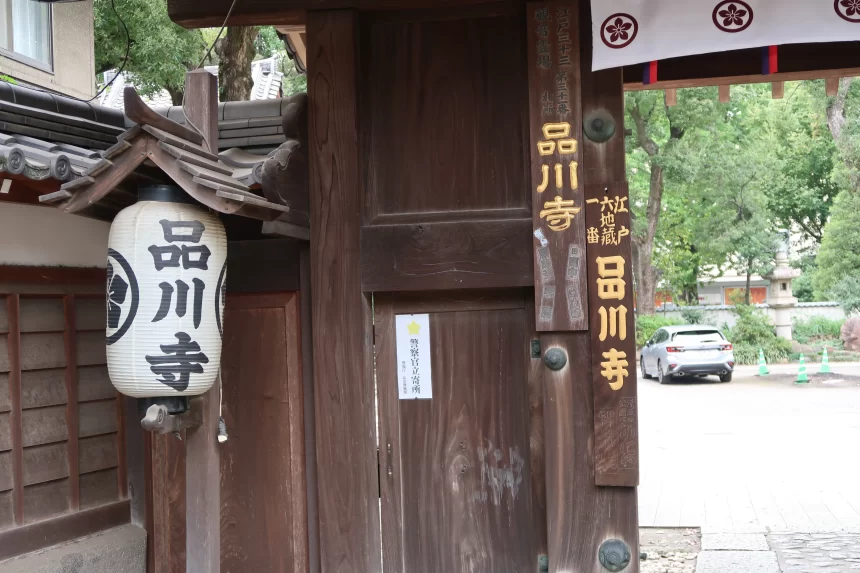
The origin of the Edo Rokujizōson is as follows. Jizō Osho Shōgen, who resided in Fukagawa, Edo (present-day Kōtō Ward), fell ill with an incurable disease. After praying with his parents to Jizō Bosatsu for recovery, Shōgen was able to regain his health. Following the style of the Rokujizō in Kyoto, donations were collected through public appeal starting in 1706 (Enpō 4) to erect six Jizō statues. With these donations, statues of Jizo Bosatsu were erected at six locations throughout Edo. The names of the donors and the year of erection are inscribed on the torso and lotus pedestal of each statue. The statues were cast by the foundryman of Kanda-machi, Ota Suruga-no-kami Fujiwara no Shōkichi. During the early Meiji period’s anti-Buddhist movement, the Sixth Jizō Bosatsu at Fukagawa Eidaiji Temple was destroyed. A replacement statue now stands at the Tendai sect’s Jōmyōin Temple. The Kaichōzan Sen’enji Jizō is the oldest of the six statues, erected in 1708. It stands at an impressive 275 cm tall, the tallest of the existing statues, and was once gilded with gold leaf. Its exquisite craftsmanship, rare for a mid-Edo period bronze statue, led to its designation as a cultural property.
Jizō Bosatsu is said to “save those suffering in all six realms of existence.” For this reason, six statues were traditionally placed side by side at village entrances and cemetery gates. I believe this practice was meant to correspond to the six realms and the six major highways (Tōkaidō, Kōshū Kaidō, Nakasendō, Nikko Kaidō, Mito Kaidō, Chiba Kaidō), with one statue placed along each highway to pray for travelers’ safety.
№1 Honsenji Temple (Tokaido)
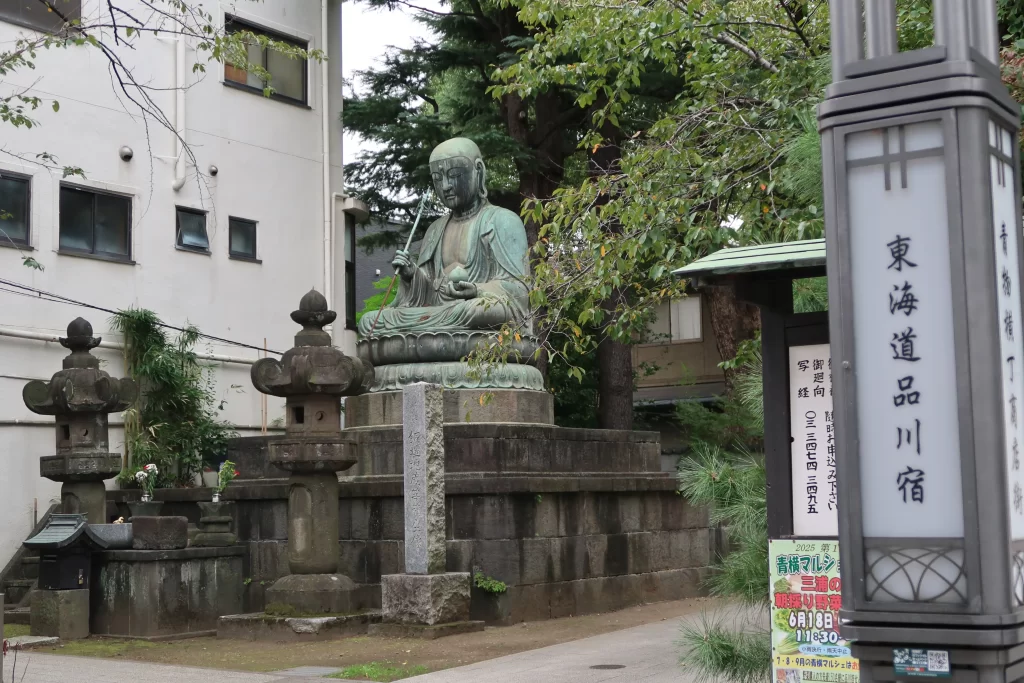
This is the Jizo Bosatsu statue at Honsenji Temple in Shinagawa-juku, the first post town along the Tokaido Road. The temple stands quietly within the shopping district. Stepping into the precincts, a solemn atmosphere envelops the surroundings, creating a feeling of deep reverence. I paid my respects here, imagining the scene from that era when travelers with various purposes set out on their journeys, praying for safe passage at this starting point. Travel back then was primarily on foot, making the hardships immeasurable. It’s easy to imagine people losing their lives or falling ill along the way. Praying for safety on such a harsh journey was surely a common practice in those days.
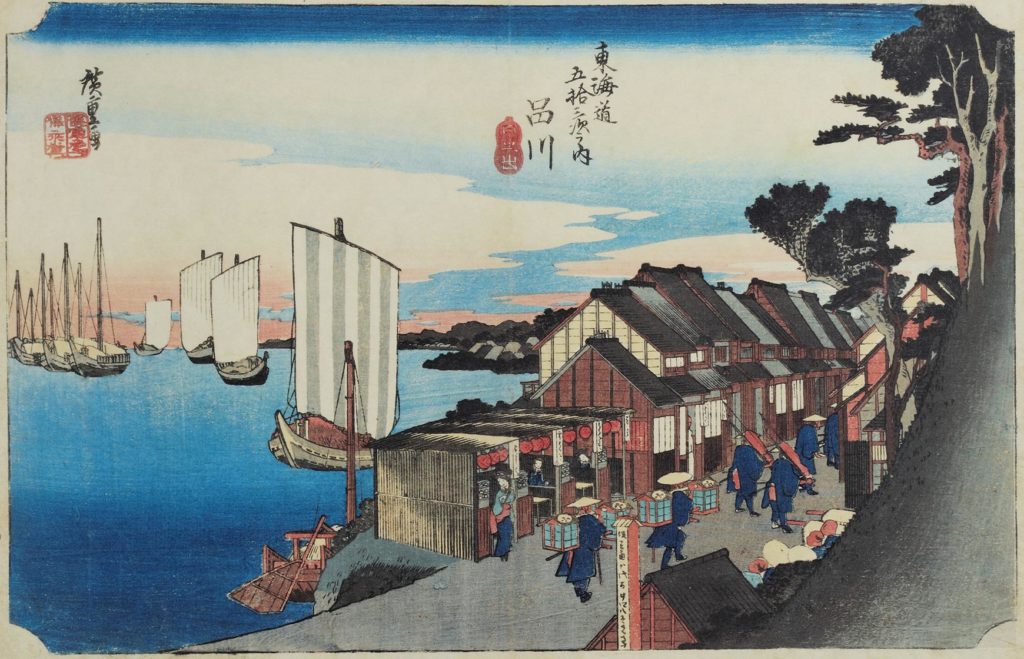
From the National Diet Library Digital Collection
During the Edo period, the development of the domestic transportation network progressed under the orders of Tokugawa Ieyasu, and one of these routes was the Tōkaidō, considered the busiest route at the time. The Tōkaidō stretched approximately 500 km from Nihonbashi to Sanjō Ohashi in Kyoto, a journey that took about two weeks. Travelers then moved on foot or horseback, limiting daily distances, so post towns were established along the route. The term “Fifty-Three Stations” (Gojūsantsugi) comes from the 53 times travelers, horses, and goods were transferred from one post town to the next. The image above depicts Shinagawa-juku from “The Fifty-Three Stations of the Tōkaidō” by Utagawa Hiroshige, a renowned ukiyo-e artist representing the late Edo period. Hiroshige created ukiyo-e featuring landscapes, and his works depicting the famous sites, nature, and local specialties of the Tōkaidō remain today. These works are highly valued as historical materials for understanding the culture of that era.
How to get this place
Address:
3-5-17 Minami-Shinagawa, Shinagawa-ku Tokyo
Access:
From Shinagawa Station:

Take the Keikyū Main Line to Aomono-yokochō Station. The ride takes about 4 minutes. From there, it’s another 5 minutes on foot.
№2 Taisoji Temple (Koshukaido)
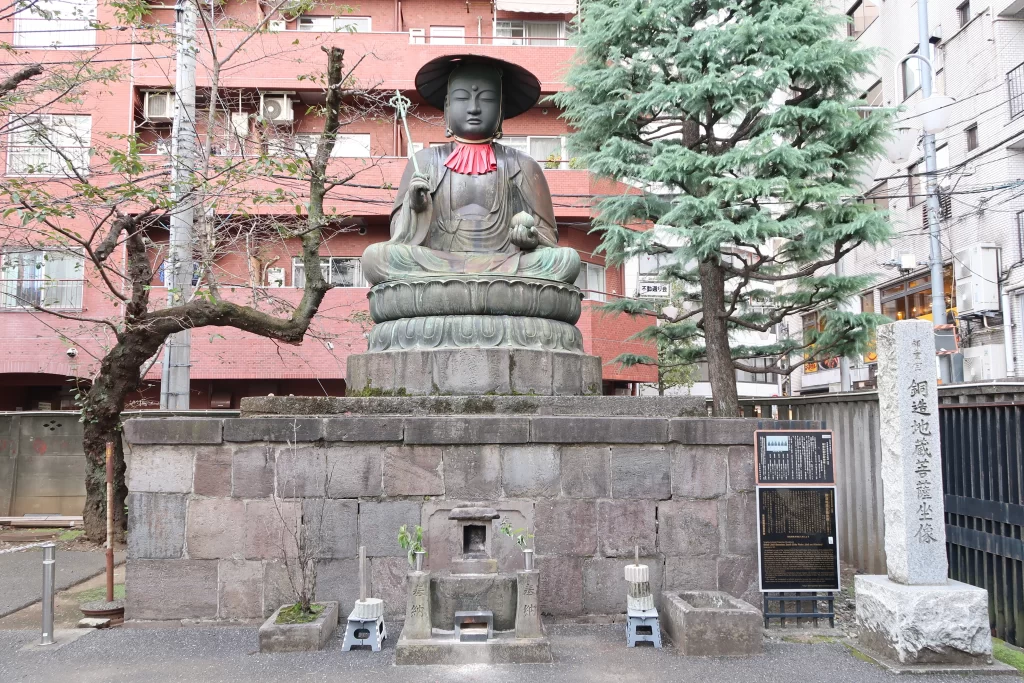
Located along the Koshu Kaido road about a 10-minute walk from Shinjuku Kabukicho, one of Japan’s most famous entertainment districts, stands the Jizo Bosatsu statue at Taisoji Temple. It’s a place where you’re instantly enveloped in a serene atmosphere, far removed from the bustle of the city. While it’s easily accessible for travelers visiting Kabukicho or nearby areas, we recommend visiting here first if possible. This is not a place to visit while carrying shopping bags after shopping around Shinjuku. It is fundamentally a place where prayers for safe travels have been offered. Please visit not as a tourist attraction, but to pray for the safety of your journey.
The Kōshū Kaidō was one of the five major roads of the Edo period, a route approximately 205 kilometers long connecting Nihonbashi to Shimosuwa-juku (present-day Nagano Prefecture). The Kōshū Kaidō was used by feudal lords traveling under the sankin-kōtai system, which required regional lords to periodically travel to Edo. It was also a vital route for merchants, pilgrims, travelers heading towards Kōfu, and visitors to Suwa Grand Shrine in Nagano. Forty-four post towns lined the road, providing inns, rest areas, and shops for travelers.
How to get this place
Address:
2-9-2 Shinjuku, Shinjuku-ku Tokyo
Access:
From Shinjuku Station:10 minutes on foot.
№3 Shinshoji Temple (Nakasendo)

This Jizo Bosatsu statue stands at Shinshoji Temple, within walking distance of Sugamo Station, often called “Grandma’s Harajuku.” You can offer incense here. Please place your donation and light incense at the designated spot to pray for safe travels. As with any temple, stepping inside instantly changes the atmosphere, making you feel a sense of solemnity. I deeply appreciate how this statue has watched over people for hundreds of years. The Nakasendo road is the longest of the five main roads connecting Nihonbashi in Tokyo to Sanjo Ohashi in Kyoto via inland routes, stretching approximately 526 km. With 67 post stations along its route, the journey was often difficult due to mountainous terrain, limiting daily travel distances. Consequently, it had the most post stations among the five roads.
Near the temple stands Kōganji Temple, famous for its Thorn-Removing Jizō statue. The temple’s principal image is the Life-Extending Jizō, revered for its power to cure illness and prolong life. The name “Thorn-Removing” originates from a legend: a maid who accidentally swallowed a needle was able to expel it after swallowing an image of the Jizō statue.
How to get this place
Address:
3-21-21 Sugamo, Toshima-ku Tokyo
Access:
From Ueno Station:

Take the Yamanote Line to Sugamo Station. The ride takes about 11 minutes. From there, it’s another 6 minutes on foot.
№4 Tozenji Temple (Nikko Kaido)
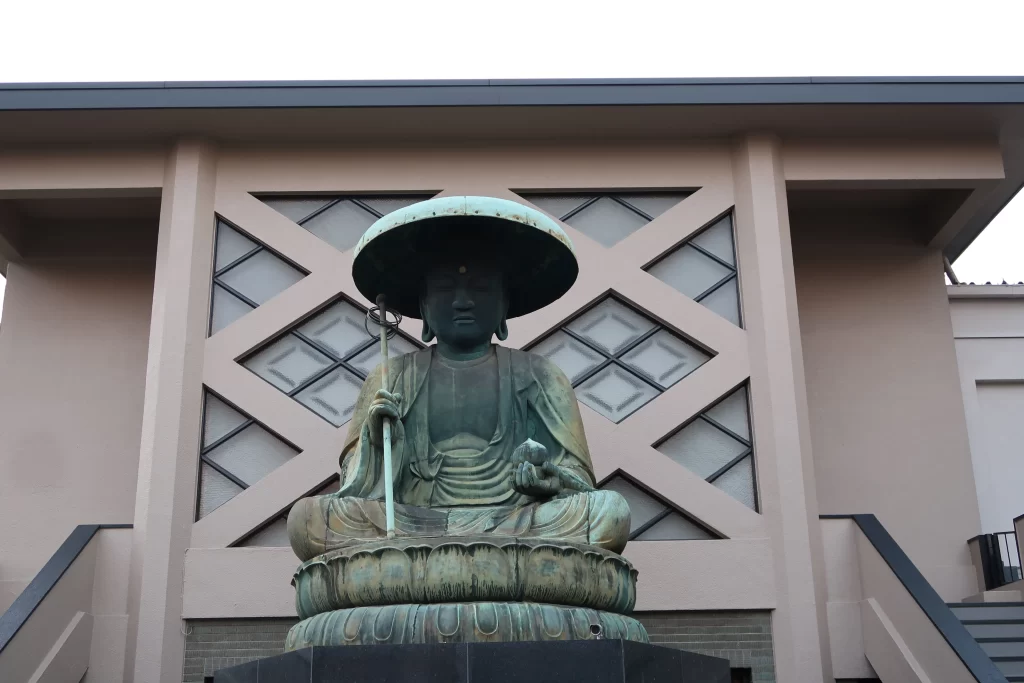
Tōzenji Temple is within walking distance from Sensoji Temple in Asakusa. Standing quietly amidst the quiet residential area, the Jizō Bosatsu statue at the temple’s entrance exudes a presence that has watched over countless people for many days. It seems poised to move at any moment, ready to guide us.
The Jizo Bosatsu at Tosenji Temple is located along the Nikko Kaido road. The Nikko Kaido is a highway stretching approximately 160 km from Nihonbashi to Nikko Toshogu Shrine, where the first shogun of the Edo shogunate, Lord Tokugawa Ieyasu, is enshrined. Pilgrimages to Nikko Toshogu by successive shoguns of the Edo shogunate totaled 19 times up to the 15th shogun. While the original purpose seemed to be paying homage to Tokugawa Ieyasu, this changed after the third shogun, Iemitsu. It evolved into a ritual demonstrating the legitimacy of the Tokugawa family’s rule and the authority of the shogun. The pilgrimage undertaken by the 10th shogun, Ieharu, was so large that it is said when the front of the procession reached Nikko, the rear was still in Edo. Twenty-one post stations were established along the route, spanning what are now Saitama, Ibaraki, and Tochigi Prefectures.
How to get this place
Address:
2-12-13 Higashiasakusa, Taito-ku Tokyo
Access:From Sensoji:16 minutes on foot.
№5 Reiganji Temple (Mito Kaido)
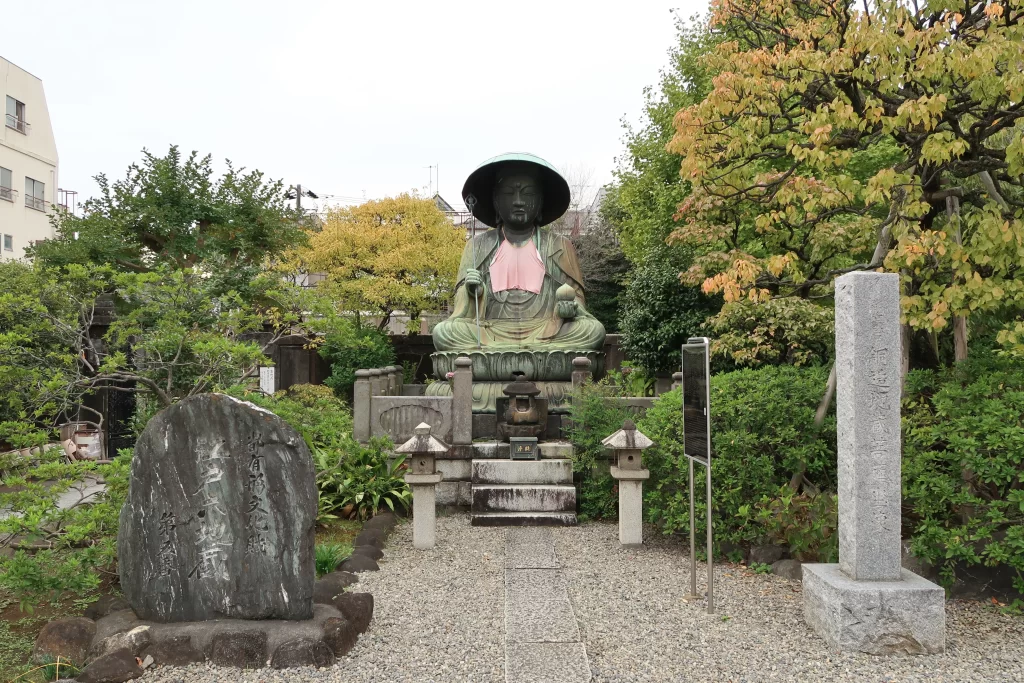
Reiganji Temple is located along Fukagawa Shiryokan-dori Shopping Street, brimming with old downtown charm. Reiganji Temple was founded in 1624 on Reiganjima Island (Chuo Ward) by Oūyō Reigan, a trusted retainer of Tokugawa Ieyasu, Hidetada, and Iemitsu. After being destroyed in the Great Fire of Meireki, it was relocated to its present site in 1658 when the low-lying coastal marshland was reclaimed by the head priest Kasan and his disciples. Nearby attractions include Kiyosumi Garden and the Fukagawa Edo Museum.
The Mito Kaido was a highway connecting Mito, the seat of the Mito domain lord of the Tokugawa Gosankke (Three Houses of Tokugawa), to Edo. Approximately 116 km long, it had 20 post towns established along its route. Since the Mito domain lord resided in Edo, there was no sankin-kotai (alternate attendance) system. Instead, frequent communication was necessary. Consequently, many temples, shrines, and lodgings associated with the Mito family were found in the post towns along the Mito Kaido road, which domain samurai frequently traveled.
How to get this place
Address:
1-3-32 Shirakawa, Koto City, Tokyo
Access:
From Ryogoku Station:

Take the Oedo Line to Kiyosumi-shirakawa Station. The ride takes about 4 minutes. From there, it’s another 4 minutes on foot.
№6 Eitaiji Temple (Chiba Kaido)
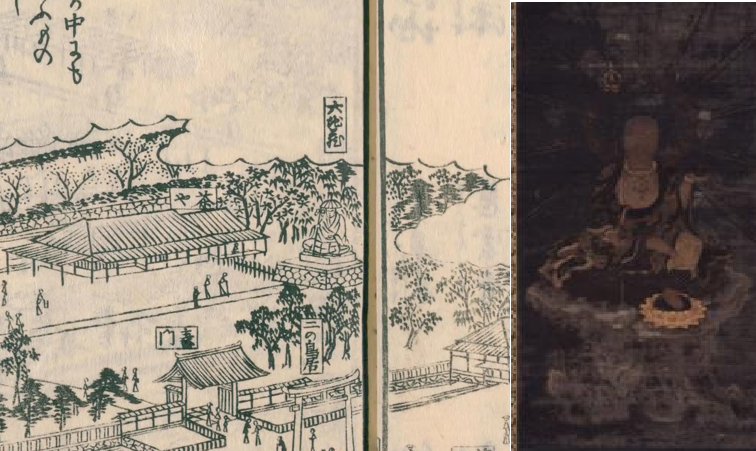
Left: “Tomioka Hachiman Shrine” from Edo Meisho Zue
Right: “Colored Silk Painting of Jizo Bosatsu in Half-Lotus Position” Koto Ward
The sixth Jizō Bosatsu of the Edo Rokujizō, unfortunately, was destroyed when Eitai-ji Temple was abolished under the Shinto-Buddhist Separation Edict in the early Meiji period. The illustration on the left above depicts the Jizō Bosatsu at Tomioka Hachimangu Shrine at that time. The illustration also notes “Six Jizō.” The image on the right depicts a half-seated Jizō Bosatsu painted on silk with color. It is deeply regrettable that only the Six Jizō were destroyed. Yet, amidst the significant shift in attitudes toward Buddhism during that era and the many events that occurred, I am grateful that so many temples and shrines have survived to the present day, continuing to offer solace to countless people.
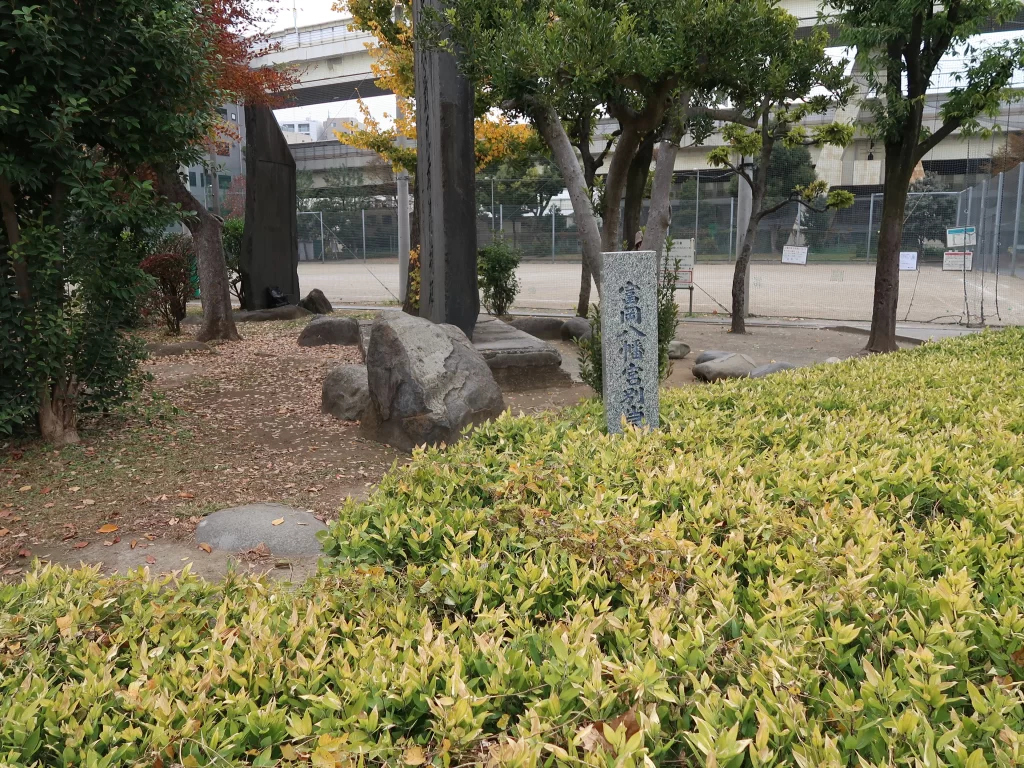
Currently, the site of Eitai-ji Temple is located in Fukagawa Park. Behind it is Fukagawa Fudoson, so please visit it.
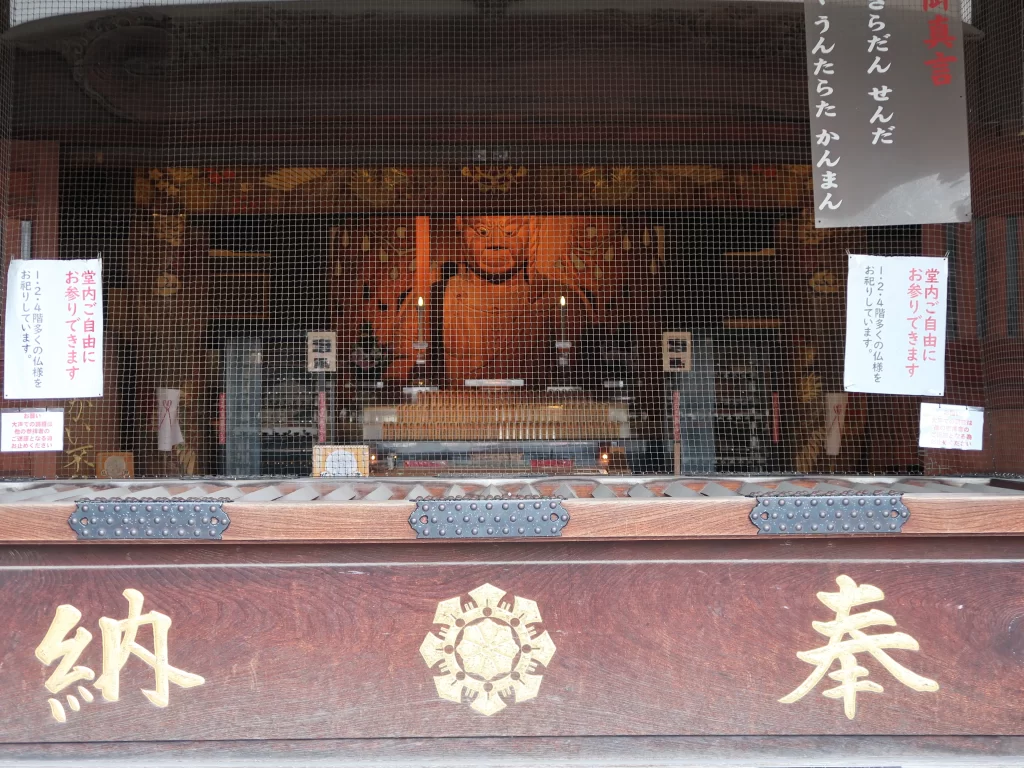
The main image bears the mantra of Fudō Myōō: “Nōmaku sanmanda bazara dan sendā makarōshada sowataya untarata kanman.” This is the phrase used to fulfill one’s wishes before Fudō Myōō. The outer walls of the main hall are covered in Sanskrit characters. Additionally, daily homa rituals are performed at fixed times; one was taking place when I visited. The sound of sutras and a large drum reached my ears. I could peek in from the side, and the sutras and drum echoing through the solemn atmosphere, along with the towering flames, gave me a mystical feeling.
How to get this place
Address:
1-14 Tomioka, Koto City, Tokyo
Access:
From Tokyo Station(Ootemachi Station):

Take the Tozai Line to Monzen-nakacho Station. The ride takes about 6 minutes. From there, it’s another 2 minutes on foot.
Extra Edition
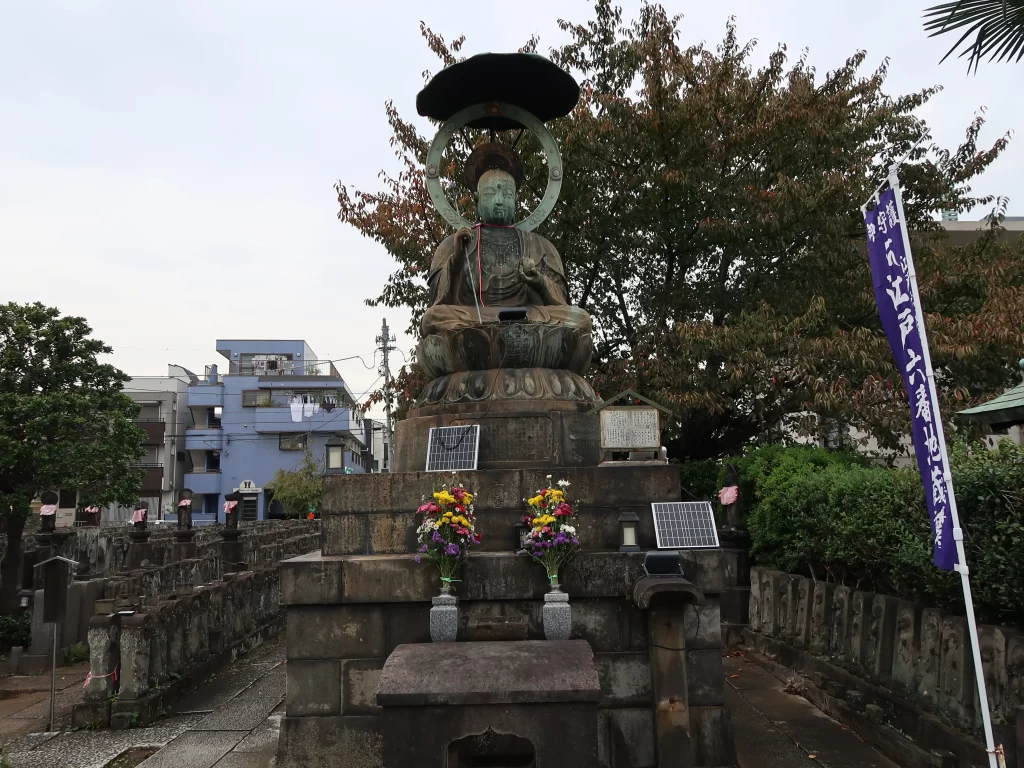
The sixth Jizō Bosatsu statue of Eitai-ji Temple, destroyed during the early Meiji period’s Separation of Shinto and Buddhism edict, was replaced by a substitute statue at Jōmyō-in Temple in Meiji 39 (1906). This new statue was dedicated to the memorial of war dead. I believe this substitute statue was erected precisely because, even after 38 years had passed, the history of Jizō Bosatsu remained firmly etched in people’s hearts. This experience made me reflect anew on how deeply ingrained in Japanese culture is this profound sense of preserving such vital aspects of the heart.
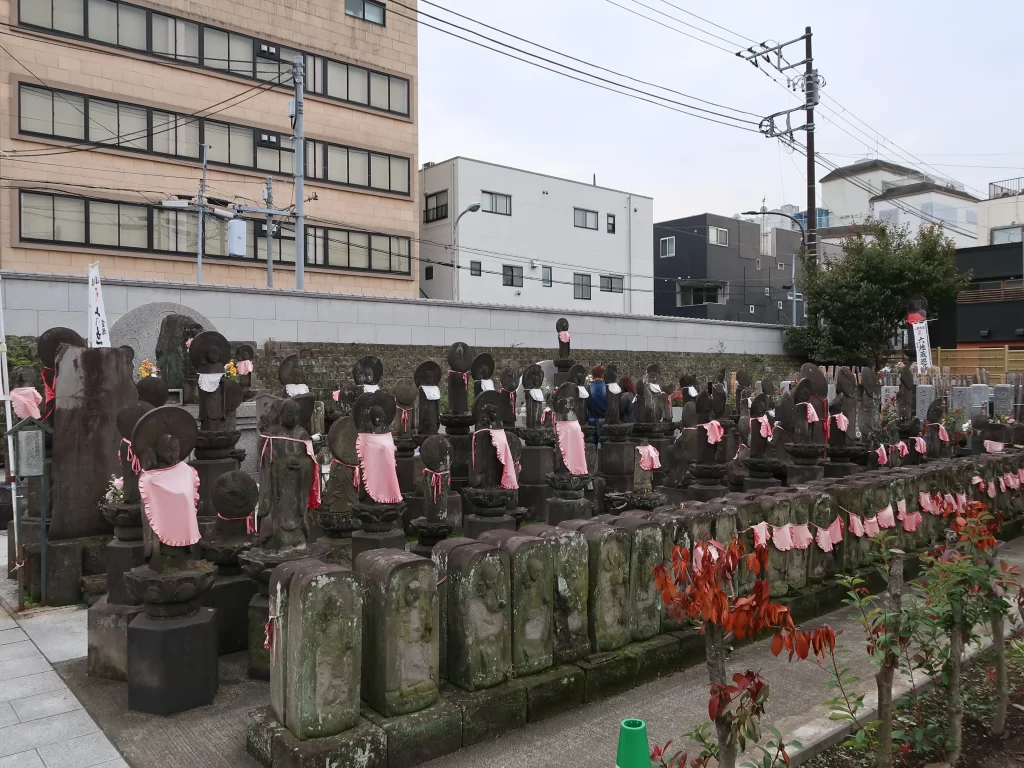
At Jōmyō-in Temple, the 38th High Priest Myōun aspired to establish 84,000 statues of Jizō Bosatsu to save the people from the five impure ages and repay the Buddha’s grace. Even today, the number of Jizō statues continues to grow.
How to get this place
Address:
2 Chome-6-4 Uenosakuragi, Taito City, Tokyo
Access:
From Ueno Station:

Take the Keihin-Tōhoku Line to Uguisudani Station. The ride takes about 2 minutes. From there, it’s another 9 minutes on foot. It’s within walking distance from Ueno Park.
Editor’s Note
This time, I introduced six Jizo statues. Since they are located at various distances, visiting all the temples may take time. However, as they are situated along different highways, there are various shops and tourist facilities nearby. Therefore, by combining visits with other tourist spots, it should be possible to see them within a limited timeframe. Plan your schedule well and please do visit.
The majority of Japanese people actually do not have the custom of adhering to a specific religion. Even so, in daily life, they visit temples and shrines during events like New Year’s. They also celebrate Christmas. While this might seem unusual to people from other countries, it stems from the deeply rooted Shinto belief that nature and all things possess divine essence. This cultural foundation makes such practices feel natural. Furthermore, Japanese culture embraces incorporating positive elements from other traditions, fostering an open-mindedness that allows celebrating Christmas when it offers meaningful aspects. We sincerely hope travelers can experience a glimpse of Japanese culture. We also wholeheartedly wish for your journey to be safe and truly wonderful.
People Also Ask About the Edo Six Jizo
What are the Edo Six Jizo?
The Edo Six Jizo are six protective Buddhist statues placed at major entrances to Edo (old Tokyo). Built during the Edo period, they were meant to guard travelers and pray for safe journeys. Each statue stands along historic highways that once connected Edo to the rest of Japan.
Where are the Edo Six Jizo located?
The six statues are positioned at historical highway gateways around Tokyo, each marking a major route used during the Edo period. They stand near former city entrances where travelers would pray before beginning long journeys.
Why were the Edo Six Jizo built?
They were created to protect travelers entering and leaving Edo. In the Edo period, travel was dangerous, so people prayed to Jizo for safety, health, and spiritual protection before setting out. The statues symbolized guardians watching over the roads.
Can you visit all Edo Six Jizo in one day?
Yes, it is possible to visit all six in one day if you plan your route efficiently using public transportation. However, many visitors prefer spreading the journey over multiple days to enjoy each location and its surrounding historic atmosphere.
No comments yet.