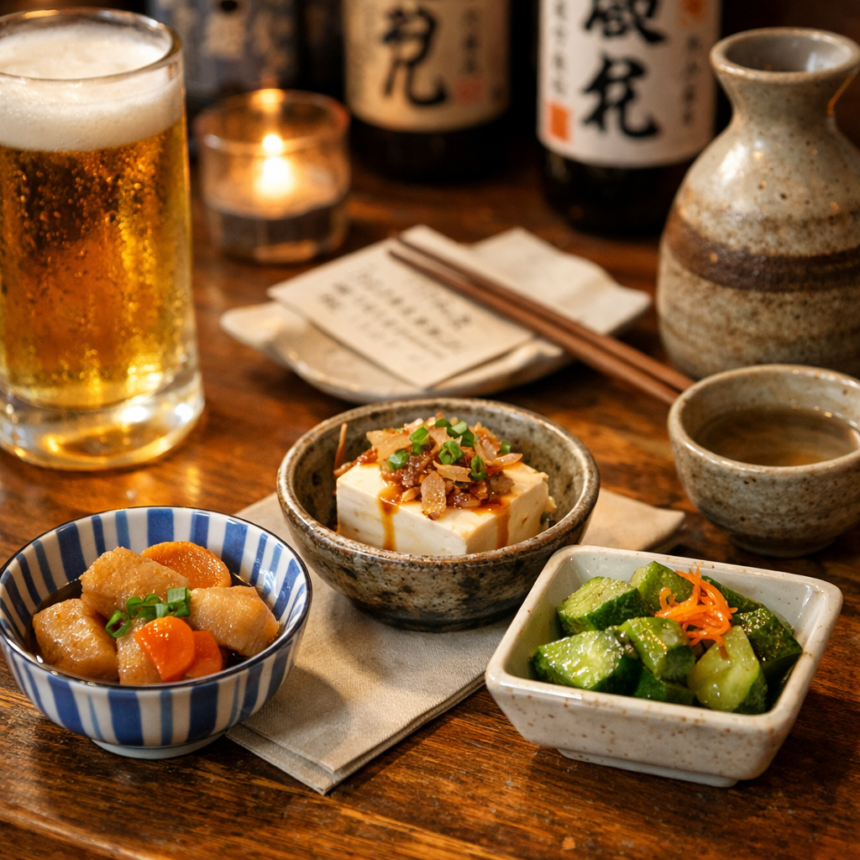
When you visit a Japanese izakaya (a casual pub), you will often receive a small dish called “otoshi” as soon as you When you enter a Japanese izakaya (casual pub), you may notice that a small dish is served shortly after you sit down — even if you didn’t order it.
This dish is called “Otoshi” (お通し).
Is Otoshi a Mistake?
No — this is completely normal in Japan.
Otoshi is a small appetizer served to every guest and comes with a small mandatory charge (usually around 300–600 yen per person).
Why Do Japanese Izakayas Serve Otoshi?
Otoshi has several purposes:
- Table charge: Instead of a “cover charge,” izakayas include otoshi as part of seating.
- Welcome dish: It gives guests something to enjoy while waiting for their drinks or main food.
- Seasonal touch: Many otoshi dishes reflect the season or the chef’s style.
Think of it as a mix of a table charge + welcome snack.
Can I Refuse Otoshi?
In most traditional izakayas, otoshi cannot be refused, as it is part of the system.
However, this is not a scam — it is a long-standing custom that Japanese customers also follow.
If you are uncomfortable, you can politely ask:
“Is this otoshi? Is it included in the charge?”
Staff will usually explain kindly.
What Kind of Food Is Otoshi?
Otoshi is usually simple and light, such as:
- Simmered vegetables
- Small tofu dishes
- Pickled items
- A bite-sized seasonal dish
It’s meant to be easy to eat and not too filling.
Do Restaurants Explain This?
Many izakayas do not explain otoshi, because Japanese customers already expect it.
This is why foreign visitors often feel confused — but once you know, it becomes part of the experience.
Is Otoshi Common Everywhere in Japan?
- Common in izakayas and small bars
- Rare in cafes, ramen shops, or family restaurants
Want to learn more about Japanese culture and avoid common travel mistakes? Check out our guide to common mistakes visitors make in Japan.
In Short
- Otoshi is normal and legal
- It is a small appetizer + seating charge
- Japanese people pay it too
- It’s part of the izakaya culture
Once you understand otoshi, visiting an izakaya becomes much more relaxed — and enjoyable.
Here are some common questions travelers have about otoshi in Japan.
FAQ
Q1. What is otoshi in Japan?
Otoshi is a small dish automatically served at izakaya (Japanese pubs), and it usually comes with a small charge. It acts as a table fee rather than a free appetizer.
Q2. Why do I get charged for otoshi?
The charge for otoshi is part of Japanese dining culture. It replaces tipping and covers the cost of seating and service at the restaurant.
Q3. Is otoshi a scam?
No, otoshi is not a scam. It is a common practice in Japan, and both locals and tourists are charged the same way.
Q4. Can I refuse otoshi?
In most cases, otoshi cannot be refused, as it is automatically included as a table charge. However, policies may vary depending on the restaurant.
Q5. How much does otoshi cost?
Otoshi typically costs between 300 and 600 yen per person, depending on the restaurant.
Q6. Is otoshi the same as a tip?
No, otoshi is not a tip. Japan generally does not have a tipping culture, and otoshi serves as a fixed service charge instead.
Q7. Do all restaurants in Japan have otoshi?
No, otoshi is mainly found in izakaya and some casual dining restaurants. It is not common in fast food restaurants or cafes.
Q8. What kind of food is served as otoshi?
Otoshi can include small dishes such as pickled vegetables, tofu, or simple seasonal items. The contents vary depending on the restaurant.
Think you’re ready for Japan? Try our travel quiz or learn the most common mistakes first-time visitors make.




No comments yet.