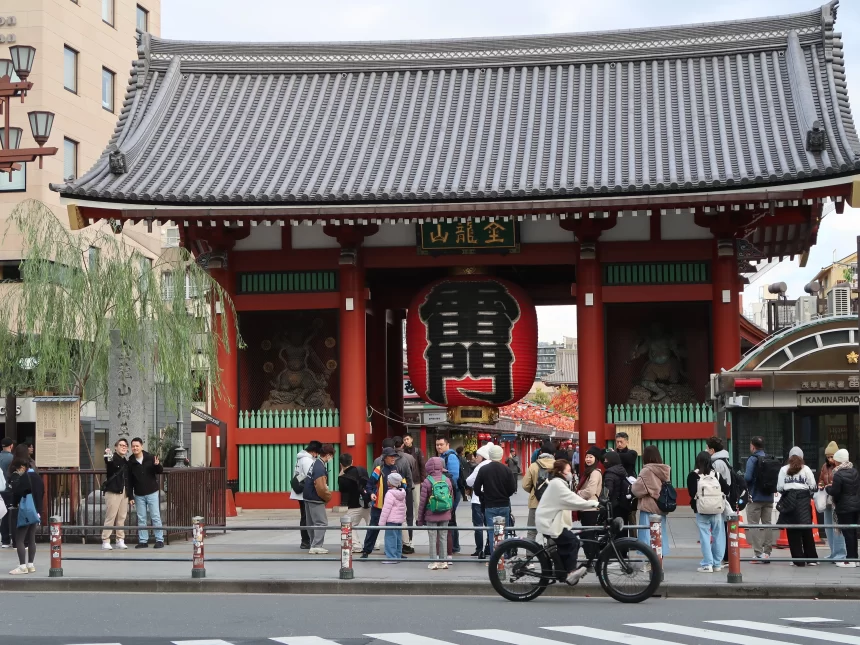
The weather was nice today, so I visited Sensoji Temple at 8:00 AM. At this hour, tourists were sparse, and even the popular photo spots allowed everyone to line up and take pictures one group at a time. While few shops were open along Nakamise Shopping Street, the quiet atmosphere was also pleasant.


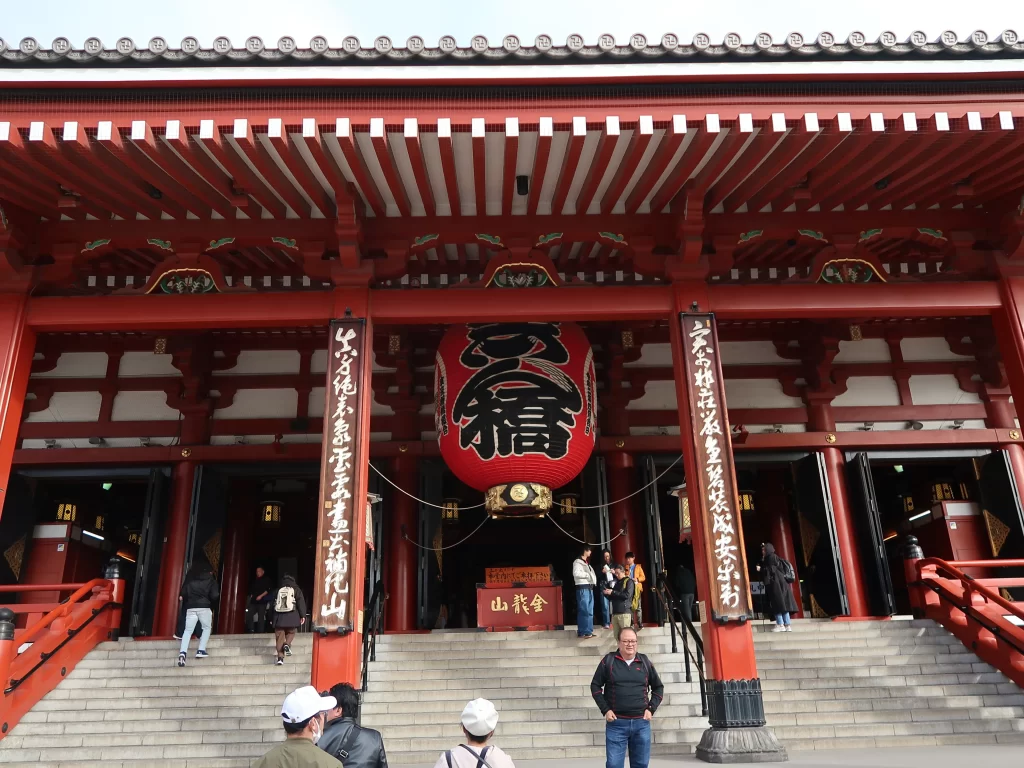
This time is recommended for those who want to take photos leisurely or explore the temple at a relaxed pace. With paintings decorating the approach path, Asakusa Shrine and Nitemmon within the temple grounds, and ceilings featuring paintings like the Ryuunozu(龍之図) and Tenjinnozu(天人之図) , a leisurely stroll allows you to notice details and make various discoveries.


Looking to the left and right of the Hōzōmon gate, you will see two statues: one with an open mouth, the A-form, and one with a closed mouth, the Un-form. These are also called the Niō statues (A-Un statues), serving as gatekeepers to prevent enemies of the Buddha from entering from outside. “A” signifies the beginning of things, while “Un” signifies the end of things. There is a Japanese idiom, “A-Un no kokyū” (阿吽の呼吸), which means “perfect harmony between two or more people doing something together,” implying actions naturally align from start to finish.
Japanese culture.
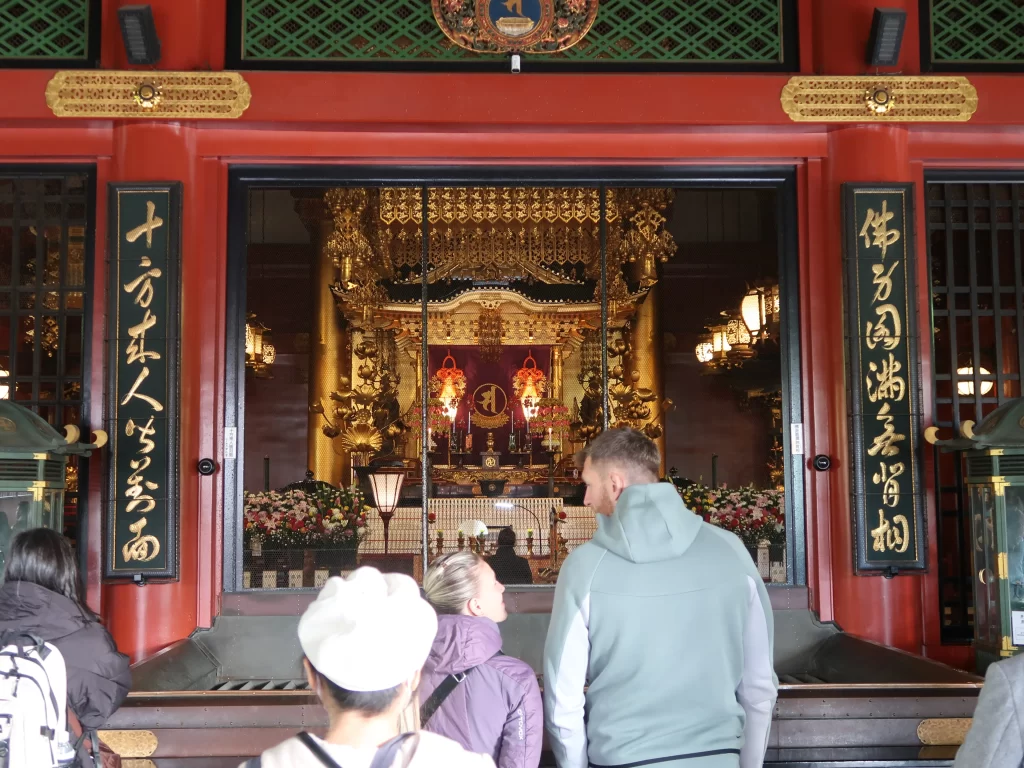
“This is where visitors quietly pray — a completely different atmosphere from the lively streets outside.”
“Don’t forget to look up — some of the most impressive details at Sensoji are above you.”

What You Can Experience on This Walk
- Visiting Senso-ji, Tokyo’s most famous temple
- Trying omikuji and traditional practices
- Exploring old-town streets in Asakusa
- Seeing the contrast between traditional and modern Tokyo
Before starting this walk, you may want to learn the basics of Japanese culture, including shrine etiquette and omikuji, in our complete guide.
After leaving Sensoji Temple, we headed toward Tokyo Skytree
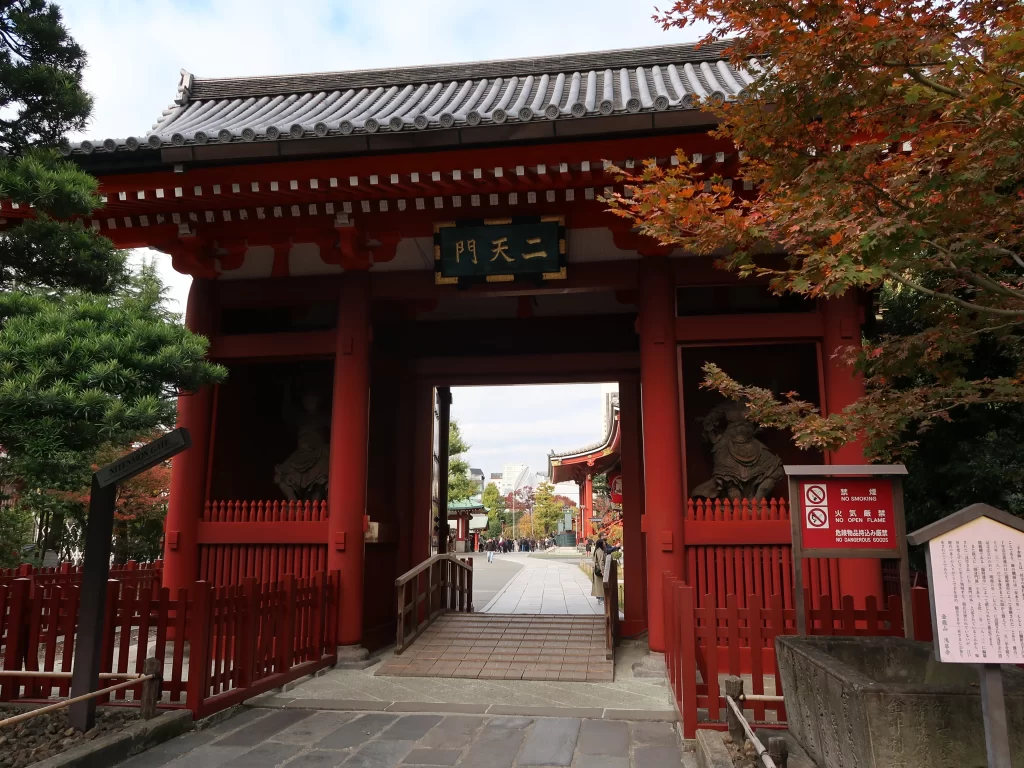

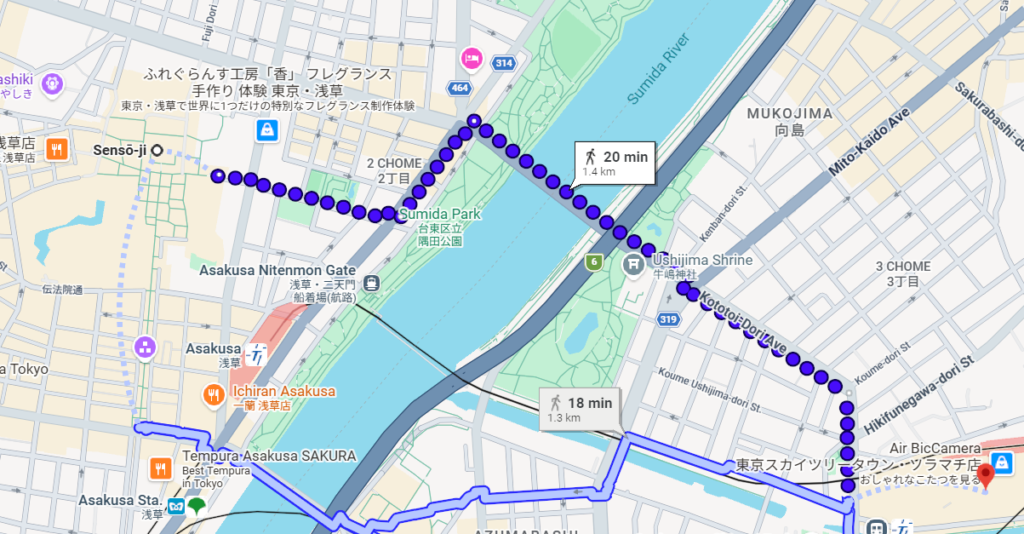
Since Tokyo Skytree is already visible from within Sensoji Temple, you won’t get lost walking towards it. Now, leaving Sensoji behind from Nitemmon, I set off towards Tokyo Skytree. Cross the traffic light and walk a short distance to reach Sumida Park. From the park, you can see the Skytree across the river, making this spot another excellent photo location. Although it wasn’t open yet, you can apparently take a water bus from here to Odaiba Seaside Park. Currently, due to aging vessels, the route options seem limited. By summer 2026, it appears they’ll be able to reach other major destinations.


Every summer, large-scale fireworks displays are held on the Sumida River, attracting many visitors. In spring, cherry blossoms bloom along the Sumida River, offering a different perspective depending on the season. Leaving the park, we cross Kototoi Bridge. There’s another Sumida Park just beyond Kototoi Bridge, and the view of the Skytree from here is also excellent. Within the park stands Ushijima Shrine.
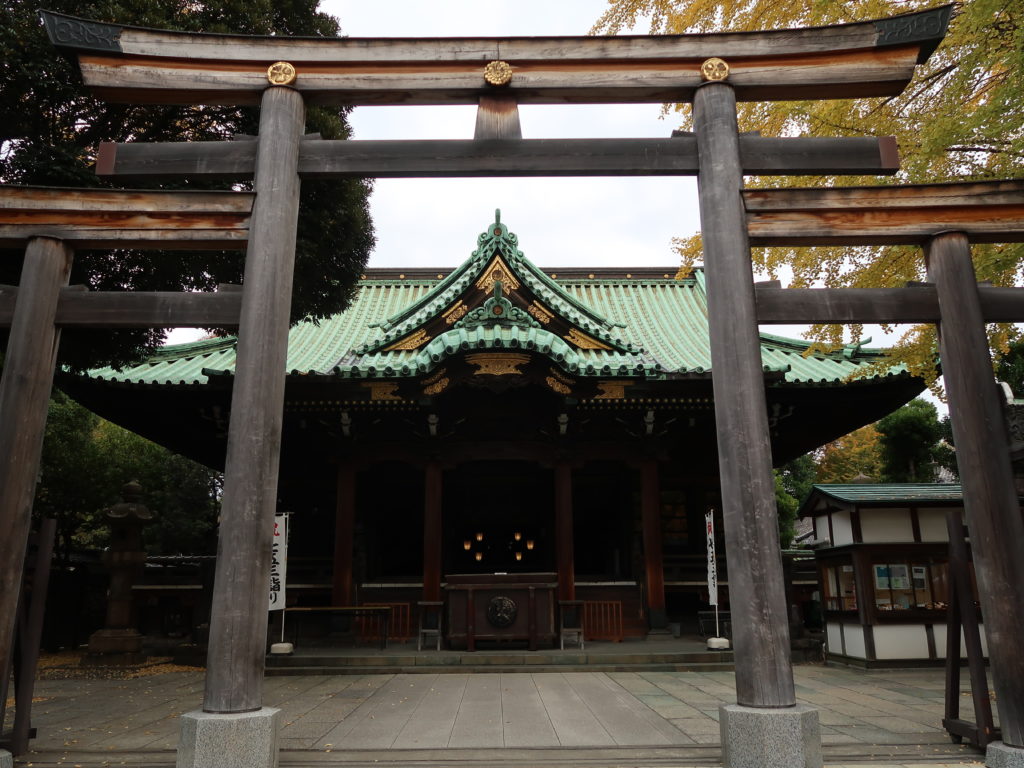
The “Nadeushi” (Stroking Cow) statue in the shrine grounds is famous as a healing object for both body and mind. The belief is that stroking the corresponding part of the cow’s body where you feel illness can cure it. In front of the main hall, there is also a very rare triple torii gate (san-no-torii). You can see that an additional torii gate is attached to the left and right of the standard torii. There were a few tourists there too.
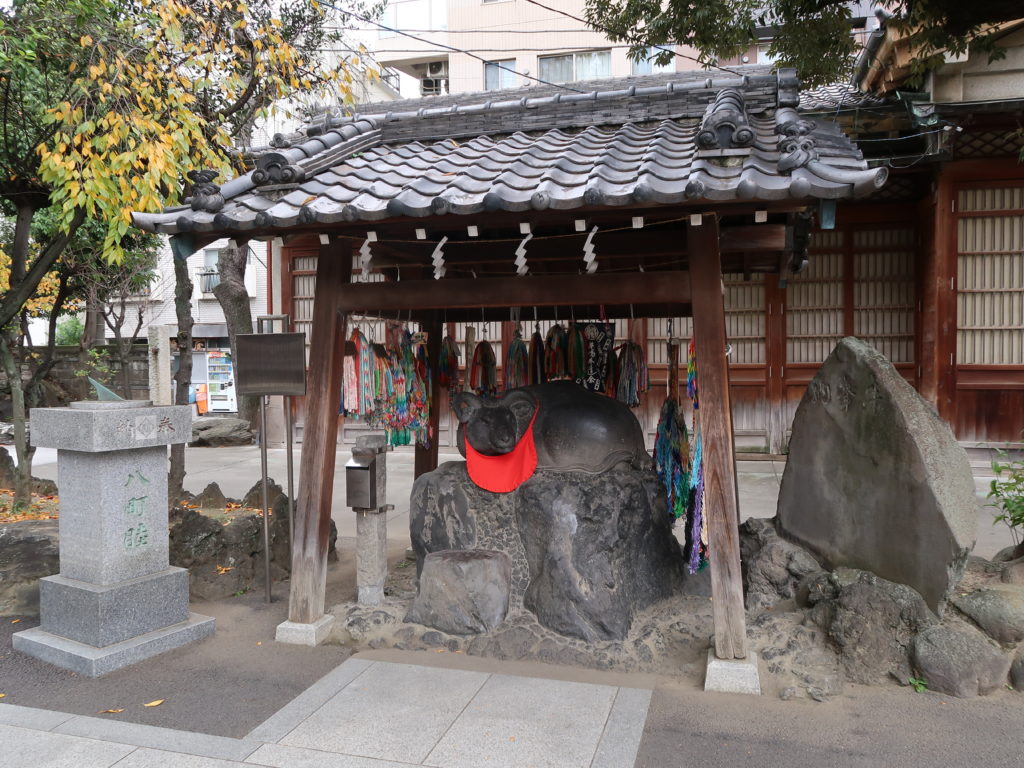
“Don’t miss the ‘Nade Ushi’ — people gently touch it for good health.”
Having made quite a detour, I headed towards Tokyo Skytree. Returning to the road after crossing Kototoi Bridge, I walked towards the approaching Tokyo Skytree. There were no turns; just following the road brought the Skytree into view.
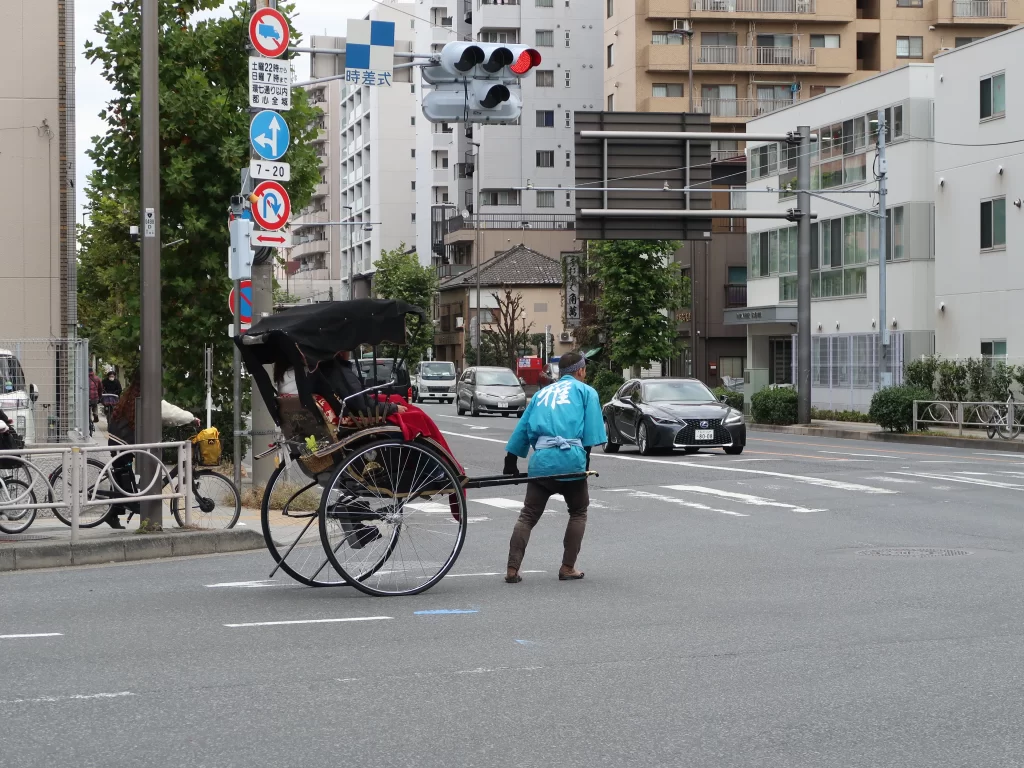
It was morning, but there were tourists riding rickshaws toward the Tokyo Skytree.

I arrived at 9:00 AM, but only the cafes were open. The Tokyo Skytree observation deck and the adjacent aquarium seemed to open at 10:00. The souvenir shops related to Tokyo Skytree were open. Tourists were sparse, but everyone was taking photos at their respective spots. Many people were taking photos from the Tobu Bridge on the south side. Since commercial facilities are adjacent to Tokyo Skytree, you can enjoy food courts and shopping. After seeing the observation deck and aquarium, stopping by might be a good idea. Walking from Sensoji Temple to Tokyo Skytree takes about 20 minutes, and the route is easy to follow, so walking is smoother.

Return from Tokyo Skytree to Sensoji Temple


After leaving Tokyo Skytree and retracing our steps back to Sensoji Temple, it was completely different from the morning—crowded with people. Seeing so many people drawing omikuji fortune slips, each excitedly reading theirs and discussing their fortunes with friends, made me happy. Regarding omikuji: These fortune slips are considered messages from the gods, and it’s generally customary to draw only once. While drawing multiple times is possible, it’s considered a minor practice within Japanese culture. Whether the result is good or bad, accepting the message from the gods is what truly matters.
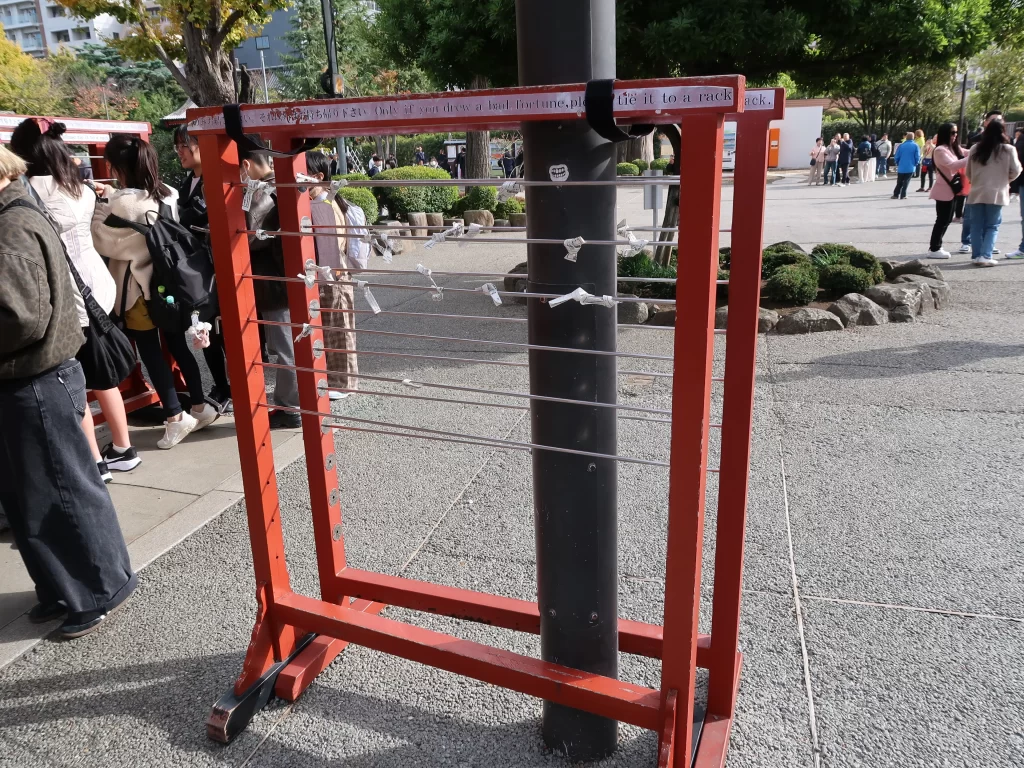
Take home the good fortune slips and tie the bad ones to the nearby fortune slip rack. This act symbolizes “tying” your bond with the gods. By tying this bond with the gods, you ask them to guide your affairs in a favorable direction. Whether good or bad, I believe the gods observe your daily conduct, and it is this conduct that determines whether things progress well.


The shops along Nakamise Street were open and bustling with crowds. Sensoji Temple is a popular destination for Japanese student field trips, and many students were visiting, browsing various souvenirs. There are shops not only inside Nakamise but also outside, including some very unique ones, so I recommend exploring. Women’s kanzashi hairpins are beautifully decorated and eye-catching, making them excellent souvenirs. The area in front of aminarimon Gate was overflowing with people, making it quite difficult to take photos. It was 8:00 PM, and by 10:00 PM, I was hungry. I looked around at nearby shops, but few were open; many seemed to open at 11:00 AM. The prices at each shop were also set quite high, which I thought was typical of tourist areas. The atmosphere of any tourist spot changes depending on the time you visit. Some people prefer lively places, while others like quieter spots. Visiting at a time that suits your preference might be a good idea.
Postscript after finishing the exploration

Looking back, the pricier shops seemed to target foreign tour groups as their main customers. In Japanese culture, breakfast is typically around 500 yen, and lunch around 1,000 yen. Finding affordable, tasty spots is part of the travel
I tried buying some takeout tempura and ate it later, piled on top of udon noodles as tempura udon—it was delicious. I’ve seen travelers buying tempura to eat while walking around, but the takeout portions are quite substantial. Eating it straight might be too greasy and heavy on the stomach. Japanese cuisine offers an incredible variety, with many dishes delicious on their own and others that shine when paired. Tempura is one such example, pairing exceptionally well with soba or udon noodles. Dishes like tempura rice bowls also feature diverse ingredients, each harmonizing beautifully with rice. For travelers wanting tempura, I recommend eating it at specialty tempura shops, soba restaurants, or udon shops.
Still planning your Tokyo trip?
After walking from Sensoji to Tokyo Skytree, you might realize that small details can make a big difference — like choosing the right route, timing your visit, or finding good local spots.
If you have questions, feel free to ask a local. We’re happy to help.
Want to explore another side of Tokyo on foot?
If you enjoyed this walk from Sensoji to Tokyo Skytree, you might also like exploring a completely different side of Tokyo.
From Hamamatsucho to Tokyo Tower, you’ll experience a more local and relaxed atmosphere with a different city vibe.
Explore the Morning Buzz at Tsukiji Market

No comments yet.